


31 Jul Weaving Between Boundaries
Growing up in Billings, Meghan Spielman and her sister were encouraged to explore every kind of art. They took classes at the Yellowstone Art Museum, studied watercolor painting during the summers, and were rarely told there was a right or wrong way to create.
Today, Spielman’s work is shaped by constraints. In her Bozeman studio, she creates textile works on a 32-harness computerized dobby loom, embracing the technical limitations that first drew her to weaving.
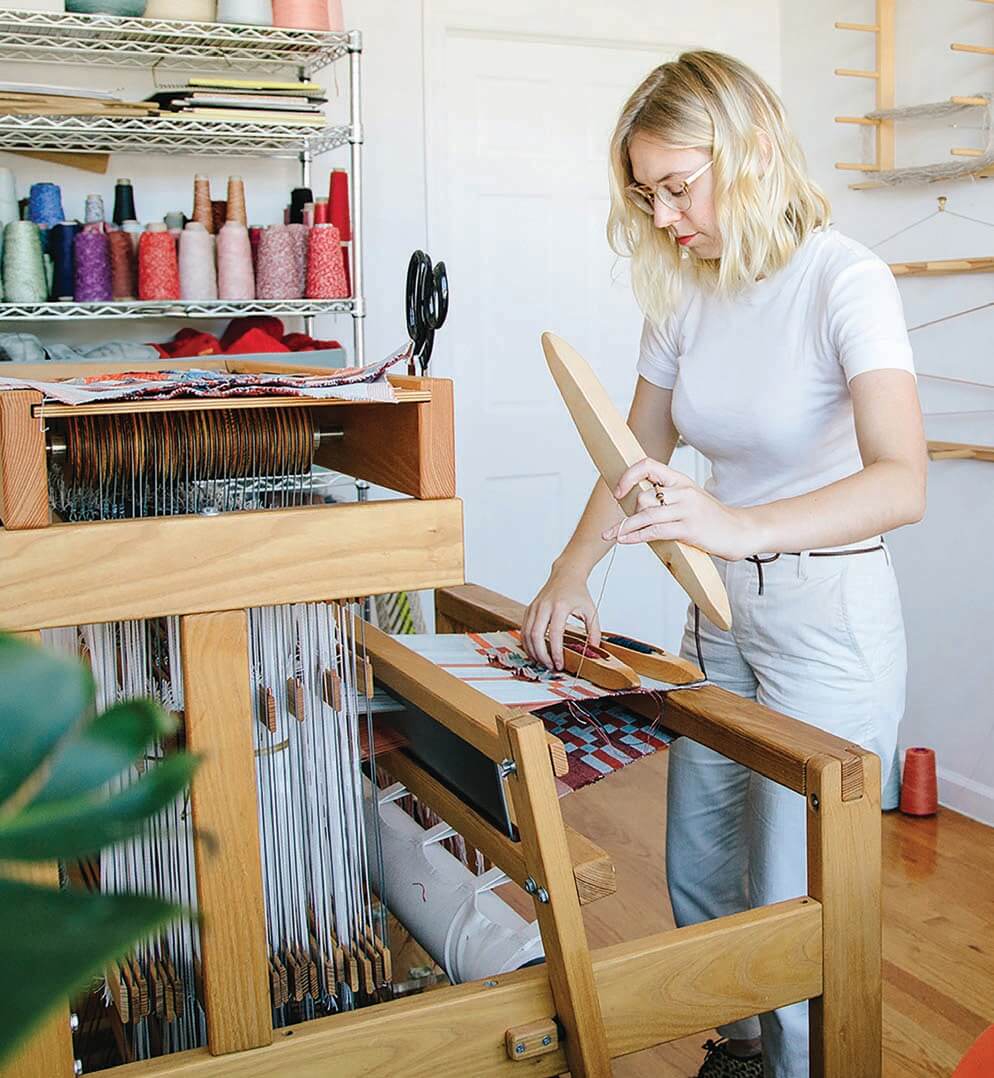
Bozeman-based artist Meghan Spielman says she finds inspiration in the boundaries imposed by the 32-harness computerized dobby loom she uses to create textiles. “There’s something exciting in the challenge of being forced to adjust and evolve an idea,” she says. | MORIAH ZIMAN
“The boundaries imposed by the loom fascinated me,” she says. “I could have an idea in my head, but when I sat down to work it out, I’d discover it wasn’t possible. There’s something exciting about being forced to adapt. The boundaries push me in directions I wouldn’t otherwise go, and I think the work is stronger because of that.”
Weaving itself occupies a similarly liminal space. For millennia, woven objects have served practical purposes — from clothing and blankets to baskets and ceremonial textiles — earning weaving a place among the traditional crafts. Yet textiles have also long functioned as vehicles for storytelling, cultural identity, spirituality, and artistic innovation. From medieval European tapestries to Indigenous, African, Asian, and Latin American textile traditions, weavers have used color, texture, and pattern to communicate ideas and emotions.
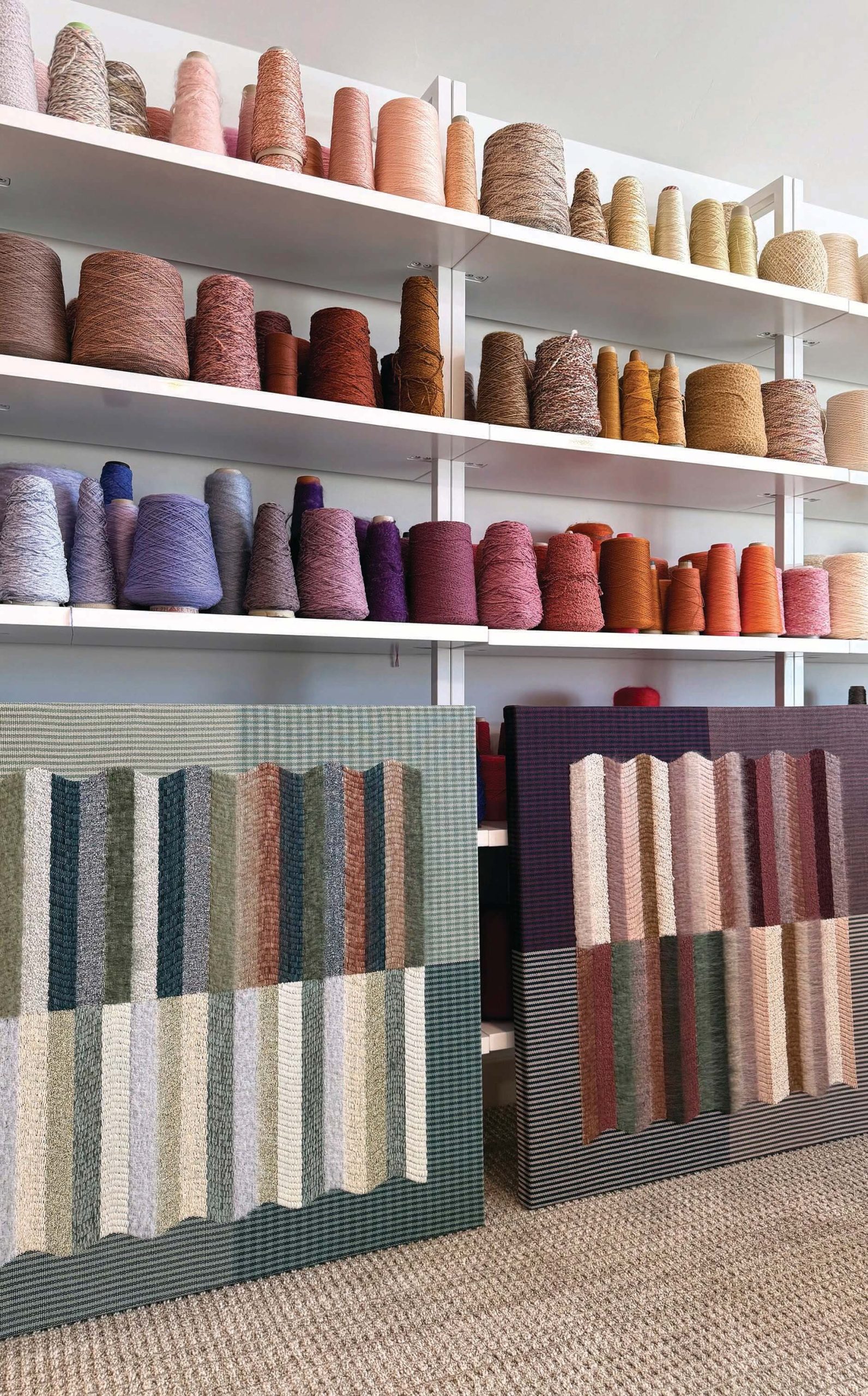
Andante III and VII are part of Spielman’s newest series, Andante, the title of which comes from the Italian musical term meaning “at a walking pace.” | COURTESY OF MEGHAN SPIELMAN
“I like that there isn’t a clear boundary between craft and fine art in textiles,” Spielman says. “I look at heirloom objects like quilts that were made to be functional but can transcend that function and become something that should be appreciated as artwork.”
Looking at Spielman’s work, there is little doubt where it falls on that spectrum. “She has turned a traditional craft into a contemporary art form,” says Alissa Kost, executive director of the Montana Art Gallery Directors Association (MAGDA). “Her work blew my mind the first time I saw it. I had never seen anything like it.”
Spielman’s ability to bridge those worlds caught MAGDA’s attention. The organization sponsored Windows and Doors, a traveling exhibition of 20 handwoven fiber and mixed-media works produced by Spielman and inspired by Eliza Calvert Hall’s 1912 A Book of Handwoven Coverlets. Since debuting at the Copper Village Museum in Anaconda in September 2024, the exhibition has traveled to museums and galleries across the region. Its final stop will be at the MonDak Heritage Center in Sidney from October through December.
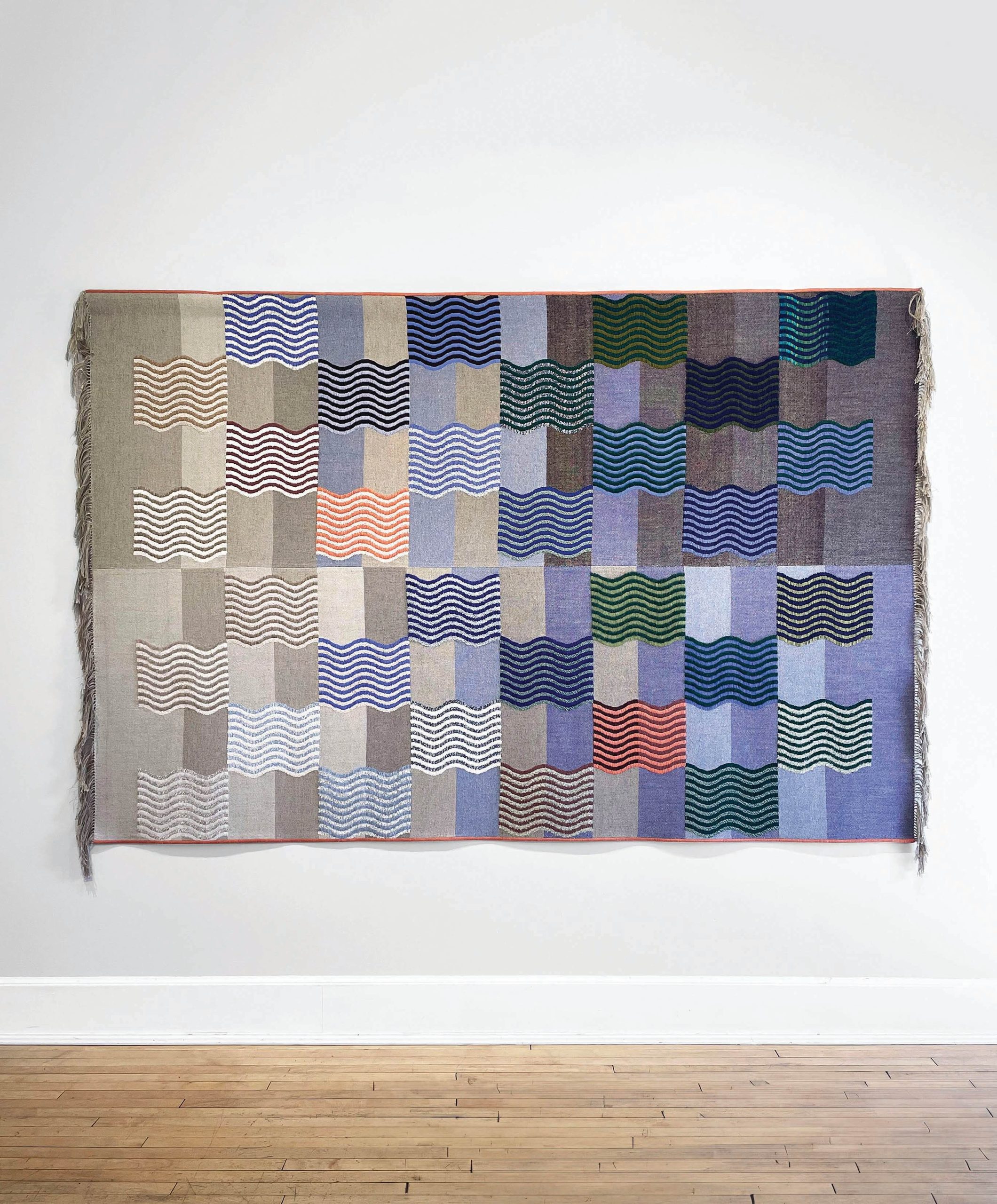
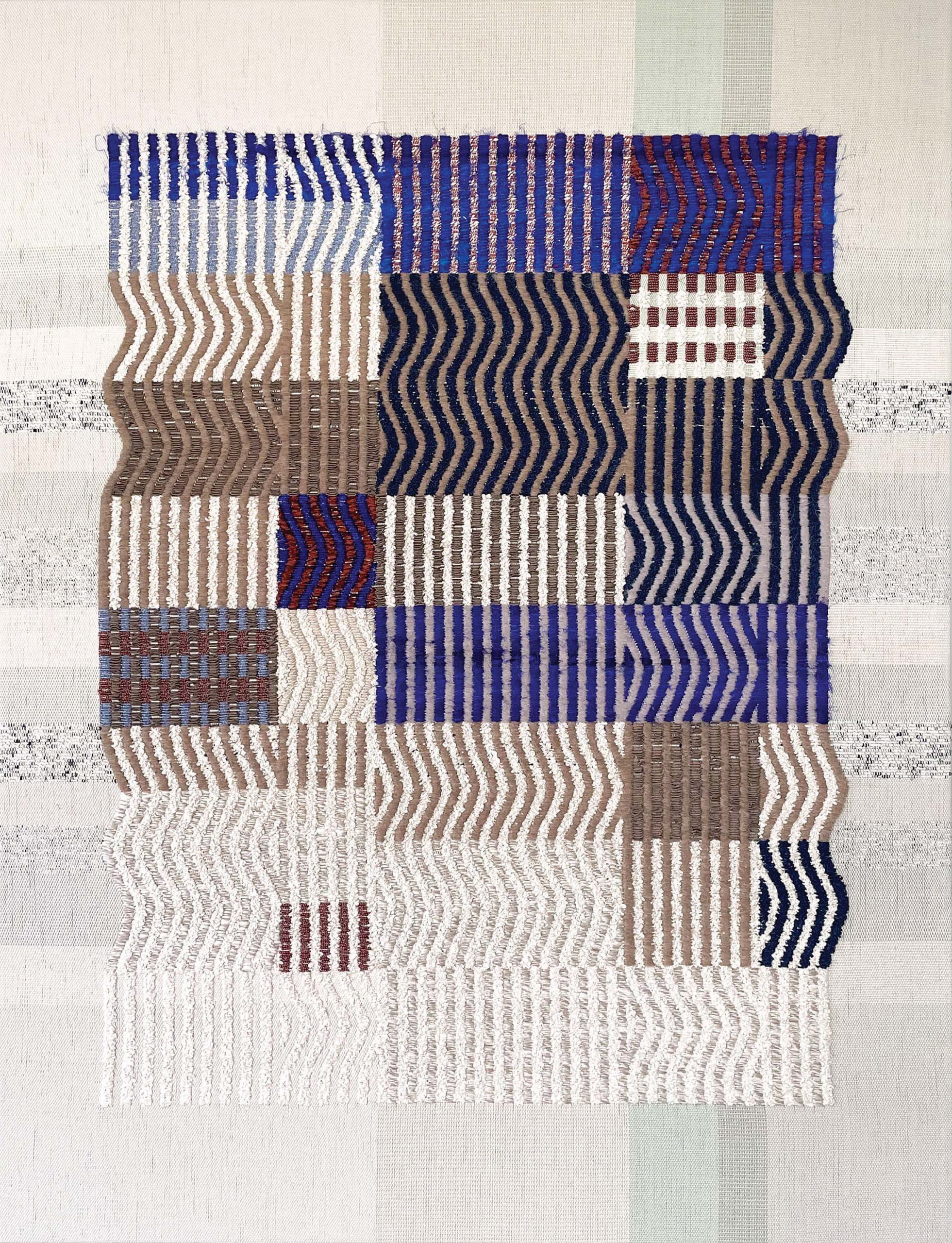
Kaleidoscope | LINEN, COTTON, SILK, CHENILLE, MOHAIR, WOOL | 72 X 108 X .5 INCHES
“Everywhere it has gone, people have loved it,” Kost says. “It is so accessible for any viewer. Based on traditional American coverlet designs, there’s a whole different audience seeing this contemporary show by a young gal who went to Parsons School of Design because she is connecting it to something they are familiar with.”
Spielman’s path to weaving was anything but direct. Despite her broad artistic upbringing, she initially gravitated toward fashion. She enrolled in Parsons School of Design’s highly competitive fashion design program in New York, only to discover that fabric interested her more than garments. “During design projects, I’d spend all my time manipulating the fabric,” she says.
Already a knitter, Spielman began creating her own textile swatches and became increasingly fascinated by the material itself. After graduating, she spent two years as a textile designer for Michael Kors, working with Italian mills and specialized luxury fabrics. “It was while I was there that I started seeing textiles as art,” she says.
That realization led her to London’s Royal College of Art, where she earned a master’s degree in woven textiles. Her master’s dissertation — titled “The Perception of Textiles as a Medium in Fine Art and the Influence of its Feminine Historical and Cultural Context” — examined the very questions that continue to animate her work.
“What I love about textiles is that they challenge the boundary between fine art and craft,” she says. “They ask the question, When is something defined as art?”
The Royal College also gave Spielman the technical foundation she needed as a weaver. Though she had begun teaching herself through instructional DVDs by weaving educator Peggy Osterkamp, she learned even more from her classmates. “Everyone else had undergraduate weaving degrees,” she says. “I could ask them how to do things.”
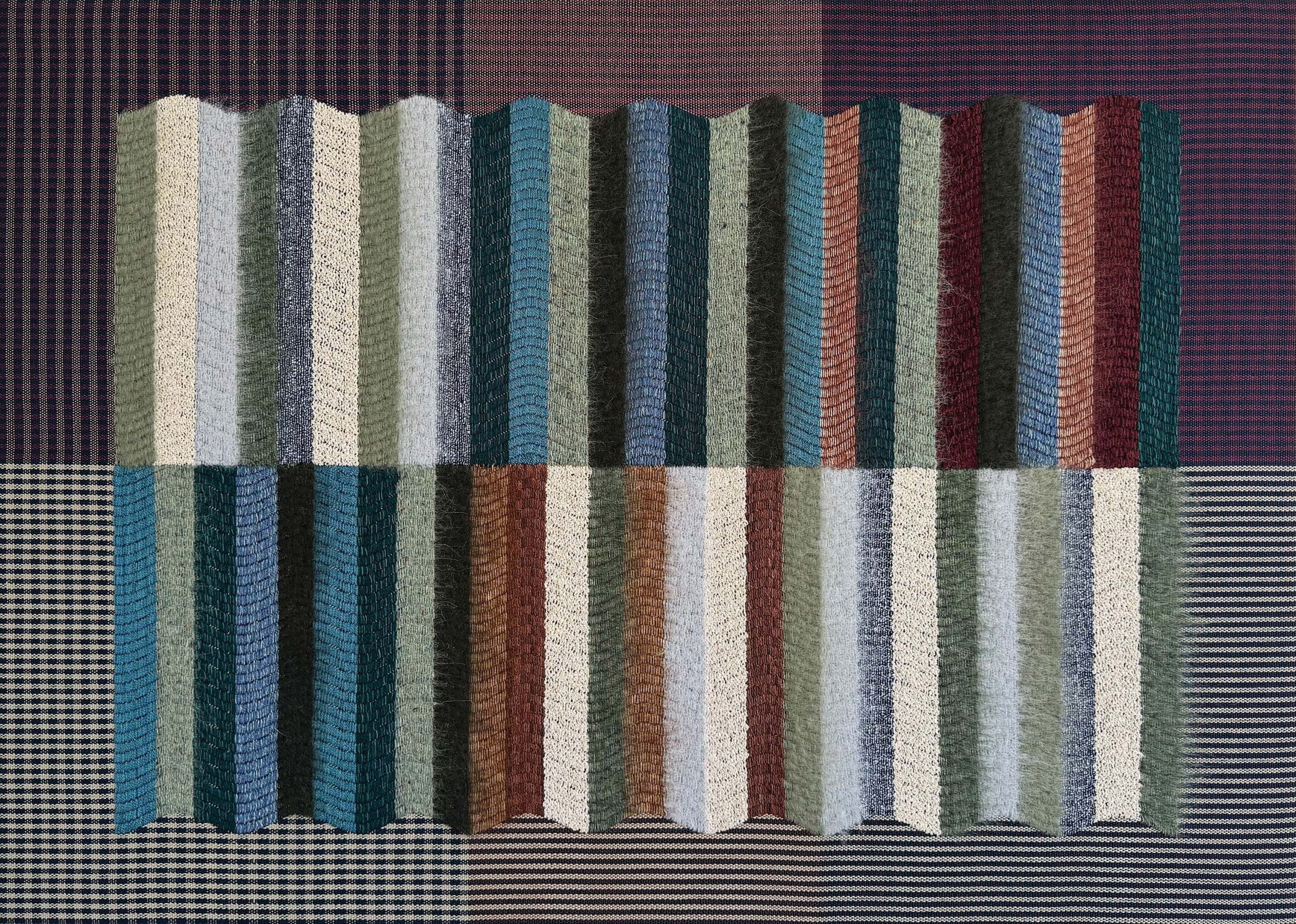
Andante VI | COTTON, SILK, MOHAIR, WOOL, CHENILLE | 30 X 42 X 1.5 INCHES
While the Royal College sharpened her weaving skills, her job after graduating profoundly shaped her artistic voice. For five years, Spielman worked as a colorist for interior textiles, developing dozens of colorways from a single fabric design. “My job was to look at one piece of fabric and come up with 20 to 40 different colorways,” she says. “It pushed me to think about color very intentionally.”
Today, color is often the starting point for her work. “I begin by wanting to discover a palette,” she says. “I start pulling yarns from my library and combining them to find interesting relationships.”
Here, another boundary enters the process. Unlike many textile artists, Spielman does not dye her own yarns. Instead, she works from a carefully assembled personal library of existing materials. If a particular shade isn’t available, she must search for it, combine fibers to approximate it, or adjust the palette altogether.
More often than not, she chooses adaptation, and, as with the structural limitations of weaving itself, material constraints often lead her somewhere unexpected. “I end up with color combinations I wouldn’t have come up with otherwise,” she says.
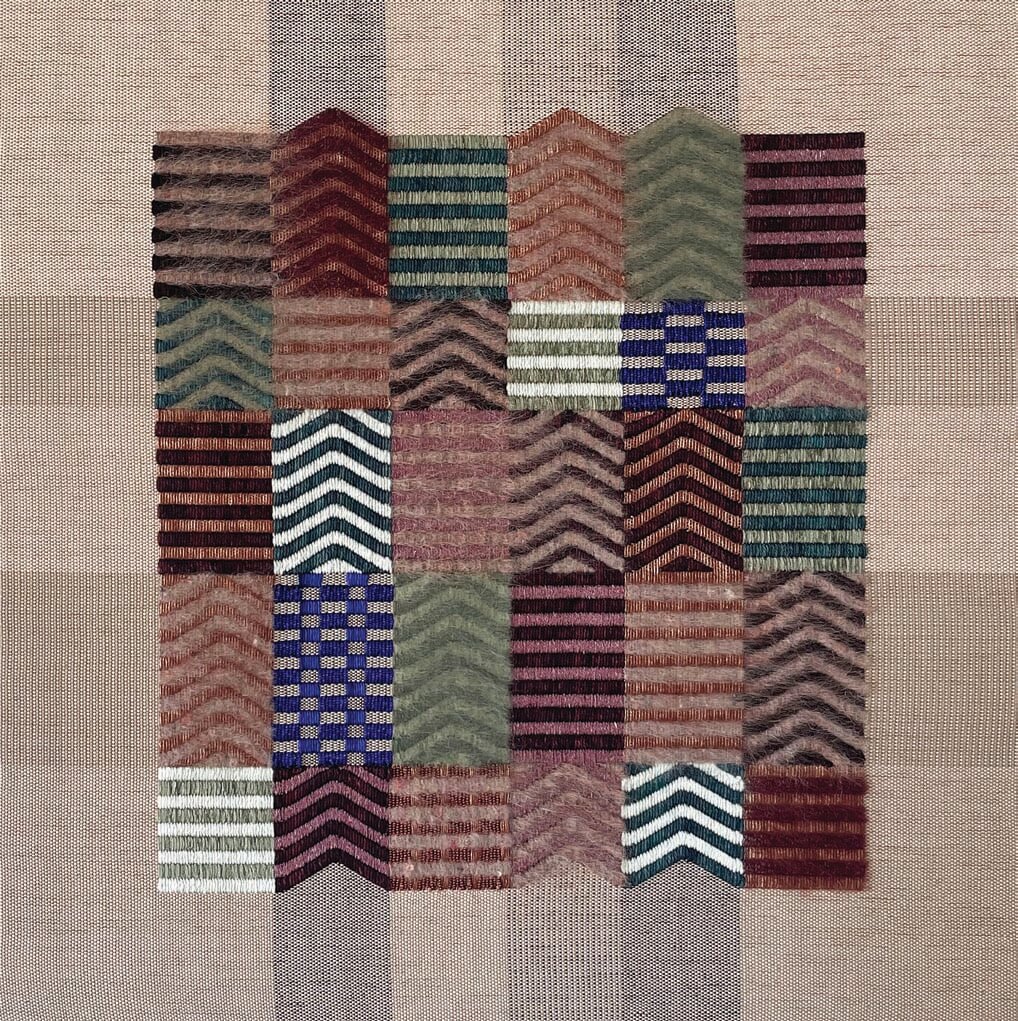
Parabola V | COTTON, SILK, MOHAIR, WOOL, CHENILLE, SEED BEADS | 24 X 24 X 1.5 INCHES
However a palette evolves, color has become one of the defining elements of Spielman’s work. With it, she deftly balances calm with moments of energetic accents. “Meghan’s work in color theory allows her to create these two-dimensional textiles that are compelling but also accessible,” Kost says. “Hers is a beautiful, beautiful niche form of creation that just blows me away.”
It is because of how deftly Spielman balances color, calm, and energy that several of the new homes at One&Only Moonlight Basin in Big Sky include her work in their art collections. “Her work makes people feel comfortable,” says Anna Hawkins-Saurer, director of Echo Arts in Bozeman, which represents Spielman and placed her work in the homes. In each dwelling, Spielman’s weavings are near the entry. “You walk in and immediately feel at home,” Hawkins-Saurer says. “She knows when to take a breath and let a piece be quiet, and the colors she uses are so warm and welcoming.”
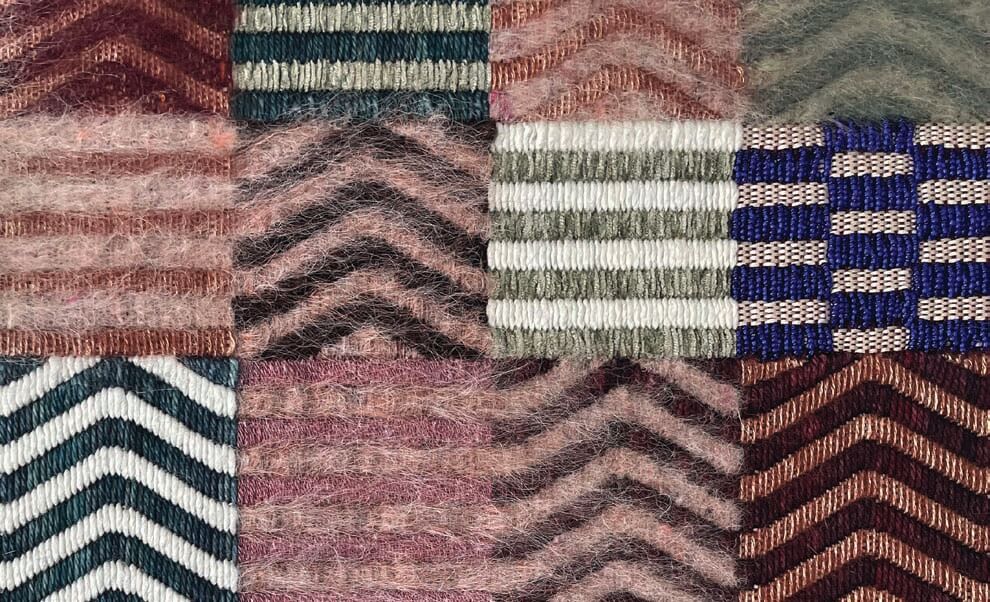
A 2011 exhibit at New York City’s American Folk Museum, Infinite Variety: Three Centuries of Red and White Quilts, helped show Spielman the possibility for endless variety even within traditional designs. The exhibit included 650 red-and-white quilts. “They were all geometric, but no two were the same,” says Spielman, whose newest series, Andante, explores movement within stripes. Above is a detail from her piece Parabola V.
Spielman’s newest series, Andante, continues her exploration of traditional textile forms, this time through stripes. By subtly shifting color relationships and introducing small accents, she creates movement within a pattern often associated with order and repetition. “In the Andante pieces, I’m trying to create movement within the stripes through color placement and the way accents can activate an otherwise rigid pattern,” she says.
The title comes from the Italian musical term meaning “at a walking pace” — a reminder of the deliberate rhythm weaving demands. For Spielman, it also reflects another boundary imposed by her medium: time. “There is always pressure to keep up with deadlines, commissions, work, life,” she says. “But I can only weave as fast as I can weave.”
In an era that rewards speed and constant production, she has come to appreciate a deliberate pace. “It’s a slow process,” she says. “But that slowness makes the work intentional. There’s beauty in making something thoughtfully.”
Based in Jackson, Wyoming, Dina Mishev is the editor-in-chief of Jackson Hole magazine as well as Call of the Wild, the annual magazine of the National Museum of Wildlife Art.
No Comments