


07 Apr Storied Farmhouse
Architecture | Miller Roodell Architects
Construction | Yellowstone Traditions
Interior Design | Peace Design
Katherine Reay loves a good story. As an accomplished author, she knows how to craft a riveting narrative. So it was no surprise that when she and her husband, Mason, decided to build a home in Montana, their journey would be a tale uniquely their own.
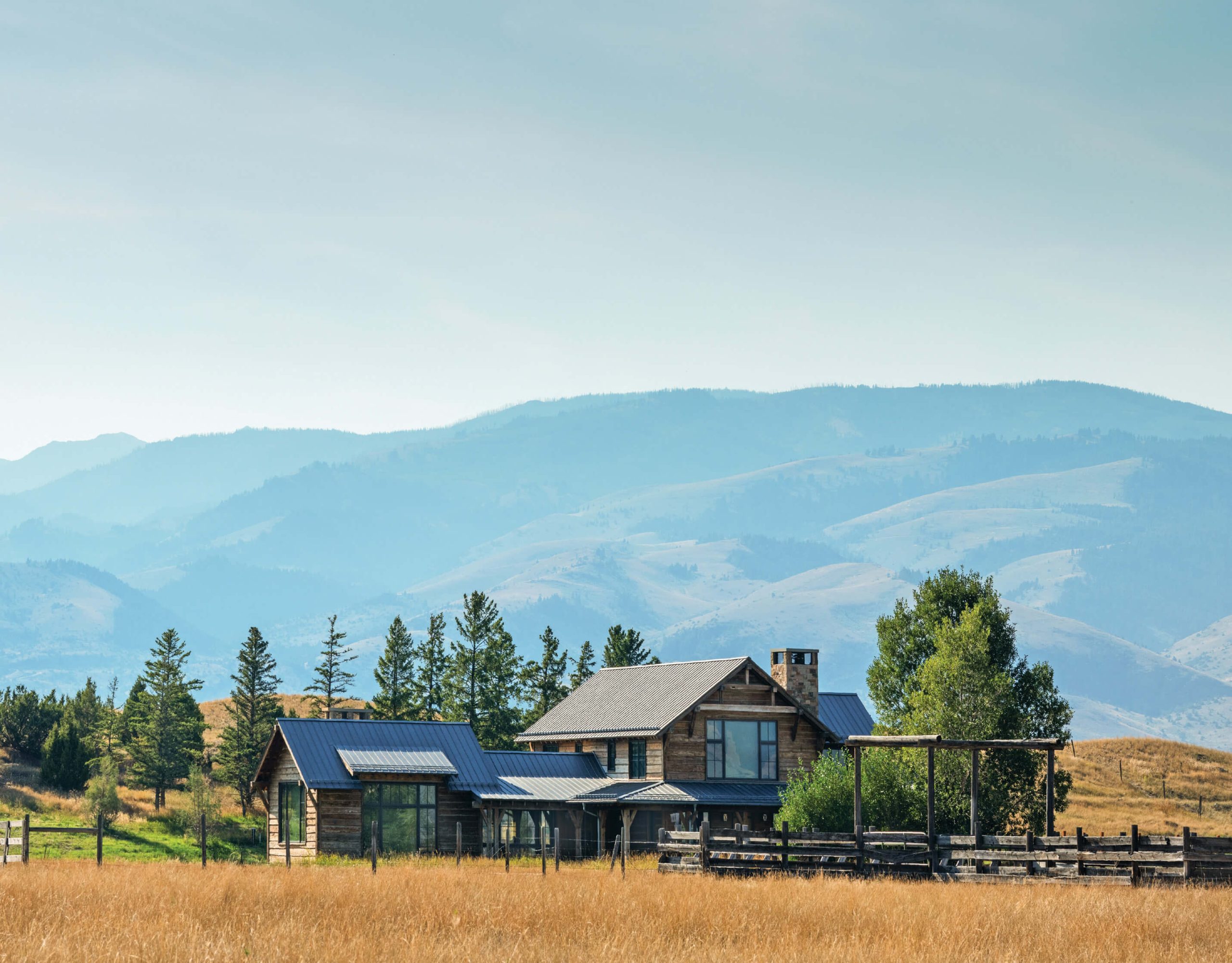
The architect ensured the home did not interrupt the skyline of the hills rising behind it. “Our job was to execute the excellent design,” says builder Ron Adams of Yellowstone Traditions.
The story commenced when the Reays began their search for property a decade ago. “Mason started working for a Montana-based company, and we fell in love with the state,” Katherine explains. “We had been looking for land throughout Montana. When we saw this land, we were convinced it would be our home, even though thick wildfire smoke kept us from seeing the mountains that surround the land.”
The southwestern Montana ranchland they purchased tells an account about the historic area. An old farmhouse, nestled into a hillside for protection on the open land, was flanked by the Absaroka Range to the east and the Gallatin Range to the west. Existing fencing and corrals remained in good shape on what was once a working ranch.
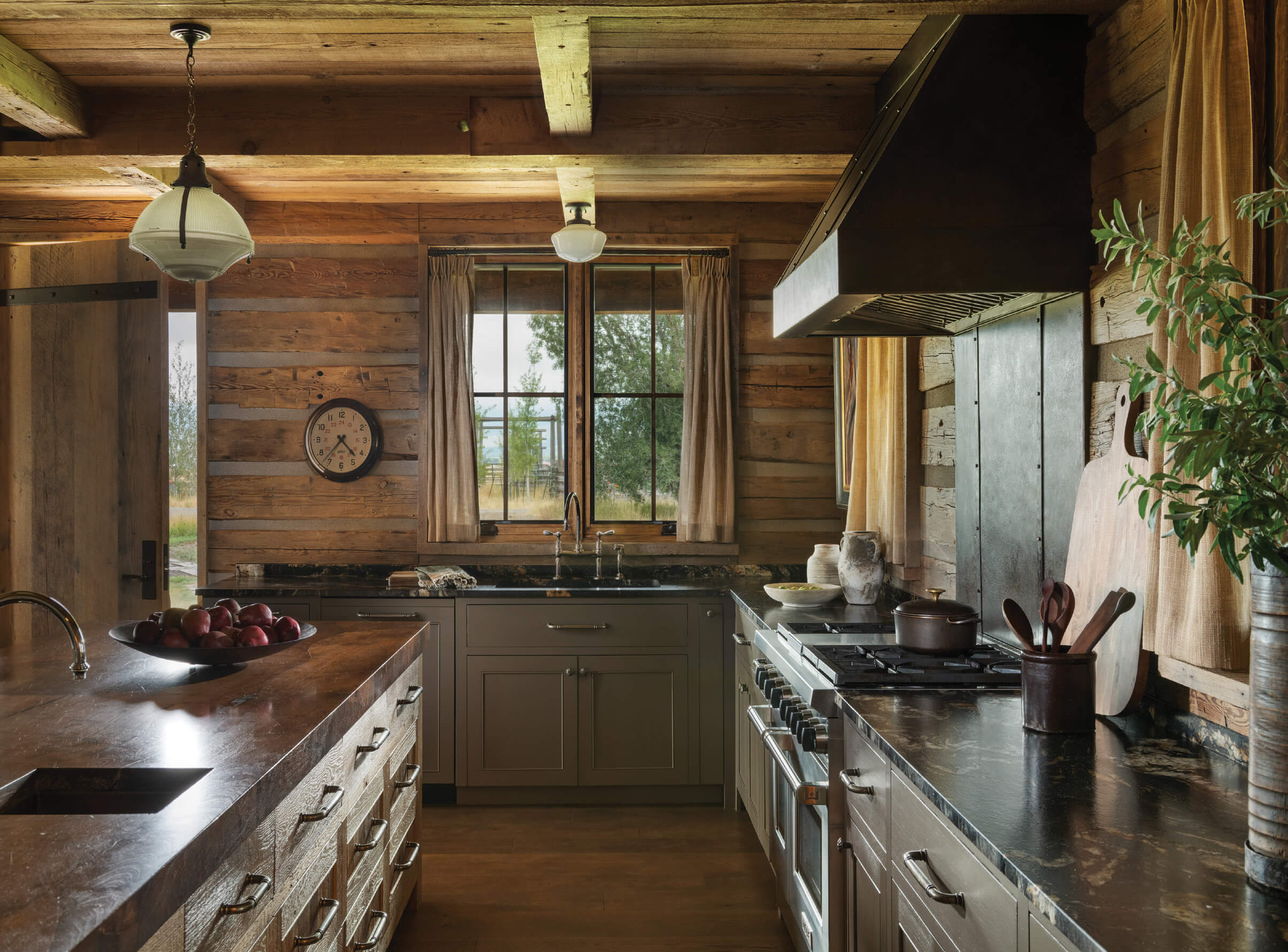
The look of an historic farmhouse kitchen is amplified by material choice: leathered Titanium granite countertops, a hammered-steel range hood and backsplash, and reclaimed white oak cabinetry.
While the couple had planned to renovate the existing home, three different architects told them the dilapidated structure was beyond repair. It had served as a ranching family’s home since 1905, and it was time for a plot twist: The Reays suddenly had a blank slate to design an optimal home for their family. The couple chose Miller Roodell Architects, builder Yellowstone Traditions, and interior designer Peace Design to create a rustic farmhouse that paid homage to the old home. The professionals were a strong trifecta, having designed many homes together over the last three decades.
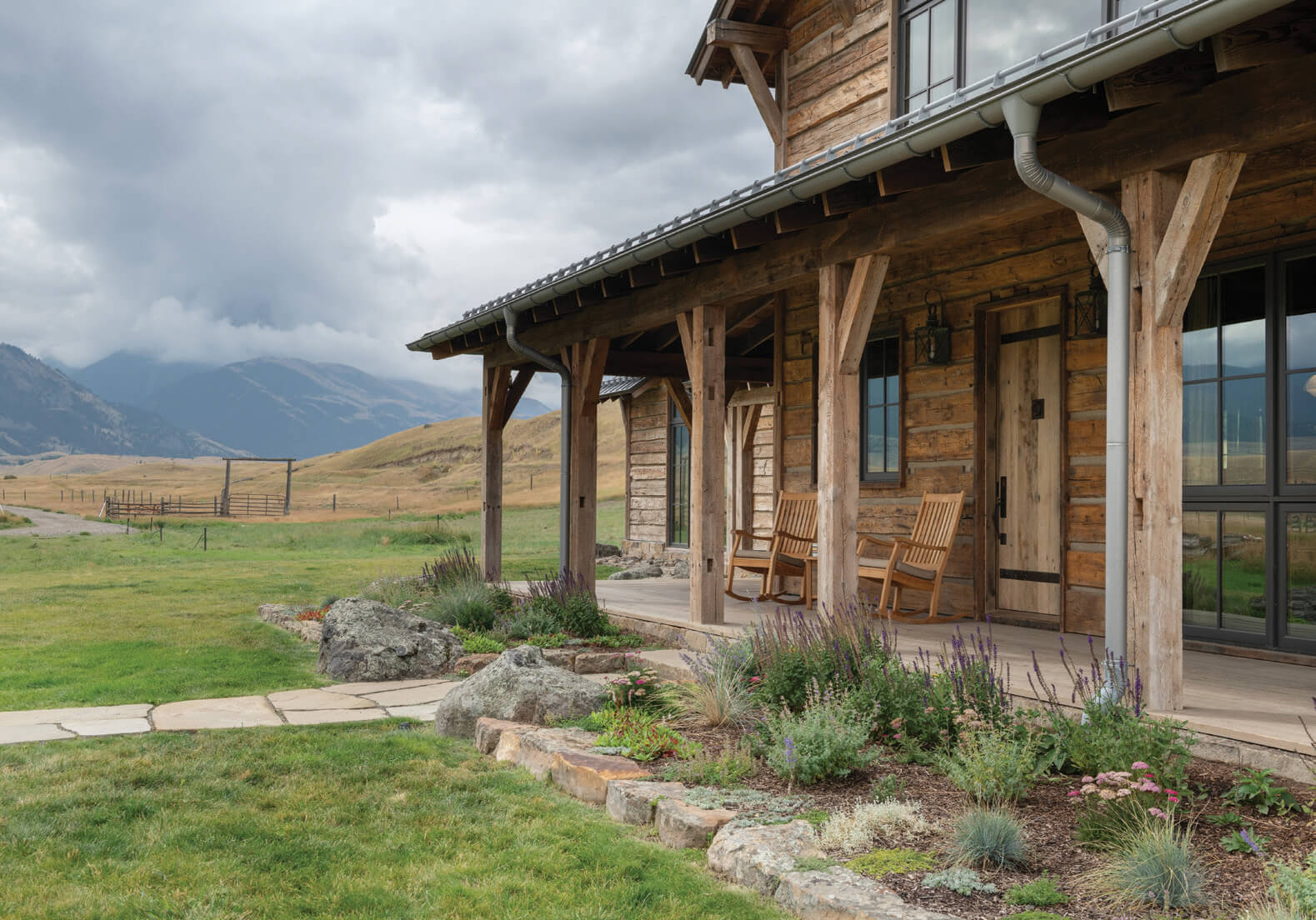
A wraparound front porch made of reclaimed timbers is located directly below the upstairs primary suite, both of which provide relaxing views of the Absaroka Range.
Paradise Valley is a river valley along the Yellowstone River and close to Yellowstone National Park’s northern entrance. The architect designed the new farmhouse in proper perspective on this enchanted landscape. “The homeowners wanted to keep an appropriate scale and massing of the new home to fit the land,” says principal architect Joe Roodell. “Even though it was going to be two levels, it was important we didn’t break the skyline of the hill behind the home.”
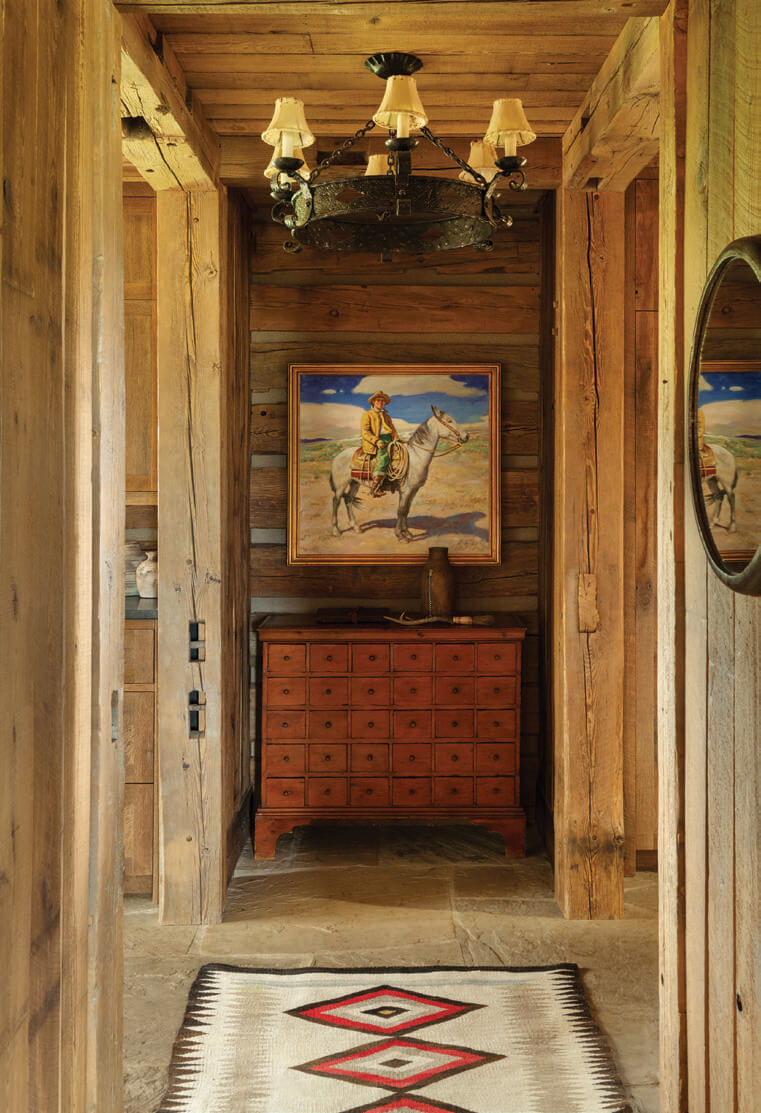
Homeowner Katherine Reay’s whimsically bold style is captured in her choice of artwork throughout the home.
Positioning the home carefully on the land and specifying a native, rugged materials palette enhanced the bygone feel. “The new home is close to the original home’s location, using the berm as a wind protector,” says Katherine. “They knew what they were doing when they first positioned it.”
“The exterior is an evolutionary story; the architect designed a farmhouse that looks like it has been added onto over time, with a portion that looks like a chinked log cabin,” she continues. A pioneer porch wraps the home, with rocking chairs that exude the feel of a comfortable place where ranchers could relax after a long day of working cattle.
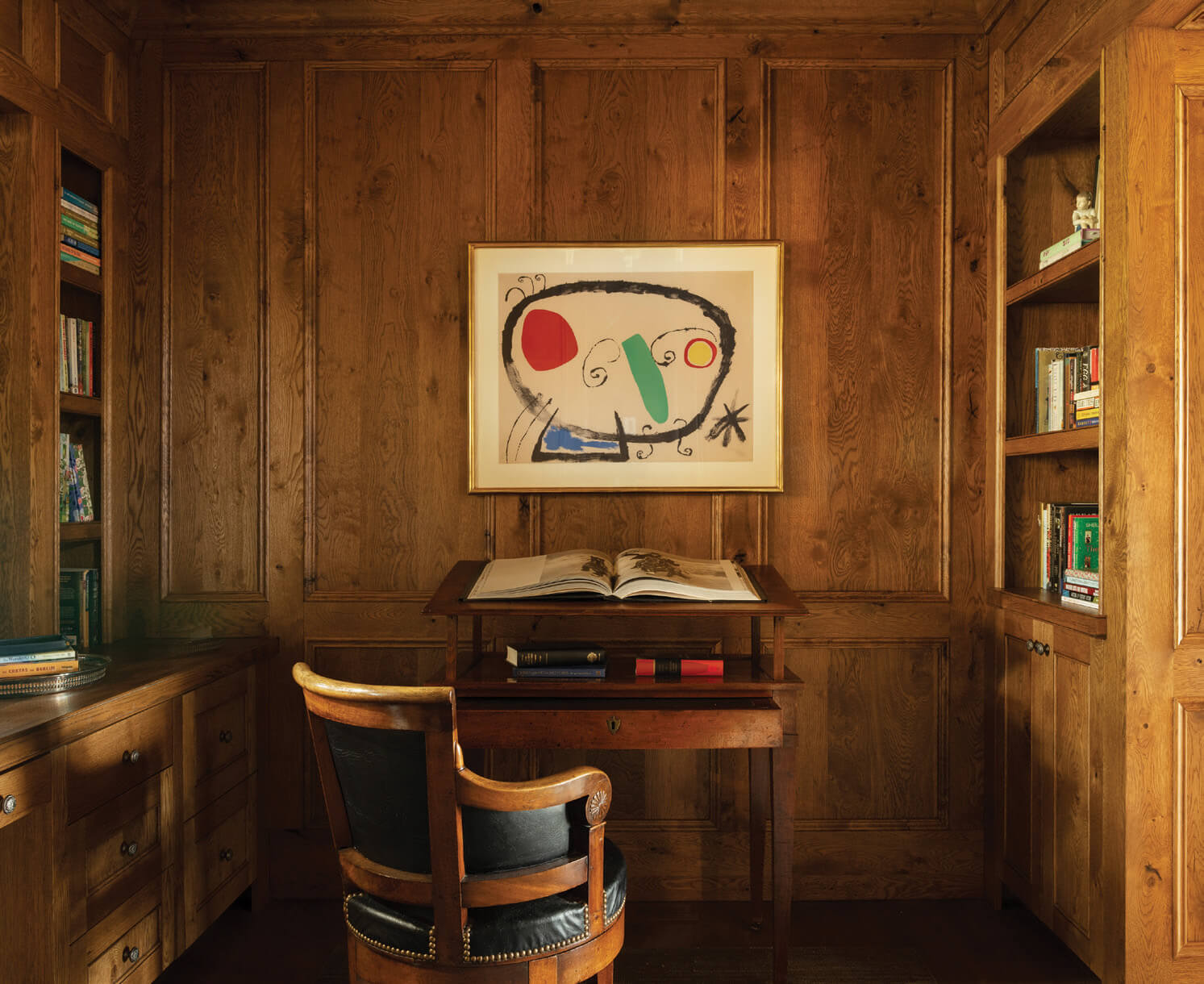
Reay’s office is her special space where she writes all of her novels.
“This home took on its historic farmhouse character with the use of reclaimed wood, much of which is white oak, both inside and outside,” says Roodell. “The porch timbers were hand-hewn 100 years ago, and the Montana moss rock on the home’s four chimneys was harvested from Montana ranches and also incorporated on the lower portion of the home to mimic an old foundation. Nestling the home into the existing hillside allowed us to retain the old-growth conifer tree cluster, which once acted as a windbreak for the old farmhouse.”
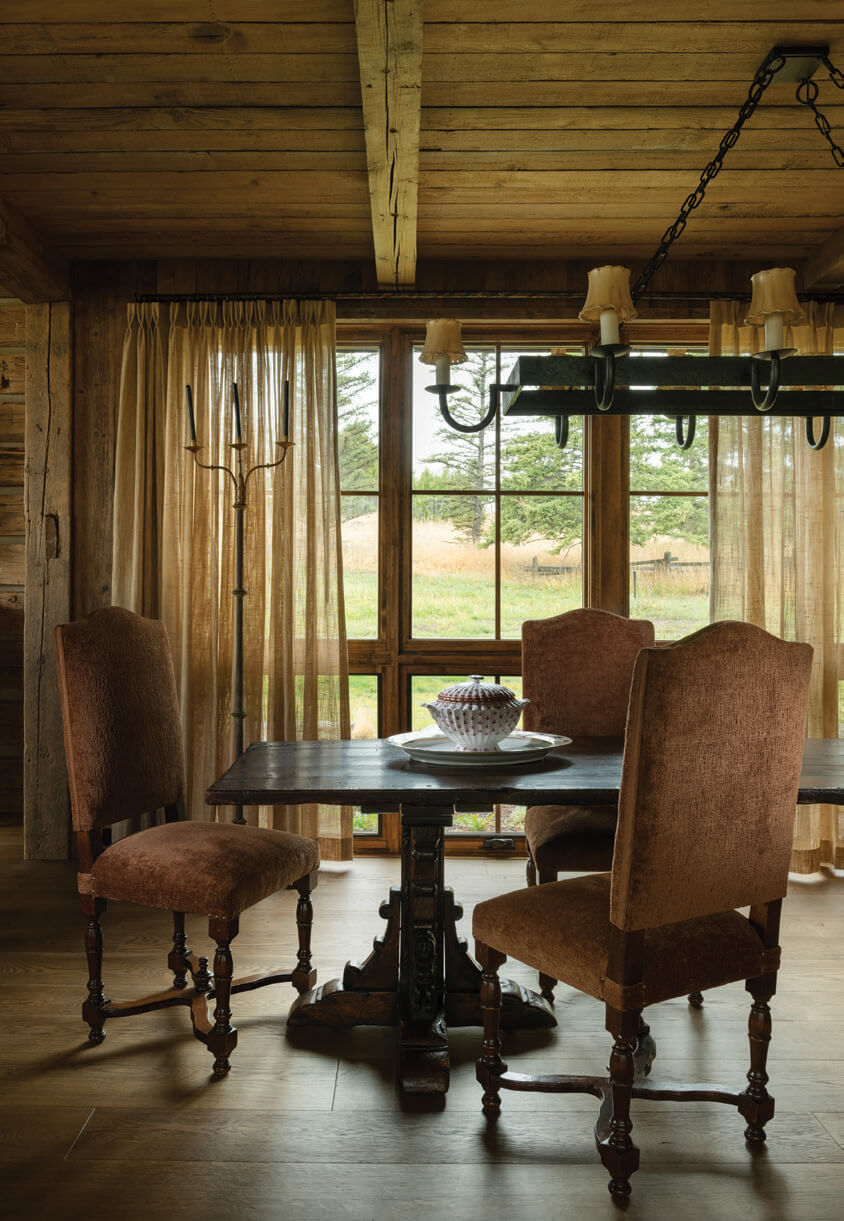
The designer repeated a luxuriously rustic feeling in the dining room, with material textures that stand up to the architecture and rich colors that don’t compete with the views.
The Reays lease the land to a local rancher, so the property continues its heritage use. “We love seeing the cows here in the summertime,” Katherine says. “They break into the fence occasionally around the house, but the dogs have learned not to chase them.”
Inside, the homeowners requested intimate, cozy spaces that feel at home, whether it’s just the two of them or a large crowd that includes their three adult children and extended family members. “The Reays wanted a home large enough for visiting family but not so big that it loses its homey feel,” says project manager Chris Gilbreaith of Yellowstone Traditions. “The spaces are thought-out. There are no tall ceilings or a big lodge feel, but instead an intimate environment with good scale.”
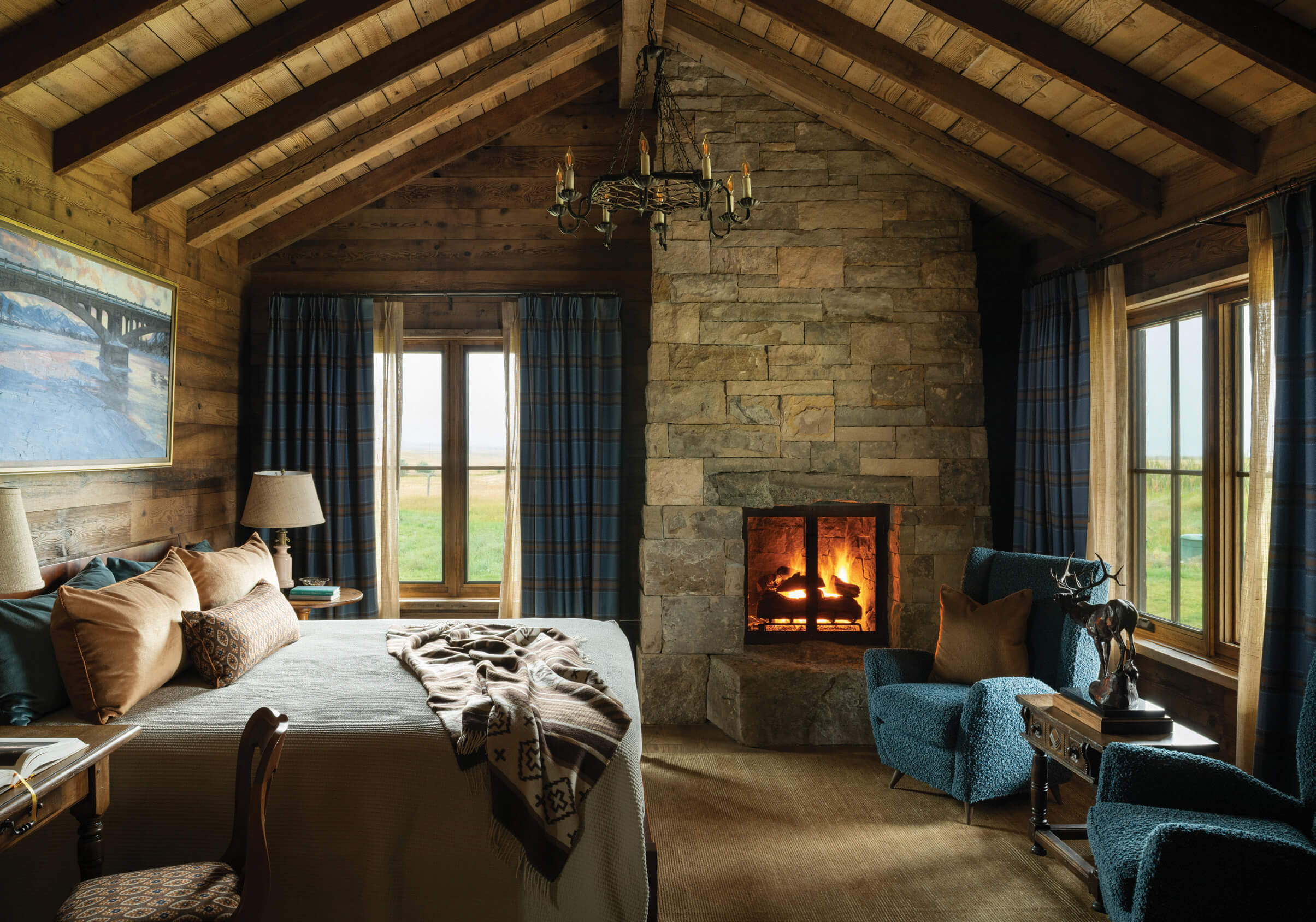
The guest suite is well-appointed with a cozy fireplace and refined details perfect for extended stays.
The home has no formal foyer, as requested by the owner. “We didn’t want the emotional barrier of a front hall,” Katherine says. “Life out here is so intimate, so if someone is invited, we want them to step right into the home, directly into the kitchen and sitting area.”
The sitting area seems to be at the top of the entire team’s darling list; Roodell calls it one of the main “moments” of the home.
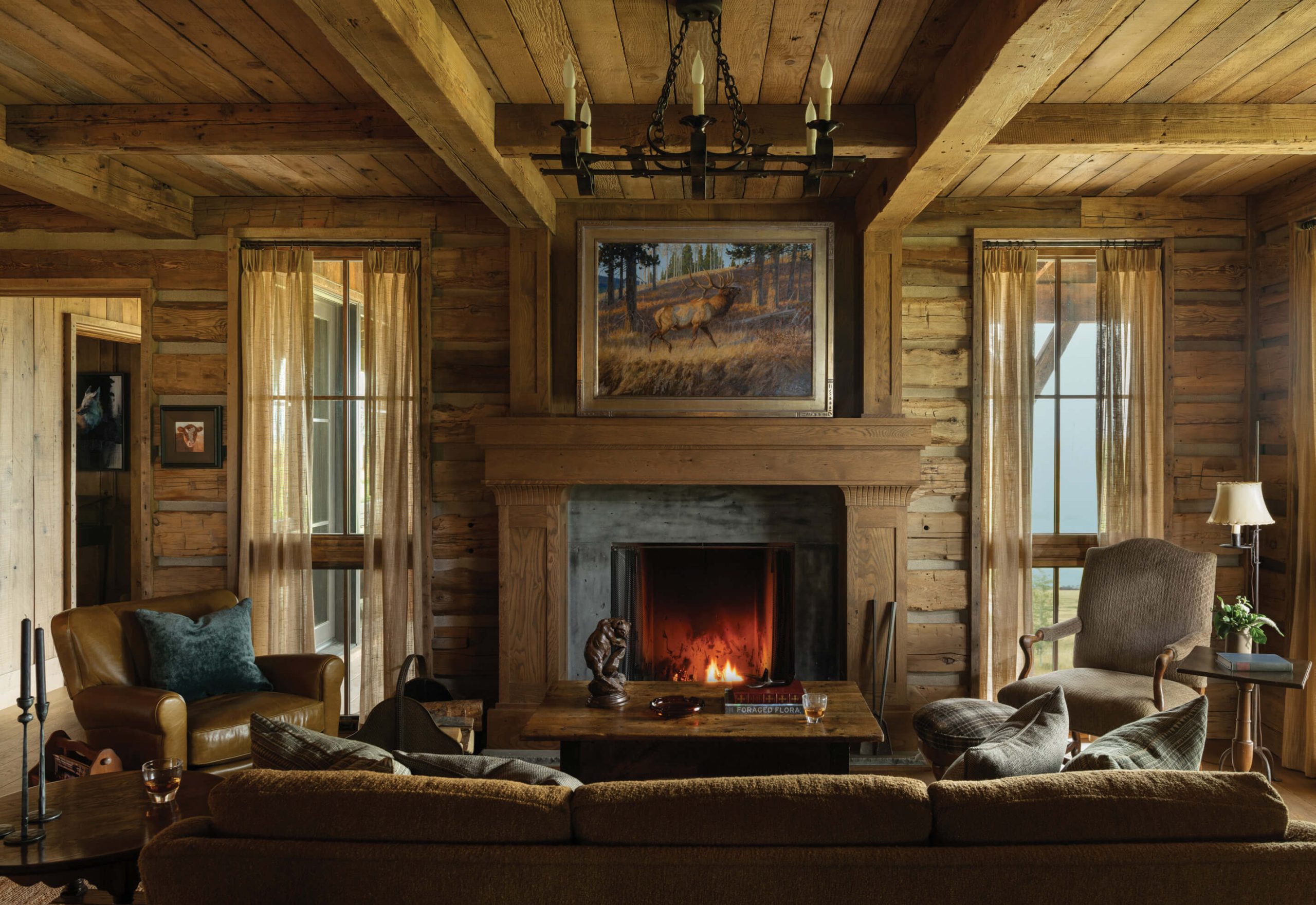
A sense of familiarity envelops visitors who are welcomed directly into the sitting room and adjacent kitchen. A 19th-century French iron chandelier keeps with the feel of the historically leaning interiors.
“Great rooms are always great, but the intimacy of the sitting room next to the kitchen is my favorite,” he says. The room is a place where family can settle in by the wood-burning fireplace in a snug space that is seamlessly open to the kitchen. It has become a favorite part of the family’s morning and evening routines. The owners specifically requested comfort, and they got it in the sitting room with timbered ceilings, chinked walls, and the crackle of the fireplace over the hum of close conversation while relaxing on leather and textural upholstered furniture.
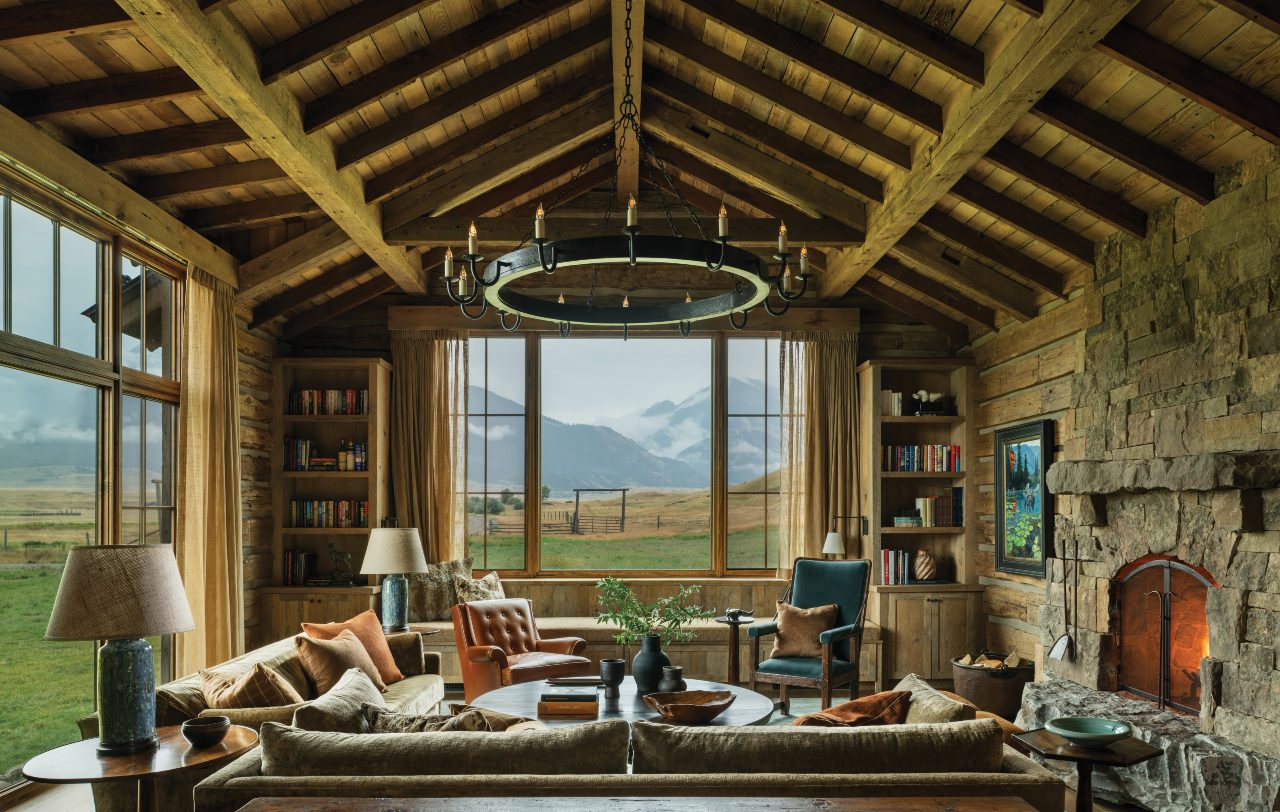
The same fir-beamed ceiling, reclaimed wooden trim, and wood-burning stone fireplace as in the sitting area create warmth in the great room. This larger space is at once intimate and expansive, as the floor-to-ceiling windows bring Emigrant Peak views. The ever-changing landscape outside was the impetus for the color palette shaped by the homeowner and designer William Peace of Peace Design.
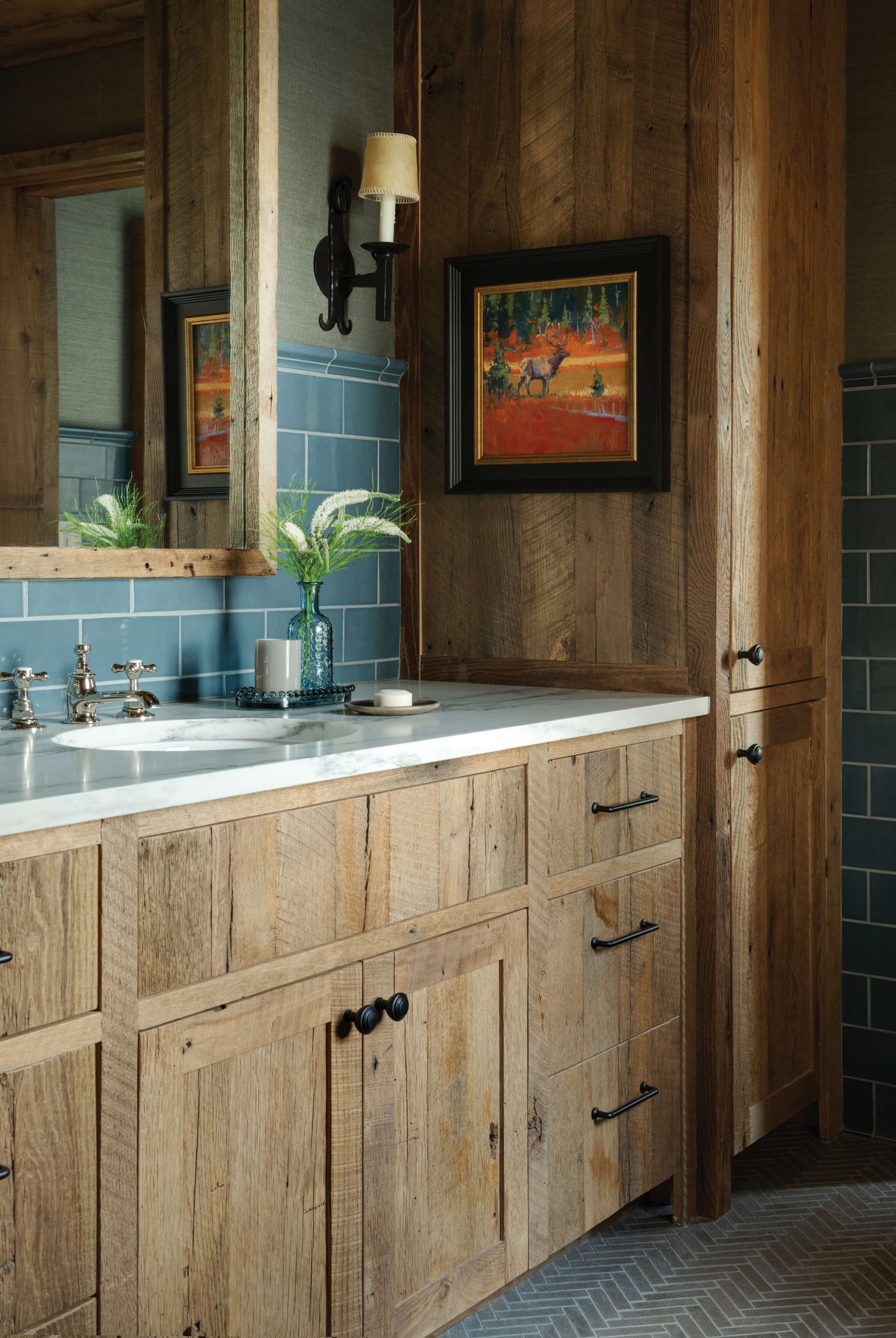
A guest bath on the upper level features reclaimed cabinetry designed by Peace and built by Yellowstone Traditions’ craftsmen.
“We used rich, but not bright, colors that don’t compete with the views,” says Peace. “A relatively neutral background supports whiskey-colored leather chairs and blue upholstery that picks up the blue sky. The furnishings have textures that stand up to the rugged architecture — suede, mohair, bouclé, wool, and crushed velvet — all of which age beautifully.”
One of Katherine’s favorite places is her office — a room that is small but well-appointed. “This 10-by-13-foot room is the perfect little space to work,” she says. “It is the only place that I write; it feels like the heart of the home, where I can read, dream, and think.”
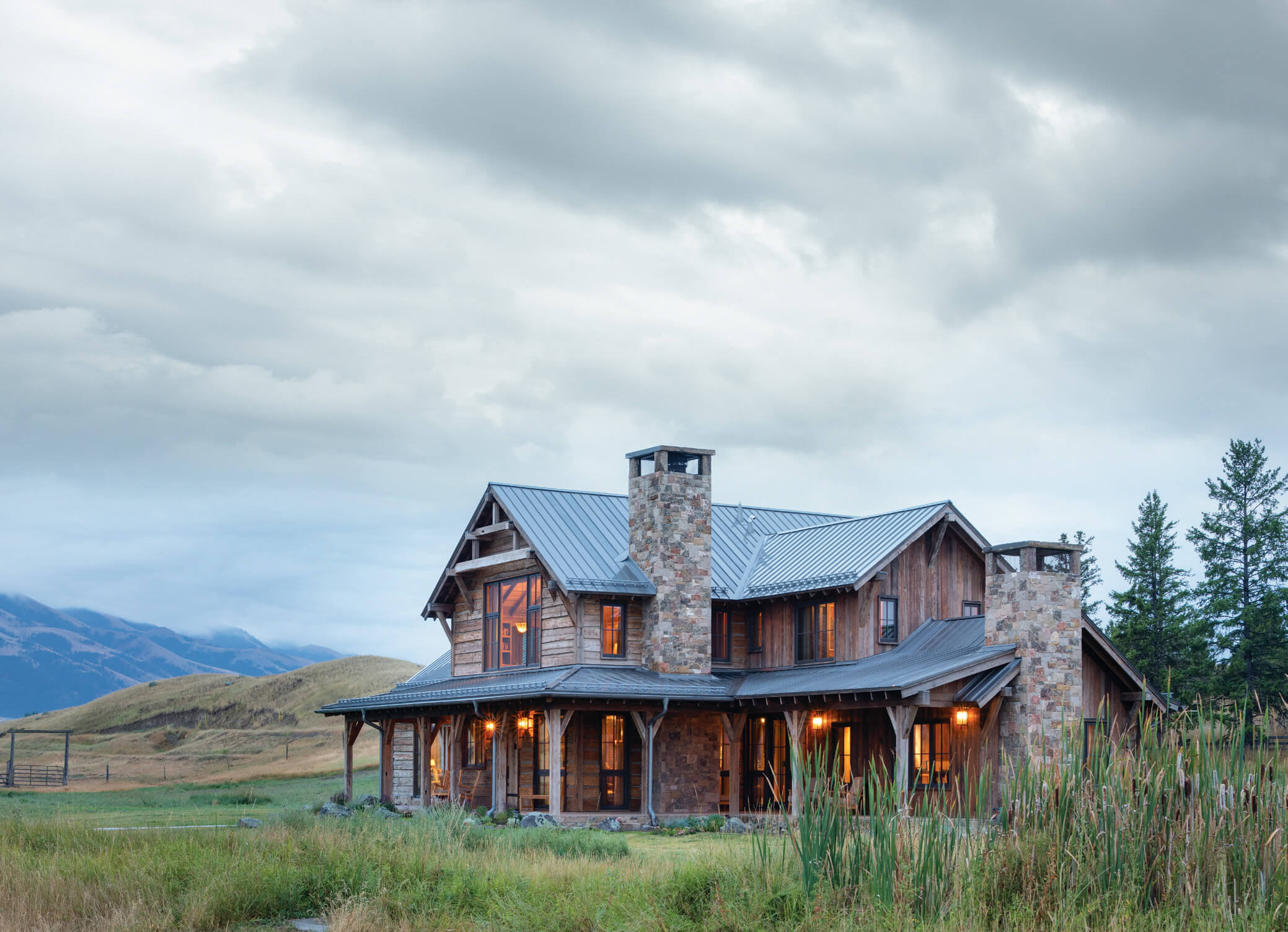
The farmhouse is in the heart of Paradise Valley, which is also home to elk, bald eagles, and grizzly bears.
Stone fireplaces in the upstairs primary suite and downstairs guest suite continue the comforting ambience. Tri-directional views from the primary bedroom make it feel like a tower, according to Roodell. While Peace brought in a new custom headboard and bedding, he relied on an antique bench, chest, and chair to provide a storied look. He designed the reclaimed oak cabinetry throughout the home, including in the primary bathroom, which was fabricated in-house by Yellowstone Traditions’ craftsmen. “We designed the guest suite a little larger and more refined than the upstairs rooms,” Katherine says. “We wanted a place for our parents now and maybe ourselves later if we need it.”
Katherine worked with the designer to create a bedroom for each of her adult children — a surprise reflecting their individual personalities.
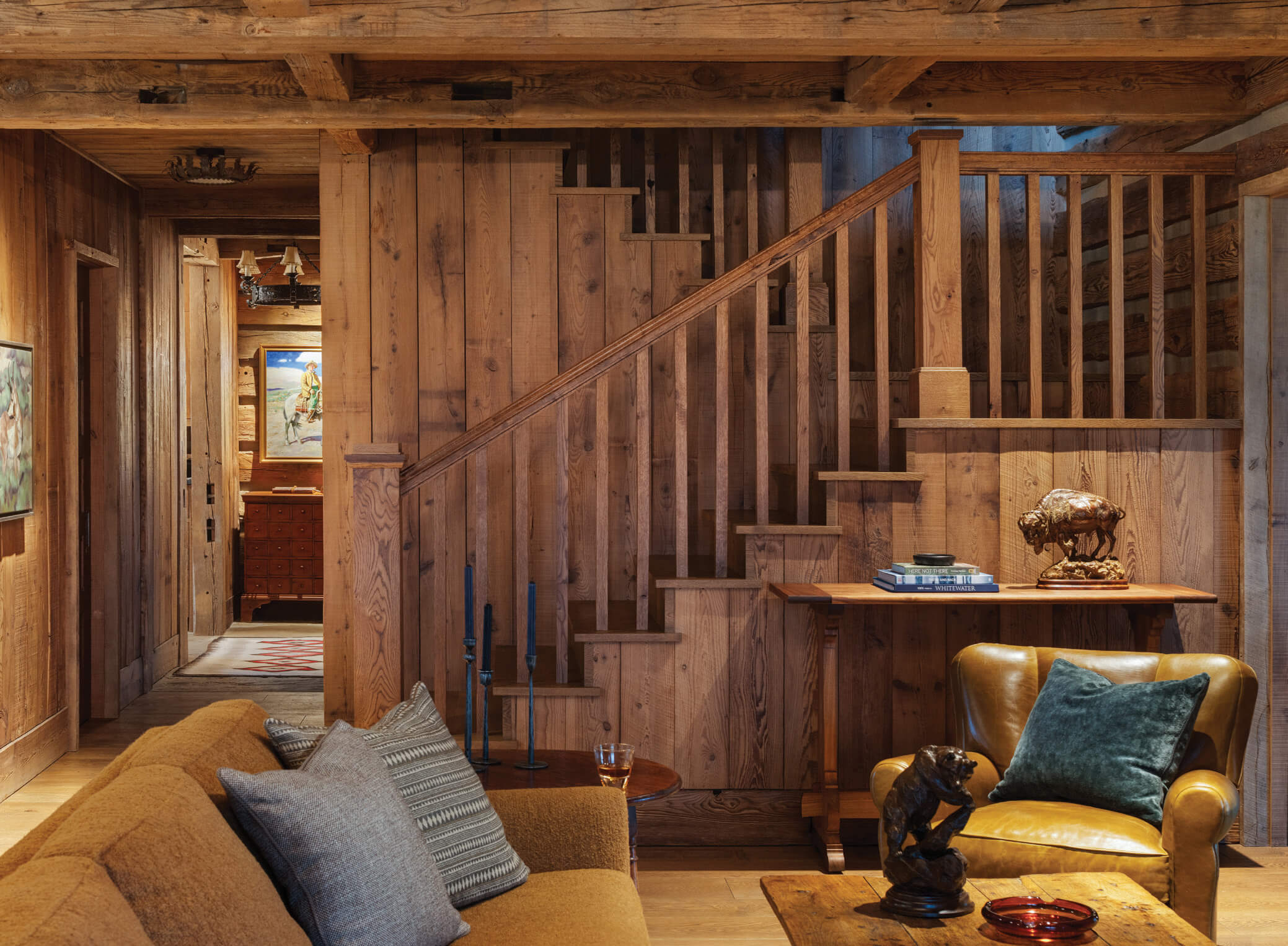
The intimate sitting room is at the top of everyone’s list of favorite places in the home.
The homeowner and designer also collaborated on an art program that brought in moments of fun throughout the home. “I am cognizant of the fact that we are not native Montanans,” says Katherine. “We were not trying to make it seem like we are. Instead, I wanted everyone to know not to get too serious. The whimsy and boldness of the artwork is my style.” She points to a lighted antique French carnival sign that hangs in the coffee nook as the art contribution that best reflects her personality and brings authenticity to the space. Peace balanced the capricious art by hanging it over an Italian credenza and pulling up two Italian leather chairs for the couple’s morning coffee routine.
The Reays’ story has a happy ending. They fell so in love with their new homestead that they sold their Chicago residence to live in Montana full-time. They see this land as a legacy property. “With three adult kids, I am fully aware that they may not want to be tucked under our roof,” Katherine says. “We are willing to build more homes; we have the space for each of them to carve out something of their own if they wish.”
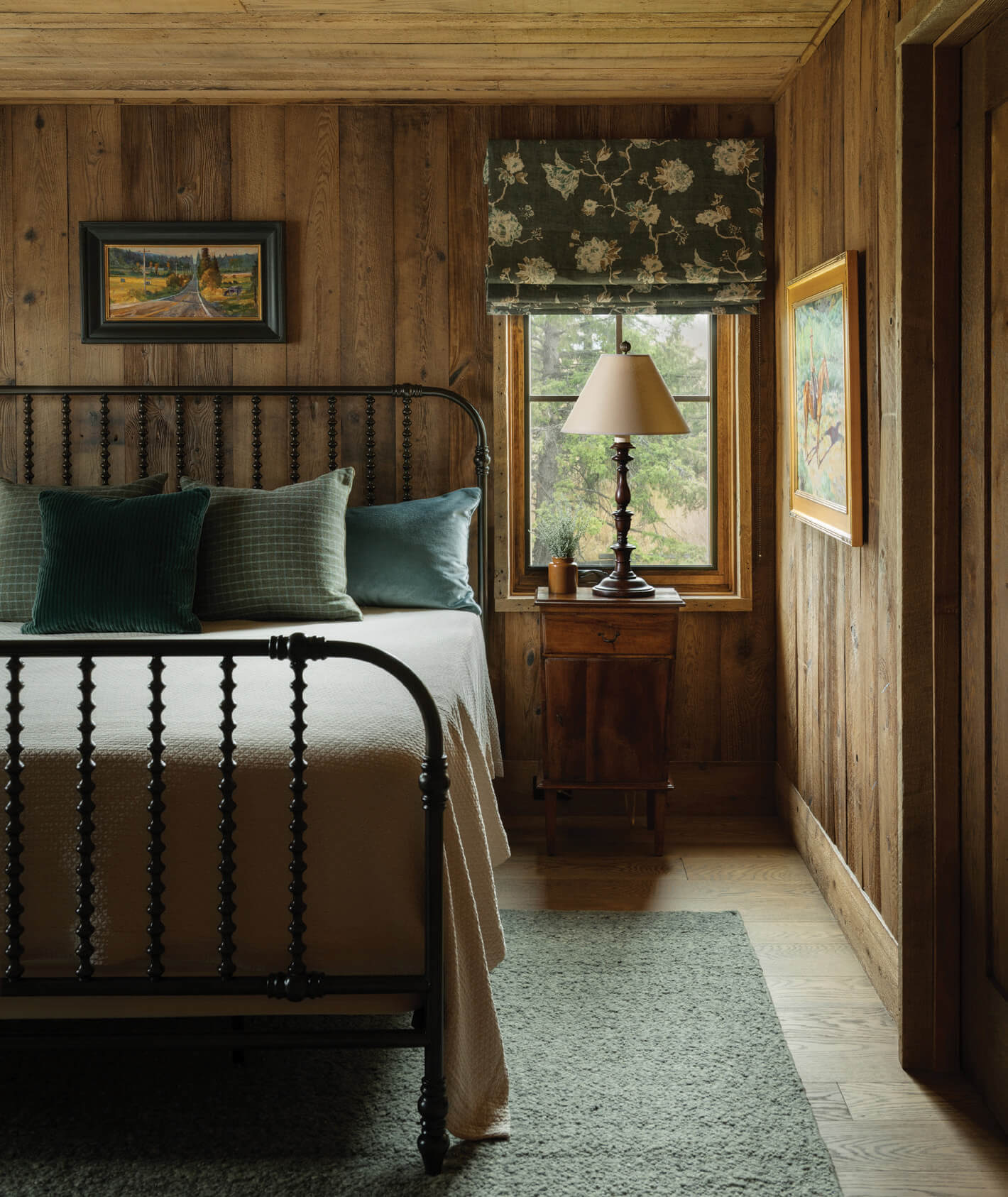
An upstairs guest bedroom was designed with one of the Reays’ adult children in mind.
The Reays have been in their home for about two years, but they first lived in the two-bedroom “barn,” which was built for the couple as they took their time designing the main home. “Building the barn first worked in our favor,” Katherine says. “The main home’s design changed based on how we live in Montana. We learned what we love about the land and how we wanted that incorporated into our home.”
Peace reiterates how the scale of the home makes it very livable. “You feel so comfortable when you walk in the door,” he says. “The home feels magnetic and soothing.”
Dana W. Todd is a professional writer specializing in interior design, real estate, luxury homebuilding, landscape design, architecture, and fine art.
Whitney Kamman is an architectural photographer based out of Bozeman. Her love for architecture came naturally growing up with an architect father and interior designer mother. Kamman’s work has appeared in The Wall Street Journal, Architectural Digest, Robb Report, and Mountain Living, among others.
No Comments