


09 Apr Rooted Upward
Architecture | Centre Sky Architecture
Construction | Teton Heritage Builders
Interior Design | The Varda Group
Specialty Wood Products | Montana Reclaimed Lumber Co.
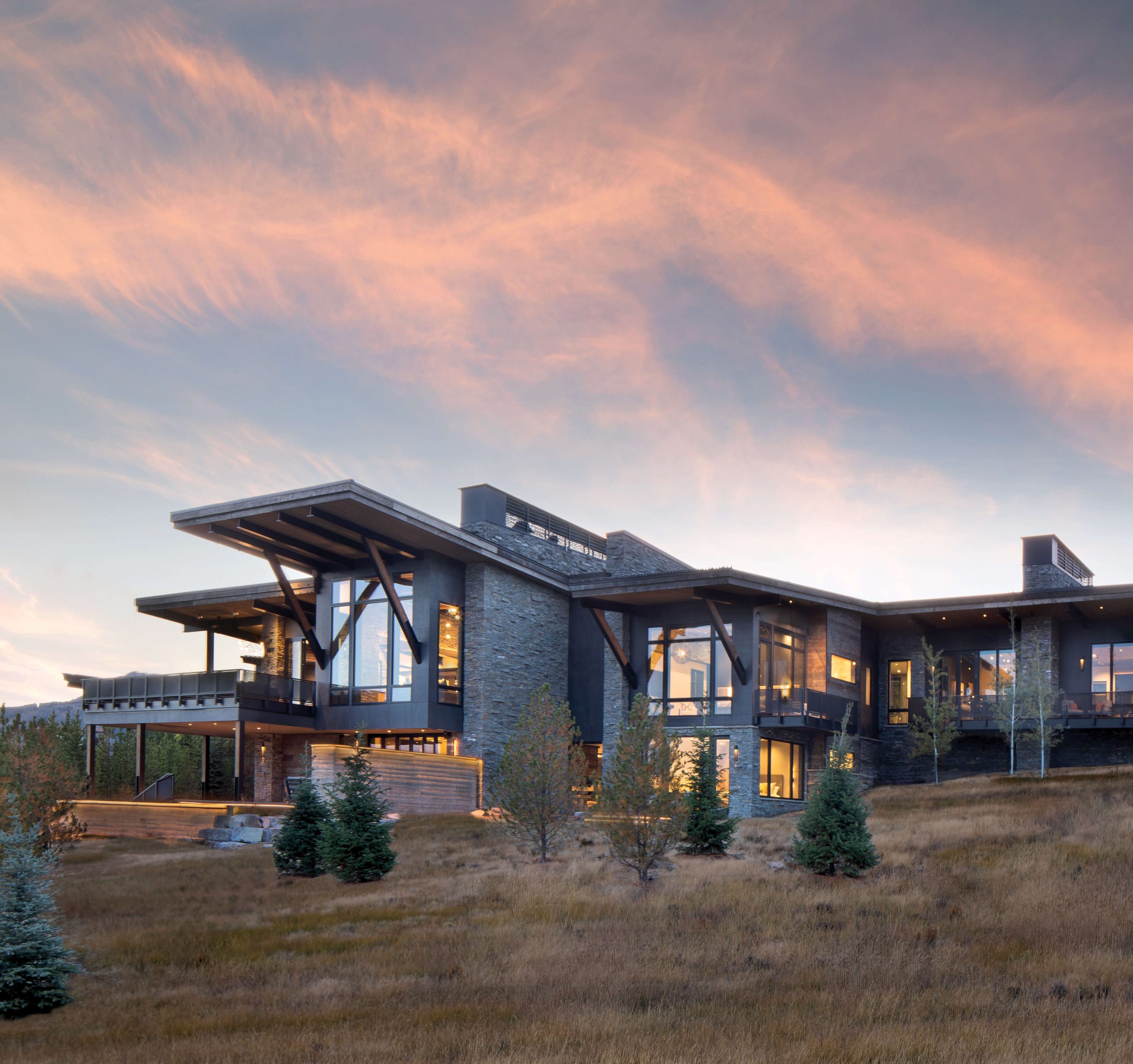
Sky Lodge, a house of rugged heights and airy lights, is literally and figuratively on the cutting edge of the Gallatin Mountain Range and boasts an architectural style rooted deep in the high peaks and low valleys of the West.
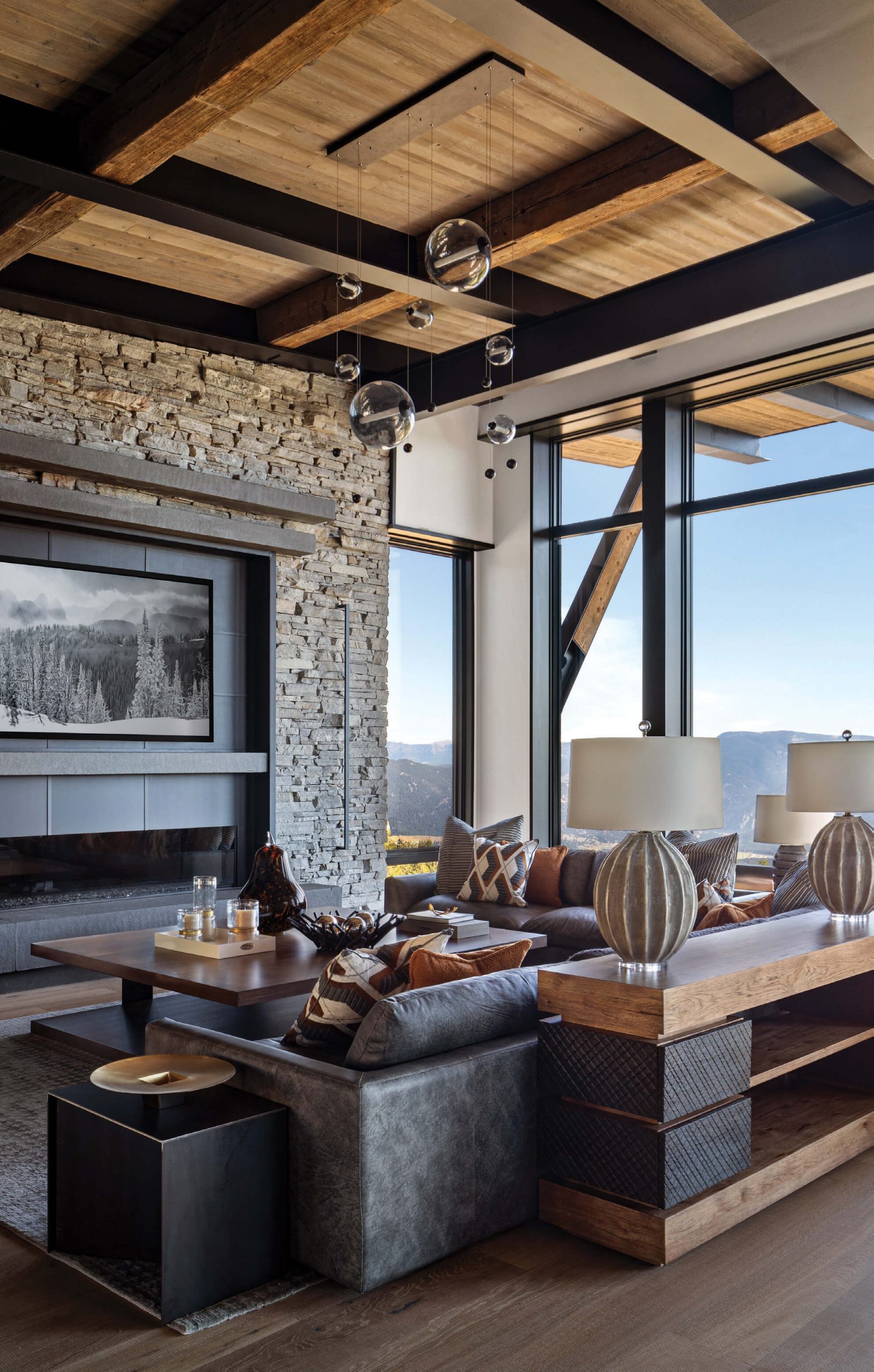
The sleek lines of contemporary design and materials are interwoven in a space that maximizes the human scale and minimizes the mountain scale to create what is sometimes termed “functional art.”
The home in Big Sky is what Jamie Daugaard, principal of Centre Sky Architecture, calls “Mountain Modern 2.0.” With offices in Montana, Utah, and Colorado, his firm has come to see structures and landscapes as interacting forms, indispensable reflections of beautiful views. And Sky Lodge — a fusion of stone, wood, metal, and glass — is less a building than an oblique-shaped sculpture that rises from a gently downsloped forest floor to swing its wings across a highly horizontal perch in a very vertical environment.
Daugaard says the house took shape amid Centre Sky’s numerous discussions with the owner and members of the design team. The architect provided a palette of colorful ideas that were narrowed only in this sense: The drama of elongated rooms and rooflines would stand as companions instead of competitors in a landscape that did not require augmentation.
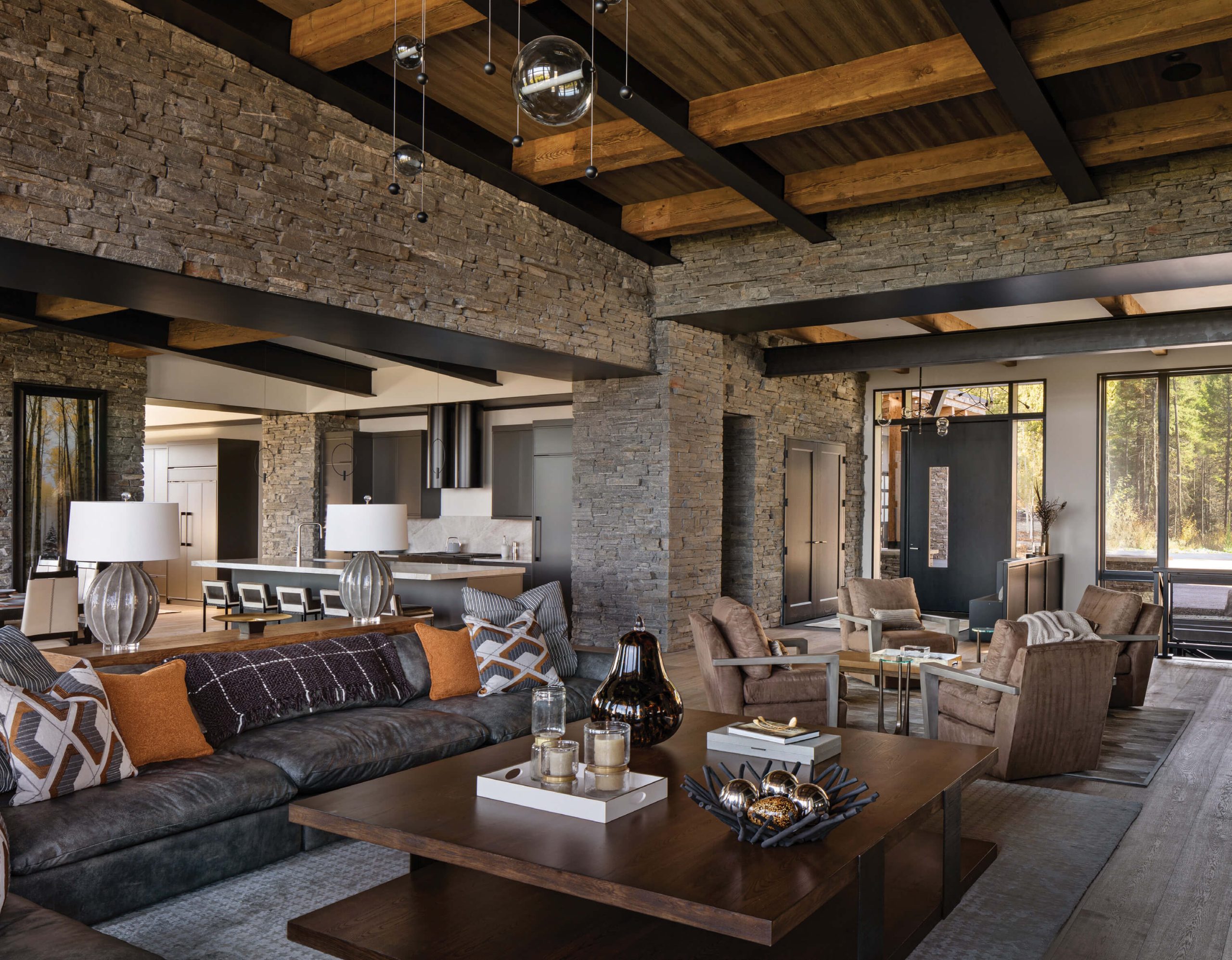
A key aim achieved by the architecture, building, and design team includes suggesting what is old is new. That is fulfilled by such elements as reclaimed timber, stained ceilings, patinated steel, and charcoal-hued stone.
“We’re creating tension with the overhung rooflines,” he says. Off the great room, the roof extends 18 feet from the exterior face of the wall in a stylish nod toward Mountain Modern even as it is a ceremonious bow to the desire for flair in contemporary design.
American architectural giant Frank Lloyd Wright is celebrated for what he dubbed a philosophy of “organic architecture,” which made use of local materials and existing forms in given landscapes. The innovation that Wright brought to a table laid by his mentor, Louis Sullivan (who coined the term “form follows function”), is widely practiced without bearing the official title.
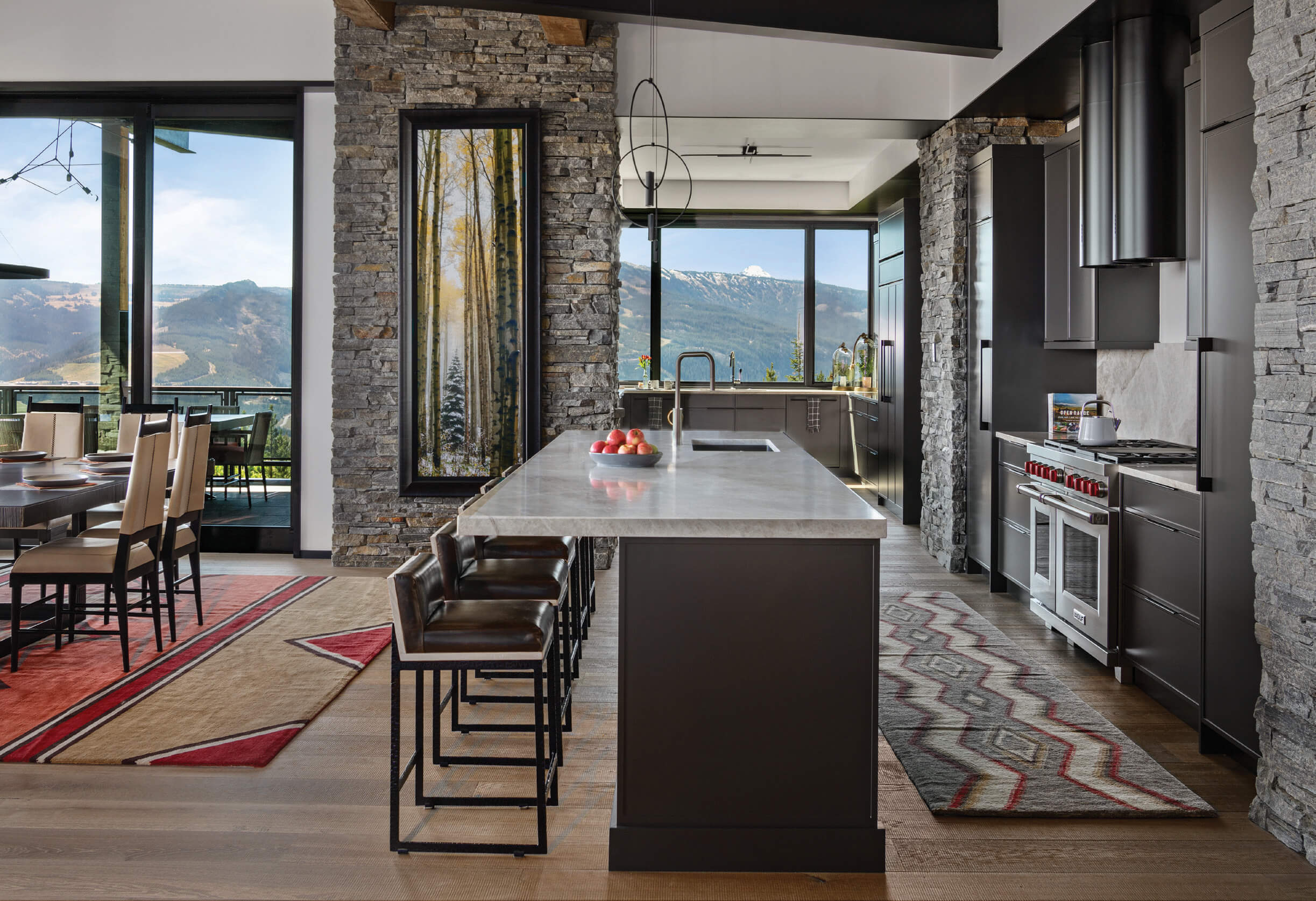
The concept of an open floor plan meeting an open view is on full display in the home’s living areas, where strong horizontal lines are mediated by what architect Jamie Daugaard calls a series of stone “spines” featured in both interior and exterior spaces.
What is included in Daugaard’s vision may be likened to the harmonizing aspects of Wright’s theory of organic architecture and to Sullivan’s marriage of shape and use. The tenets in practice saw Daugaard ensuring certain rooflines in Sky Lodge served the basic need of protection while adding an element of dynamic movement to the structure.
The slope of the house’s primary bedroom ceiling creates a sense of intimacy while allowing for the extension of high windows. Patio spaces flow from interior rooms, appearing as though they are part of the inside, simultaneously drawing the outside in.
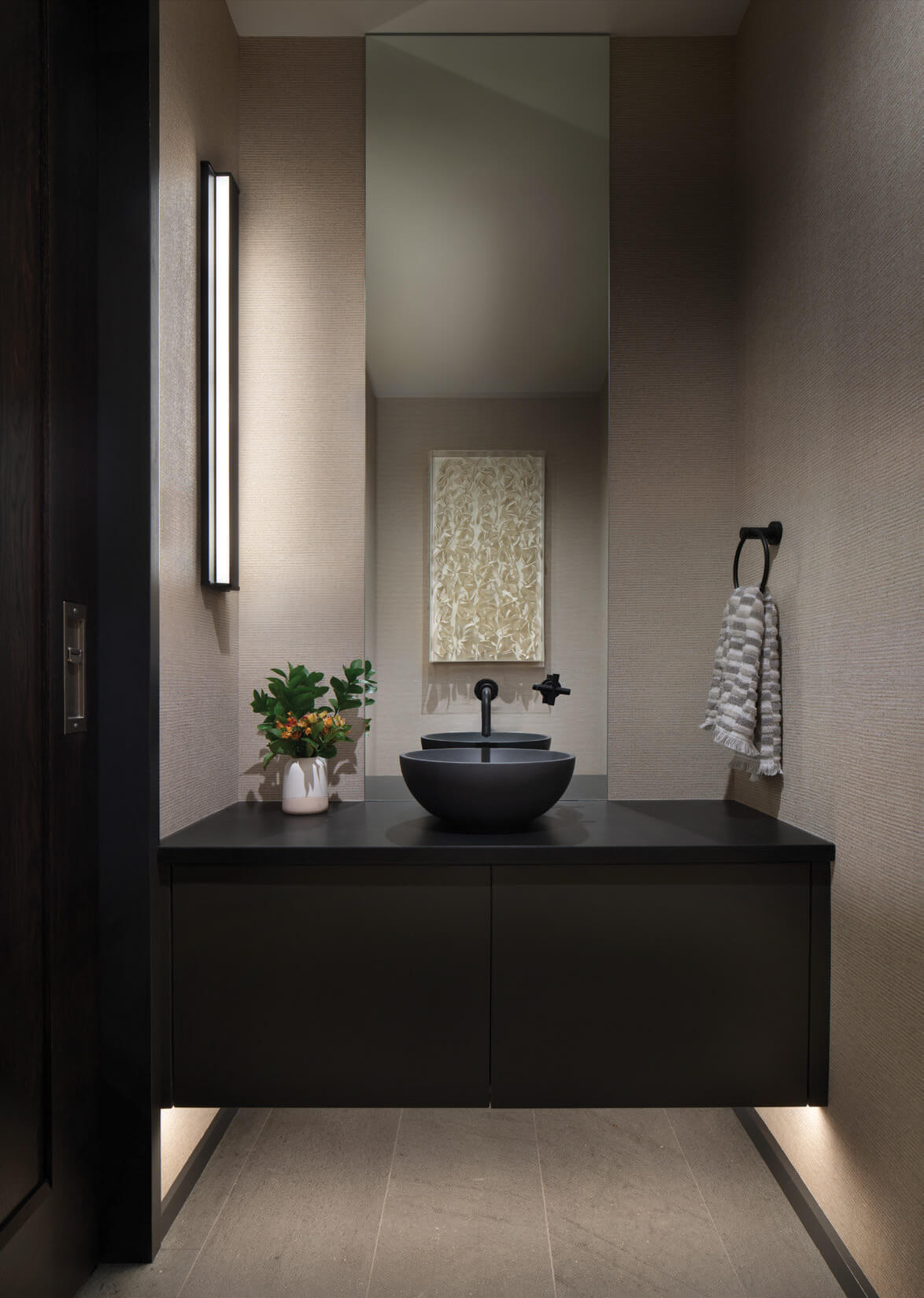
Lighting — both overt and covert as well-expressed here — was a central consideration for the design-build team that brought Sky Lodge from concept to reality.
The architect worked with Teton Heritage Builders to incorporate stone spines and extended steel braces, mechanical elements that serve both aesthetic and utilitarian purposes. The latter includes everything from the hidden passage for exhaust from fireplaces to the influx of replacement fresh air.
The reflective qualities that imbue Sky Lodge, including prolific grazed lighting, reach to a time in the early 20th century when art and technology achieved a new unity. That was the saying of the Bauhaus movement that became closely identified with a revolution in art and design, which unfolded even before the famed German school of arts, crafts, and architecture gave it a brand and a motto.
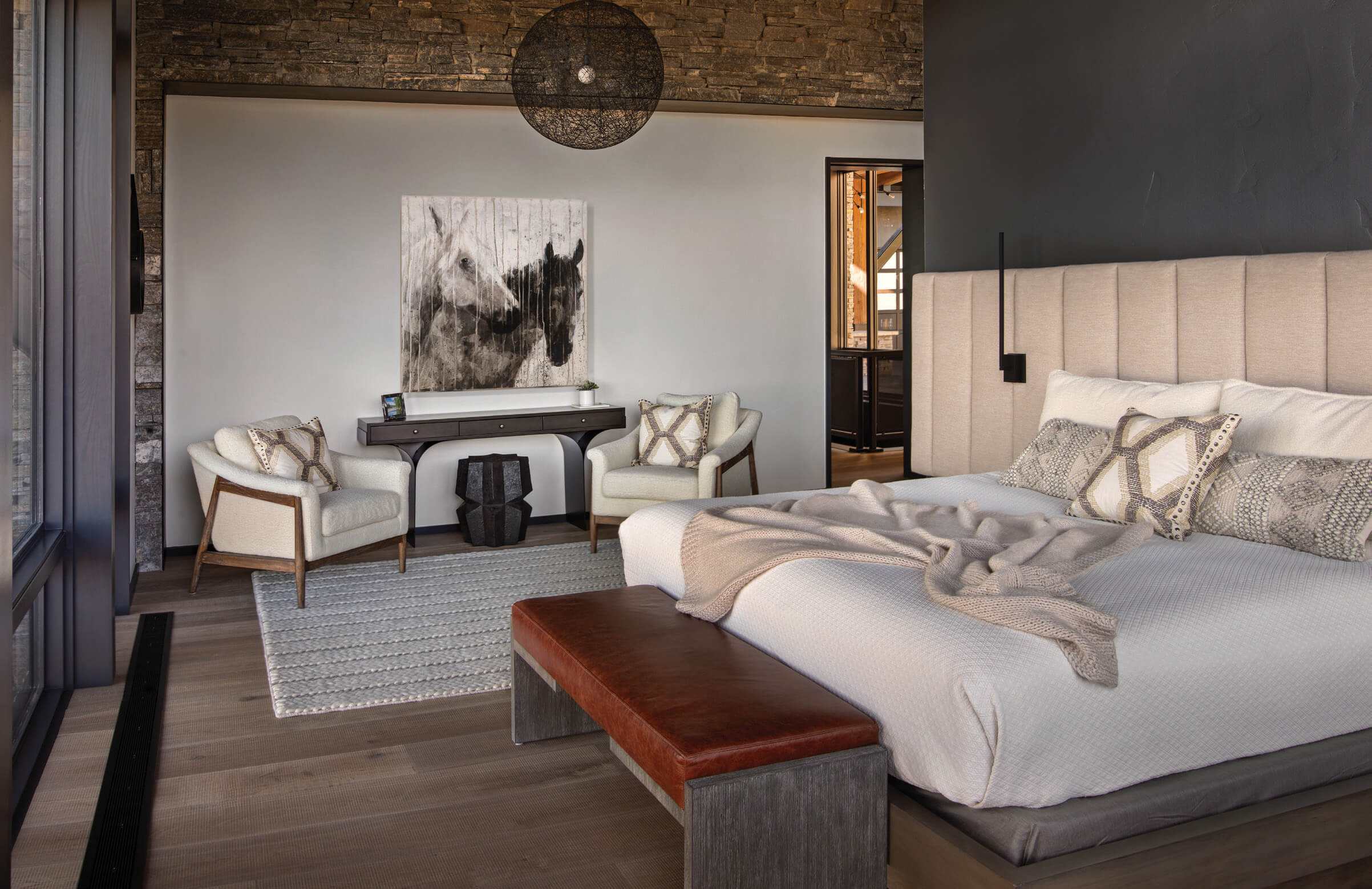
Sky Lodge is certainly art in structure, but it also expresses art in living. Private spaces like bedrooms demonstrate the advantage of a nuanced enclosure even as the use of softening textiles enhances the aspect of ease.
Daugaard says the natural, diffuse light that emerges from the structure’s glass openings — including windowed doors — is offset after dusk.
“In the evenings, the lights of the house graze the materials like stone, revealing the textural aesthetic in a soft glow,” he says. The effect smooths the angular nature of the mountain landscape but replicates the region’s legendary play of light and shadow.
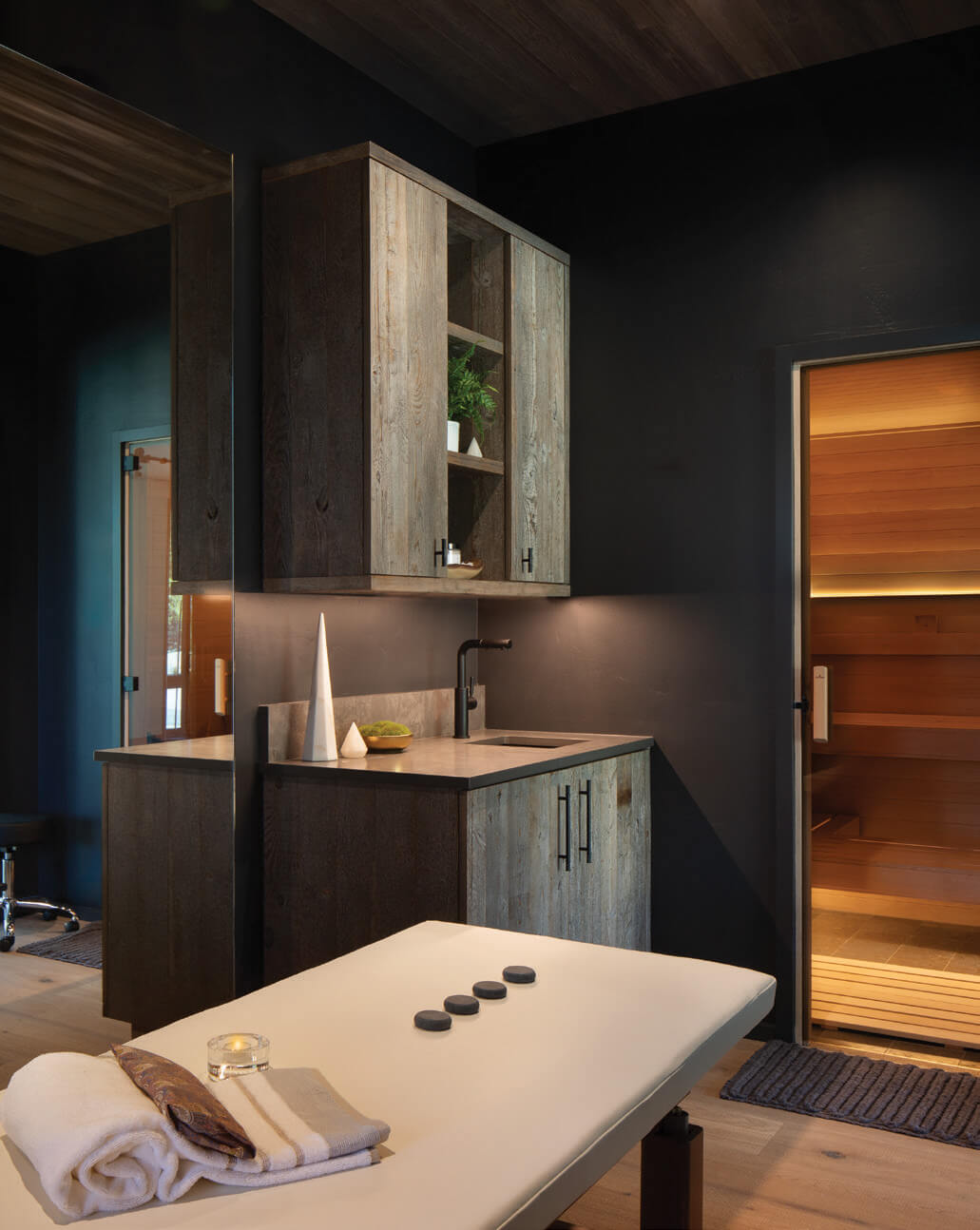
An in-home sauna and all the accoutrements of a post-workout wind down are welcome in a space that takes an oblique approach to outdoor inclusion.
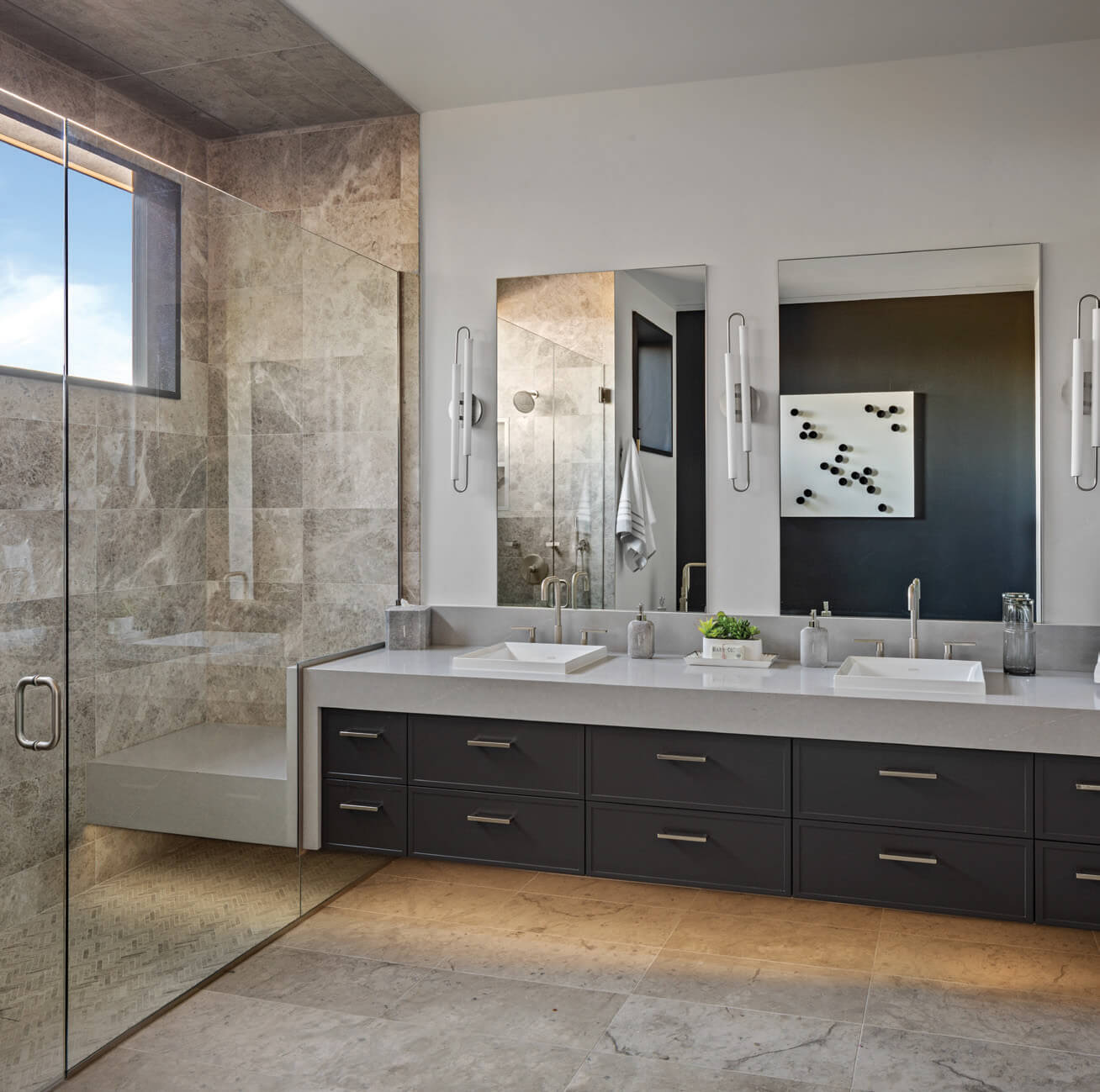
Let it never be said that any of the rooms in Sky Lodge do not speak of both utility and beauty, even the bathroom. The high, horizontal window emphasizes privacy while inviting in the kind of angled light for which the West is celebrated.
In a technique that reaches back to ancient Rome, the structure’s orientation and its openings maximize nature’s own offerings of light and temperature regulation. Sky Lodge carries through with a core design — as Bauhaus is credited with creating — of uniting interiors and exteriors to mutual and optimal advantage.
Omar Fuentes, project manager with Teton Heritage Builders, says the home’s use of both modern materials like steel and rustic features like timbers complements union instead of detracting from it.
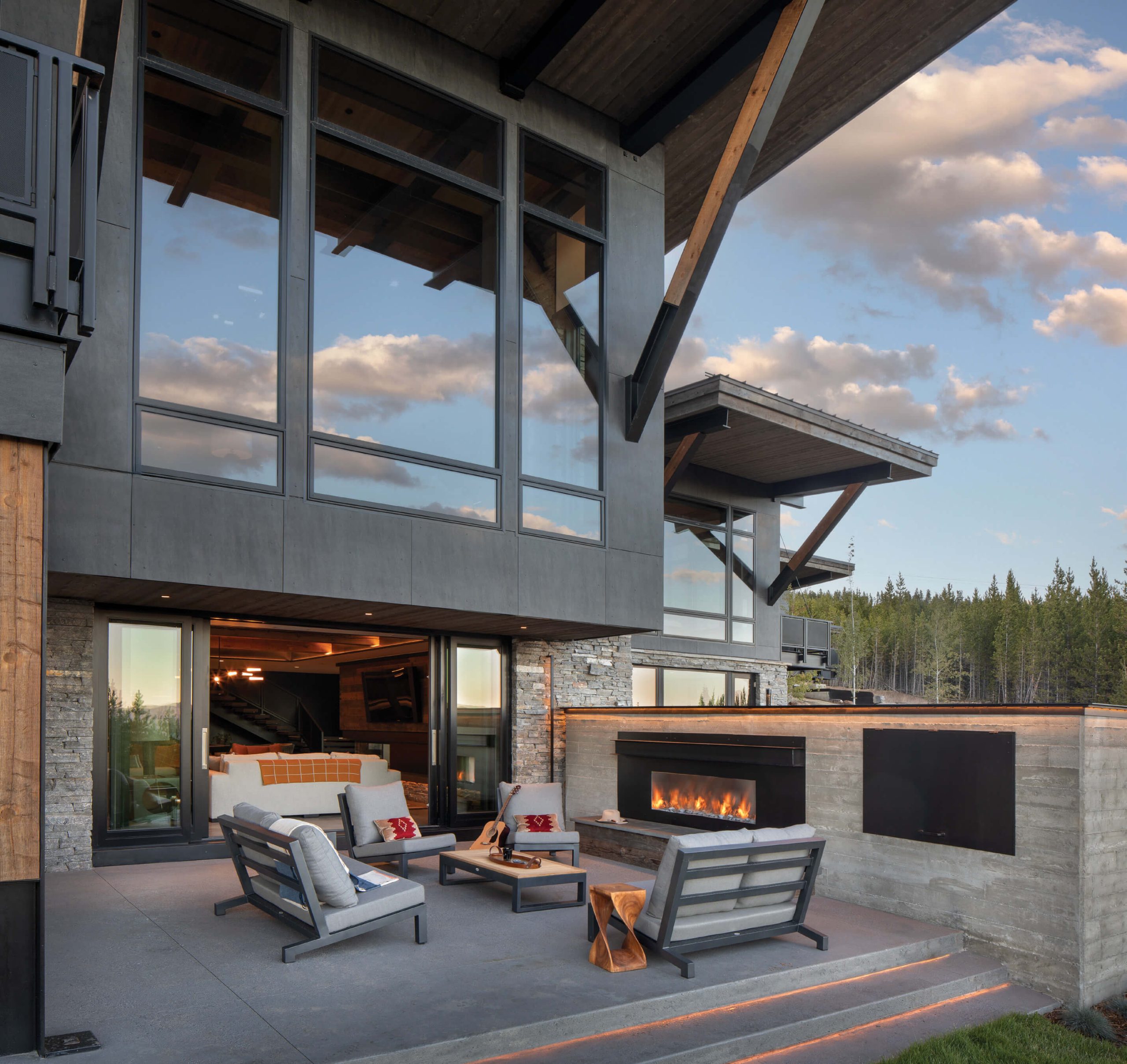
The drama of the overhanging roof would be, in itself, a design triumph. Here, it offers the added benefit of creating the sense of an enclosed outdoor entertaining area with the practical bonus of shelter from incoming storms.
The house of seven bedrooms, including two bunk rooms, reclines with ease in the exclusive Yellowstone Club development. Fuentes says fireplaces, lounge areas, and a sophisticated air system, which, in the primary bedroom, can replicate oxygen content closer to sea level, all combine to create living spaces that fulfill all senses of the term.
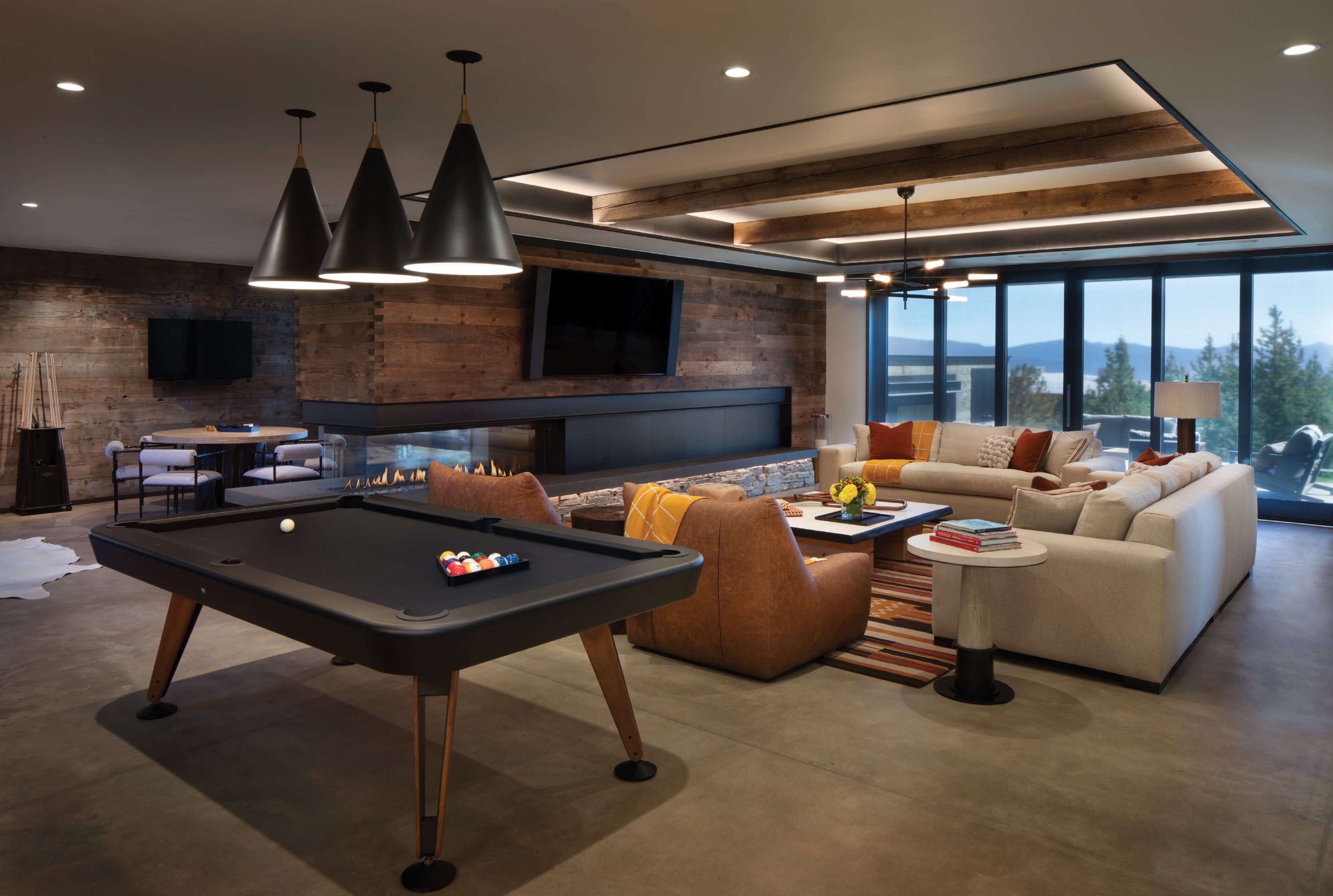
Recreation is a signature of the Rocky Mountain West, but why keep it all in the great outdoors? This comfortable den-like room is a friendly reminder that homes, sometimes the site of remote work, are also made for play.
Through brilliant use of horizontal and vertical panels and windowed doors, the great room, dining room, kitchen, and butler’s pantry on the main floor hint at separation but never actually divorce.
A house built for family members, guests, entertaining, and outdoor recreation led Michelle Varda, principal of The Varda Group, to draw on neutral and earthy tones and to accent friendly textiles and inviting seating areas. And because the architectural features of the house serve as elements of a painting — forms, subjects, colors, and perspectives — Varda applied a light touch. “Each house is genuinely its own outcome because it is so shaped by the client’s perspective, lifestyle, and needs,” she says. “Sky Lodge was a joy.”
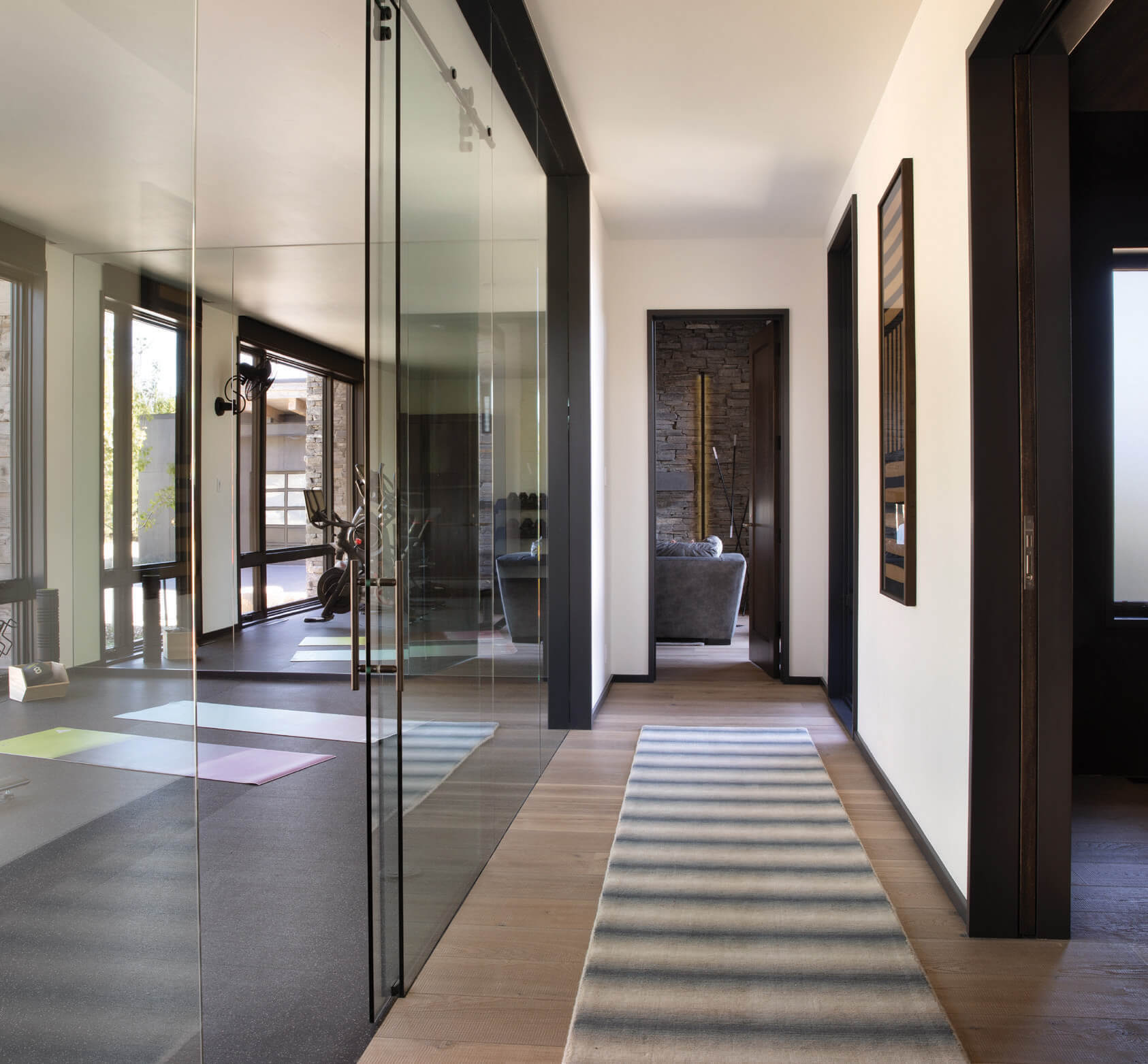
If inspiration is half the battle of exercise, the workout space at Sky Lodge provides ample motivation.
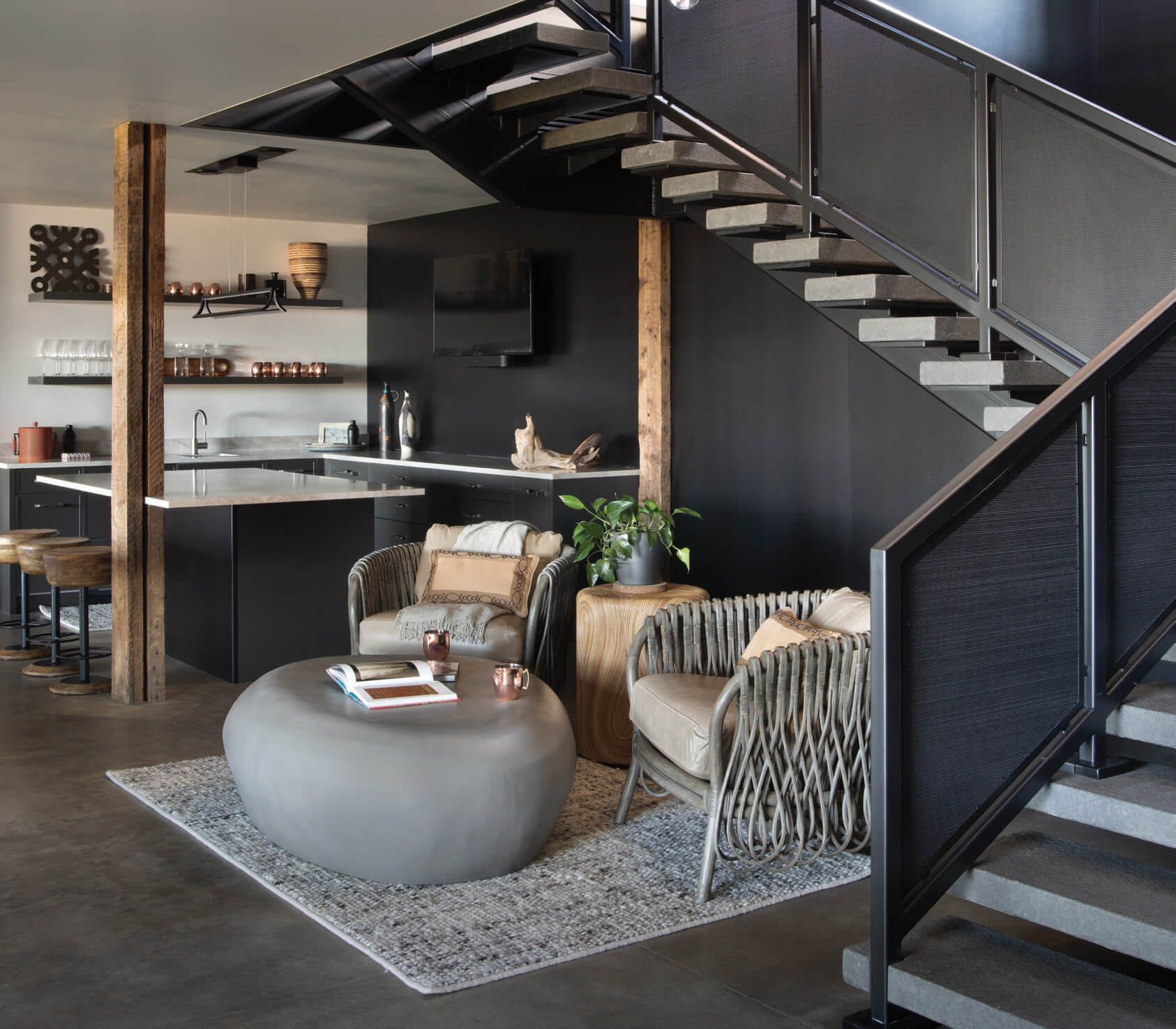
The broad stairs and extended angle of the staircase speak to Sky Lodge’s integrity of design.
Aaron Heska, superintendent with Teton Heritage Builders, says the house’s structural and design harmony mirror the relationships that developed among the owners, architect, builders, and interior designer. The house was created to blur with the skyline, to be part of the landscape, just as the shared vision and fellowship that brought it to life will outlast the phases of planning and construction.
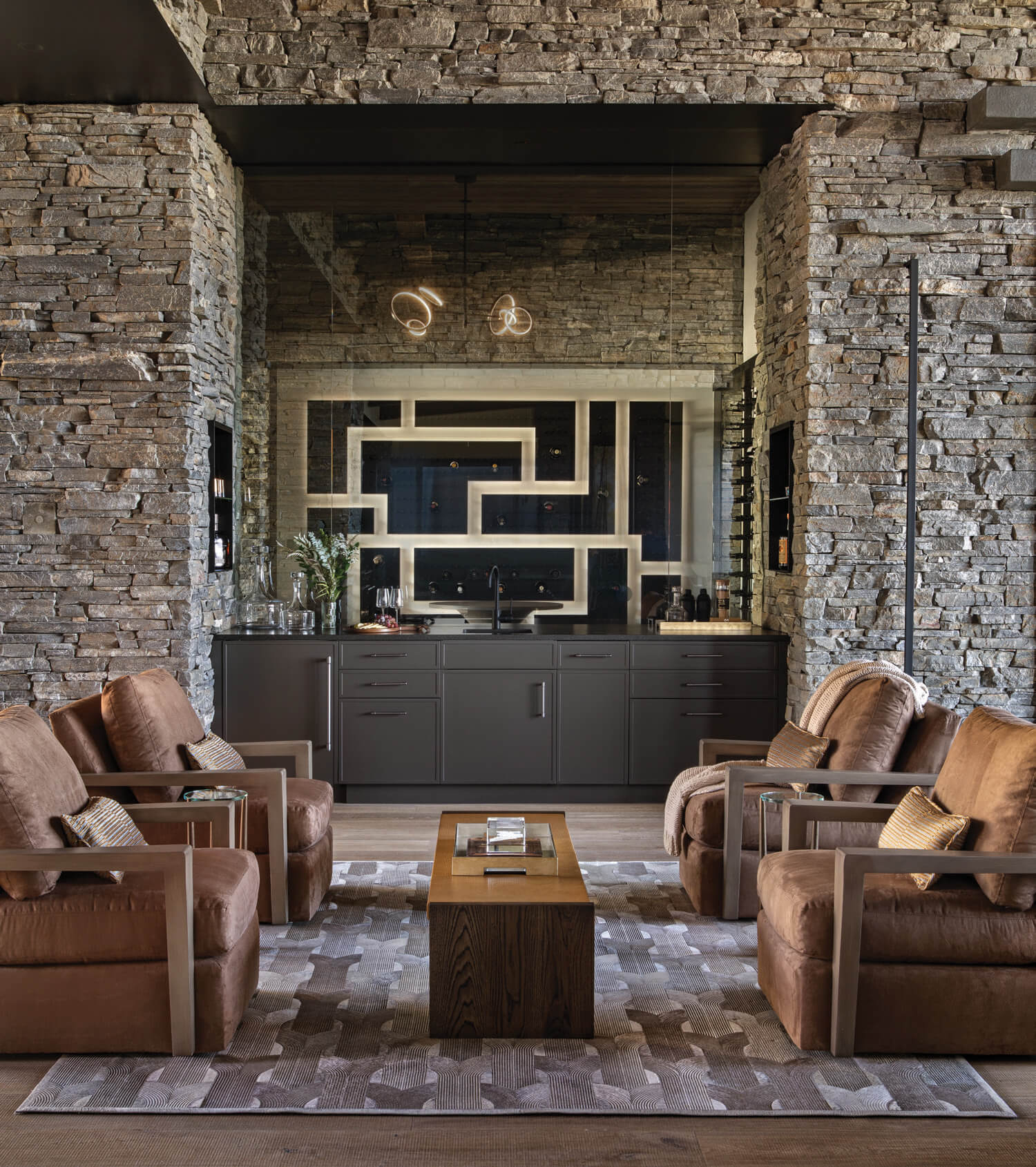
Like a window, this sitting area opens the view to another space, which, in turn, opens to yet another view. Much like a painting, Sky Lodge draws the observer’s line of vision to central features that refer back to the composition as a whole.
“We don’t just build houses,” says Heska. “We build relationships.”
Laura Zuckerman is an award-winning journalist whose work has appeared in everything from The Washington Post to Country Living.
Peter and Kelley Gibeon began their path of collaboration in 2003. Based in the Mountain West, this husband-and-wife duo specializes in luxury architectural and interior design photography. Featured in numerous publications, their passion for their clients and craft shines through in every frame.
No Comments