


30 Jan Naturalized Natives
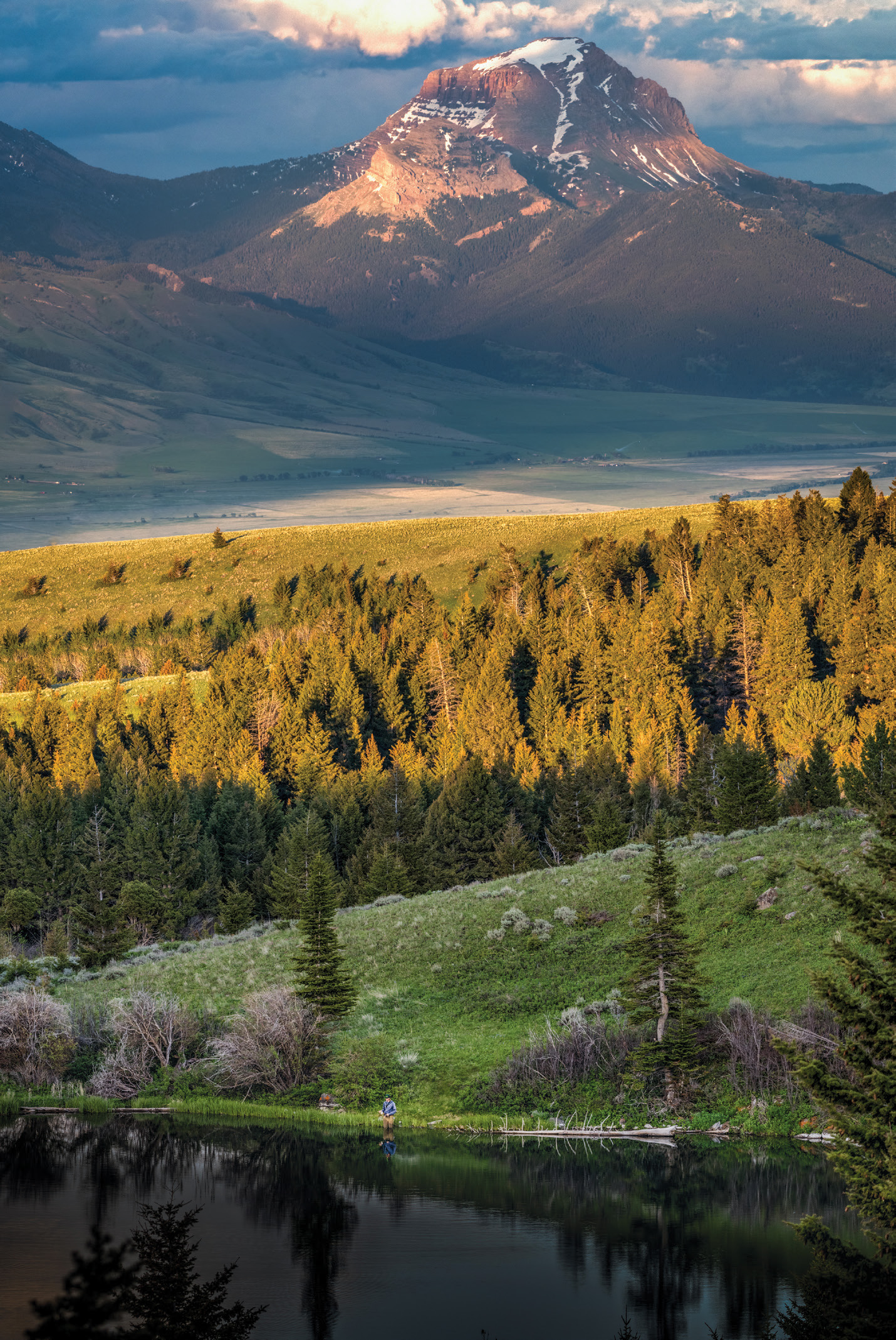
Although it was late June, the thermometer in my brother’s truck read 32 degrees Fahrenheit when we reached the trailhead around 8 o’clock in the morning. Such cold on a summer day could have dampened our spirits, but we were excited to see no other vehicles at the trailhead; we might have the lake all to ourselves. An hour and a half later — after a 2.5-mile hike and an elevation gain of 1,000 feet — we arrived at Fuse Lake in western Montana’s Sapphire Range. It was chilly up there, with lingering snow patches reminding us that vestiges of Rocky Mountain winters exist well into the summer, and a constant wind blew during our several hours of fishing.
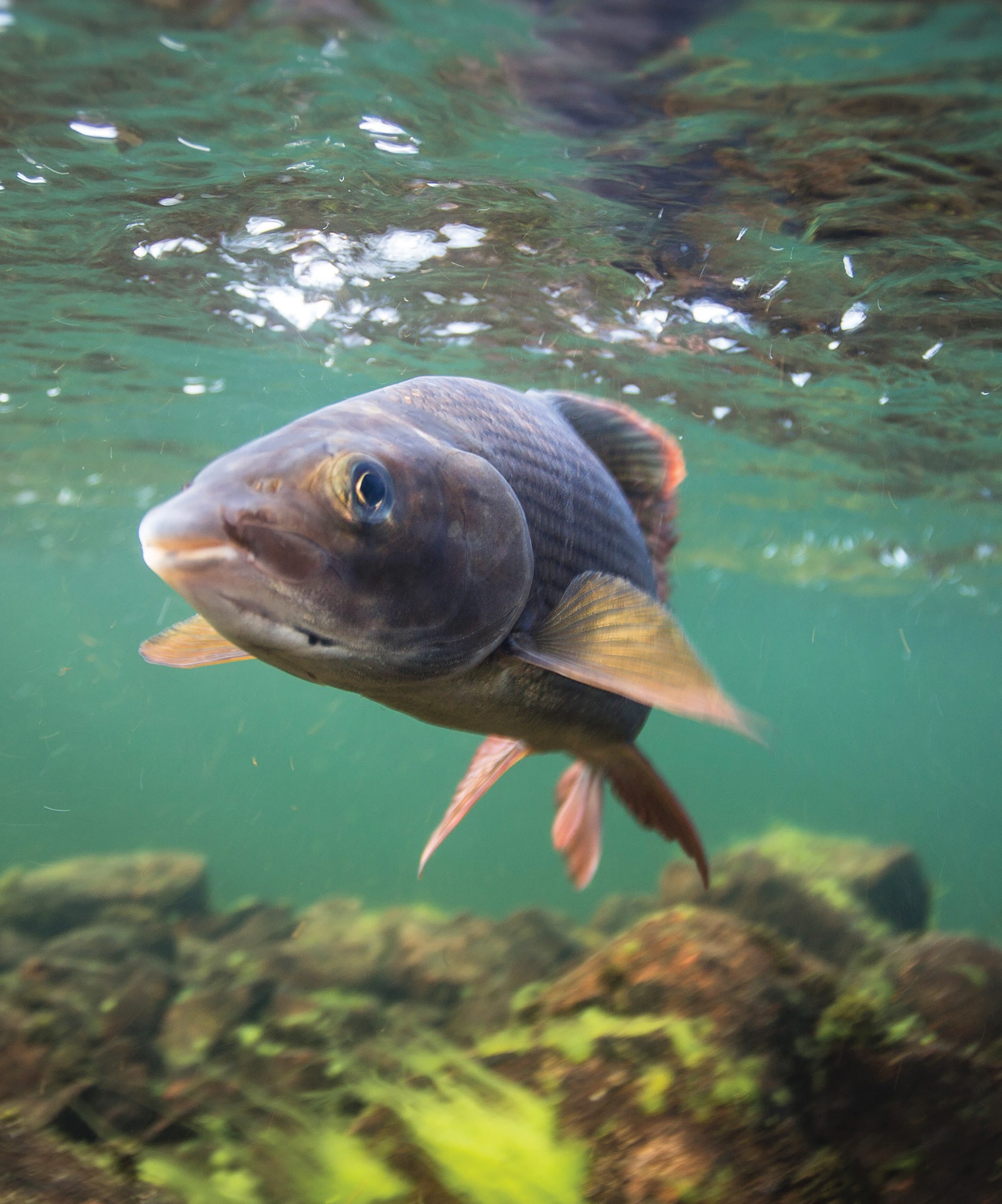
Although the arctic grayling is indigenous to Montana, few remain in their native waters within the state. Today, most populations that anglers find in the Treasure State inhabit waters they did not originally, having descended from fish that originated in the Madison or Centennial valleys. | JESS MCGLOTHLIN
Sitting at 7,568 feet in elevation, Fuse Lake drains into the West Fork of Rock Creek. While it is eminently picturesque with its clear waters, rocky shoreline, tree-covered hillsides, and a rock wall that borders part of the lake, the 10-acre lake is special because it holds arctic grayling, a treasured native Montana fish. Like many anglers, I will go out of my way for a chance to catch some nice trout. But I will go to even greater lengths to try to land a few grayling: The fish’s beauty and rarity make it worthwhile.
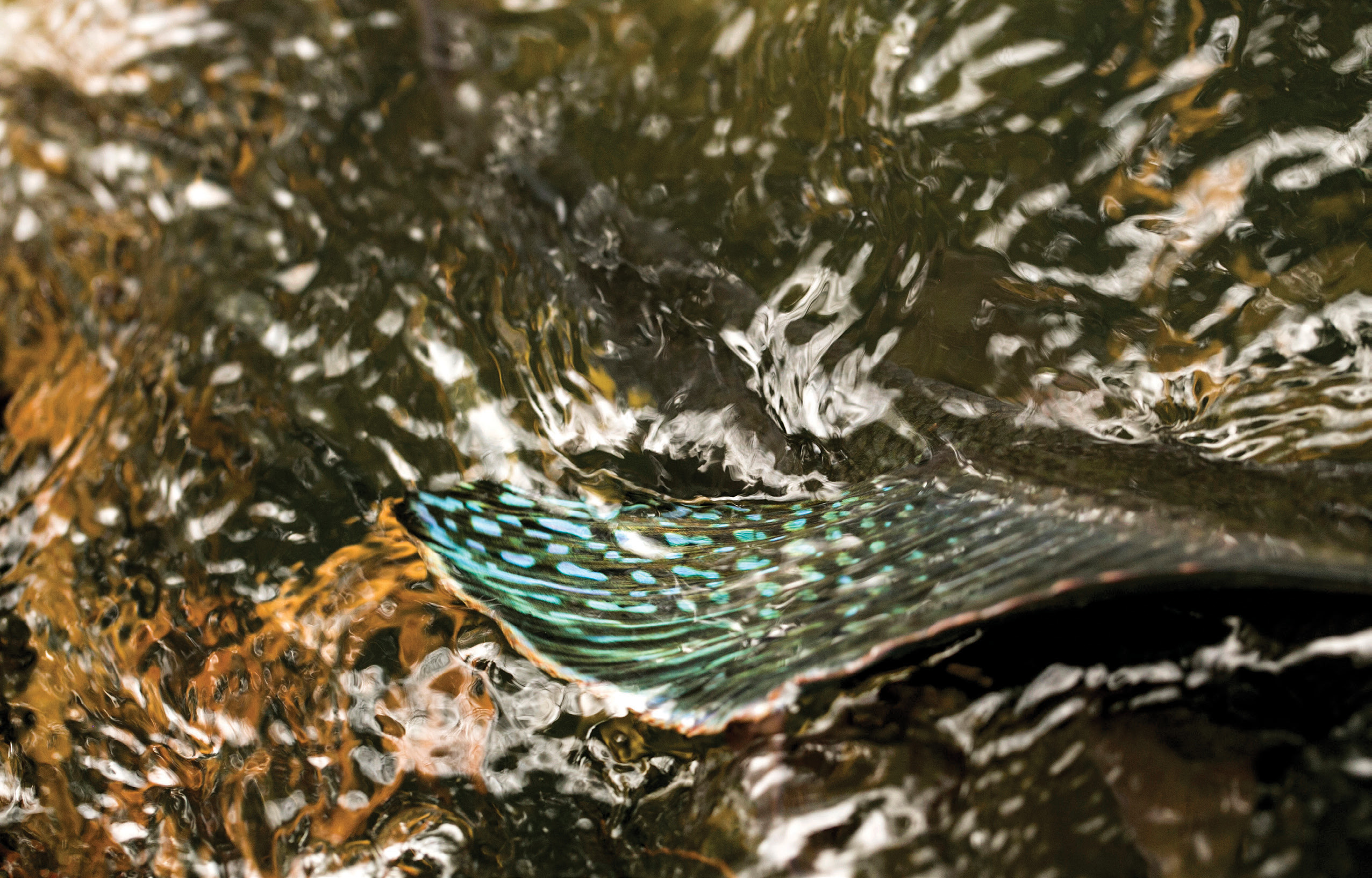
In his 1883 book, Angling Talks, George Dawson raved that the grayling’s “great dorsal fin, with its blended body-hues of olive, brown, rose, blue, green, and pink, reveal all the dazzling colors of a kaleidoscope. | JEREMIE HOLLMAN
After taking in the view and confirming that no one else was there trying to catch our fish, we navigated the boulder-laden shore to a peninsula that juts out into the lake before getting our lines wet. While we were eager to get to work that morning, the grayling were not. Telltale rings on the lake’s surface made by rising fish were infrequent; some time passed before either of us got a bite.
And then it happened. While standing atop a log that extended into the lake to get a better look into the water, I spotted a grayling patrolling nearby. On my very first cast in her direction, she noticed my size-16 purple-and-black micro chubby and rose to it. Too eager, I tried to set the hook as soon as she struck, and I missed. Reminded of the virtue of patience, I again cast the fly toward her — she had moved but a few feet away — and this time I let her take it underwater before successfully setting the hook. With the fish struggling at the other end, I steadily pulled in line and, seconds later, held her in my hands. That hen wasn’t big — perhaps 11 inches long — but I’m always thrilled to land a grayling.
I caught seven more, ranging from 7 inches to my trophy that day — a rooster measuring 14 inches — before my brother (who also caught eight fish) and I headed back down the trail. We can always fish more, but the day had not warmed and the cold reached our bones. Besides, we had successfully pursued an indigenous fish in a scenic and semi-remote part of the Treasure State. What, after all, makes for a more fulfilling angling experience than pulling a native species from a pristine mountain lake? But it’s not quite that simple.
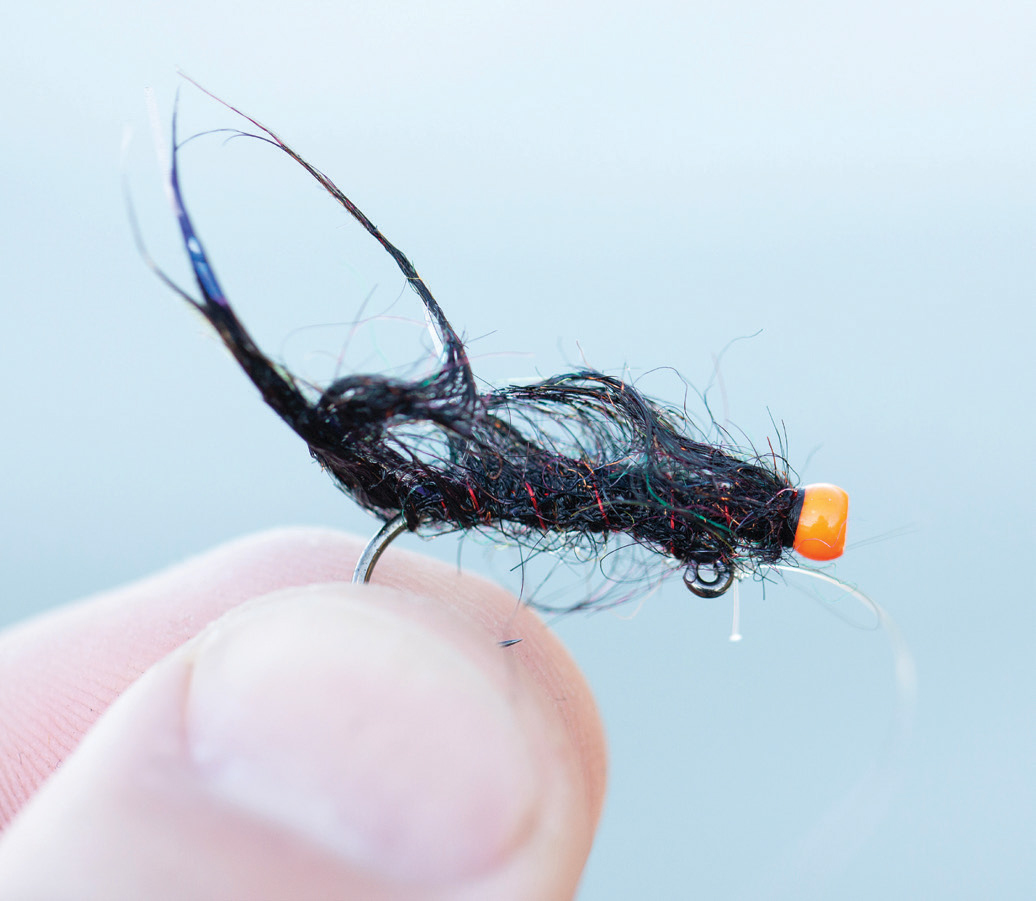
Those who offered advice for catching grayling during the 19th century often observed that the fish tended to prefer dark, often black, flies. The author can attest that Griffith’s gnats, black ants, and other dark flies remain productive today. | JEREMIE HOLLMAN
The species Thymallus arcticus is indeed indigenous to Montana: Montana Fish, Wildlife & Parks (MT FWP) lists it among the state’s native fish. Members of the Lewis and Clark Expedition pulled some from the Beaverhead River near the present-day site of Clark Canyon Reservoir. Anglers found them in the Madison, the Gallatin, and other streams in the Upper Missouri drainage during the late 19th century. Fish culturists soon began using grayling eggs collected from the Centennial and Madison valleys to artificially propagate the species. Their efforts intensified in the early 1900s as the fish vanished from much of its historic range, replaced by non-native brook, rainbow, and brown trout as dam construction, irrigation development, and other human activities transformed waterways. Therein lie the roots of why the grayling’s nativeness is complicated.
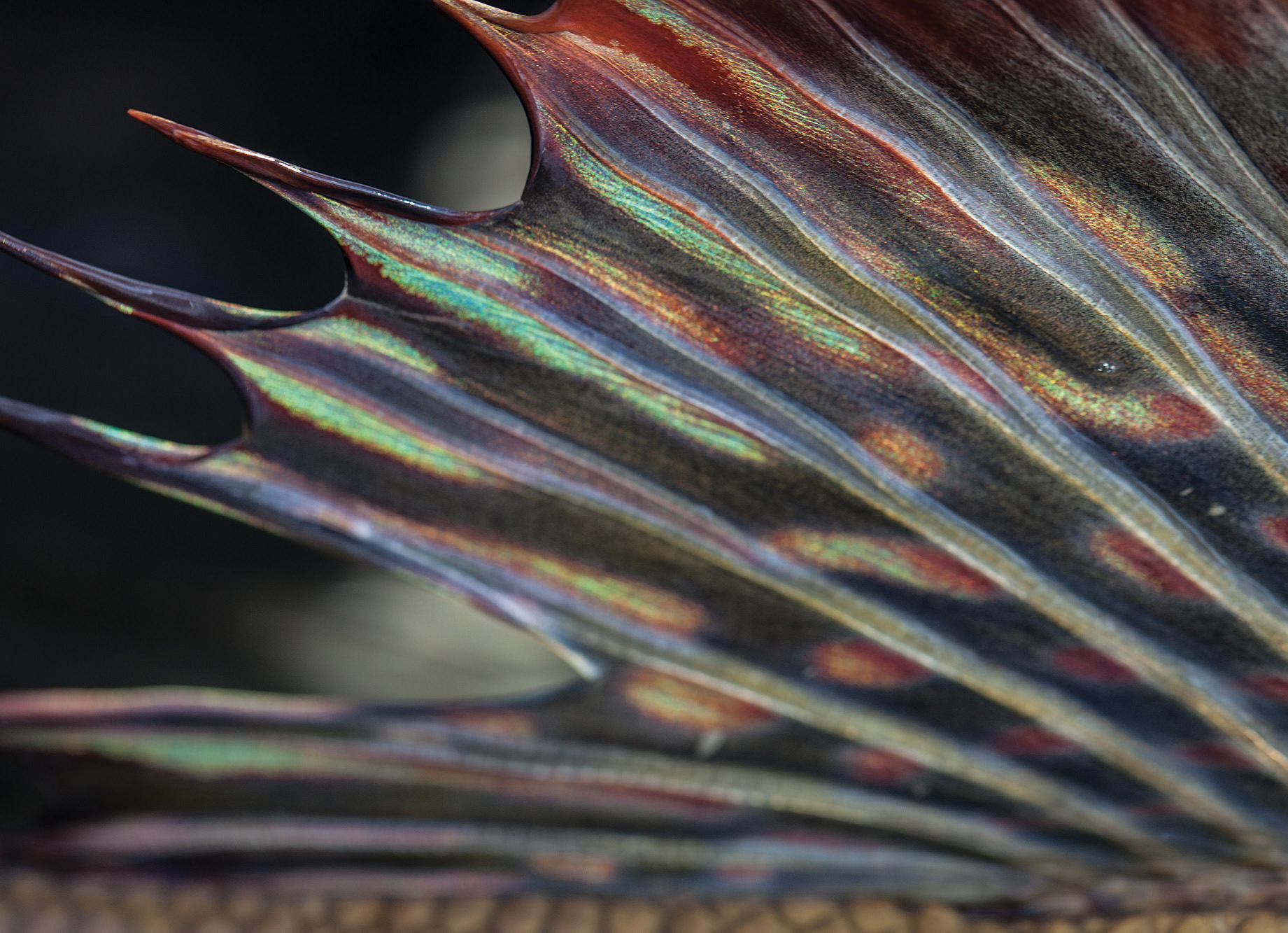
Anglers have long reveled in the arctic grayling’s beauty, particularly the striking spectrum of colors visible on their dorsal fins. Those colors are most vibrant when the fish are underwater or still wet after being pulled from the water. | JESS MCGLOTHLIN
During the 20th century, the Montana Department of Fish and Game (now MT FWP) and the U.S. Bureau of Fisheries (a predecessor of the U.S. Fish & Wildlife Service) stocked hatchery-raised grayling in lakes and streams throughout the Treasure State, including many to which the species was not indigenous. At Georgetown Lake near Anaconda, Montana Fish and Game established a brood stock based on fish that originated in the Centennial and Madison valleys. Grayling were not native to Georgetown, nor any other water west of the Continental Divide in Montana, yet they soon swam in Rogers Lake near Kalispell and other lakes that drain to the Pacific.
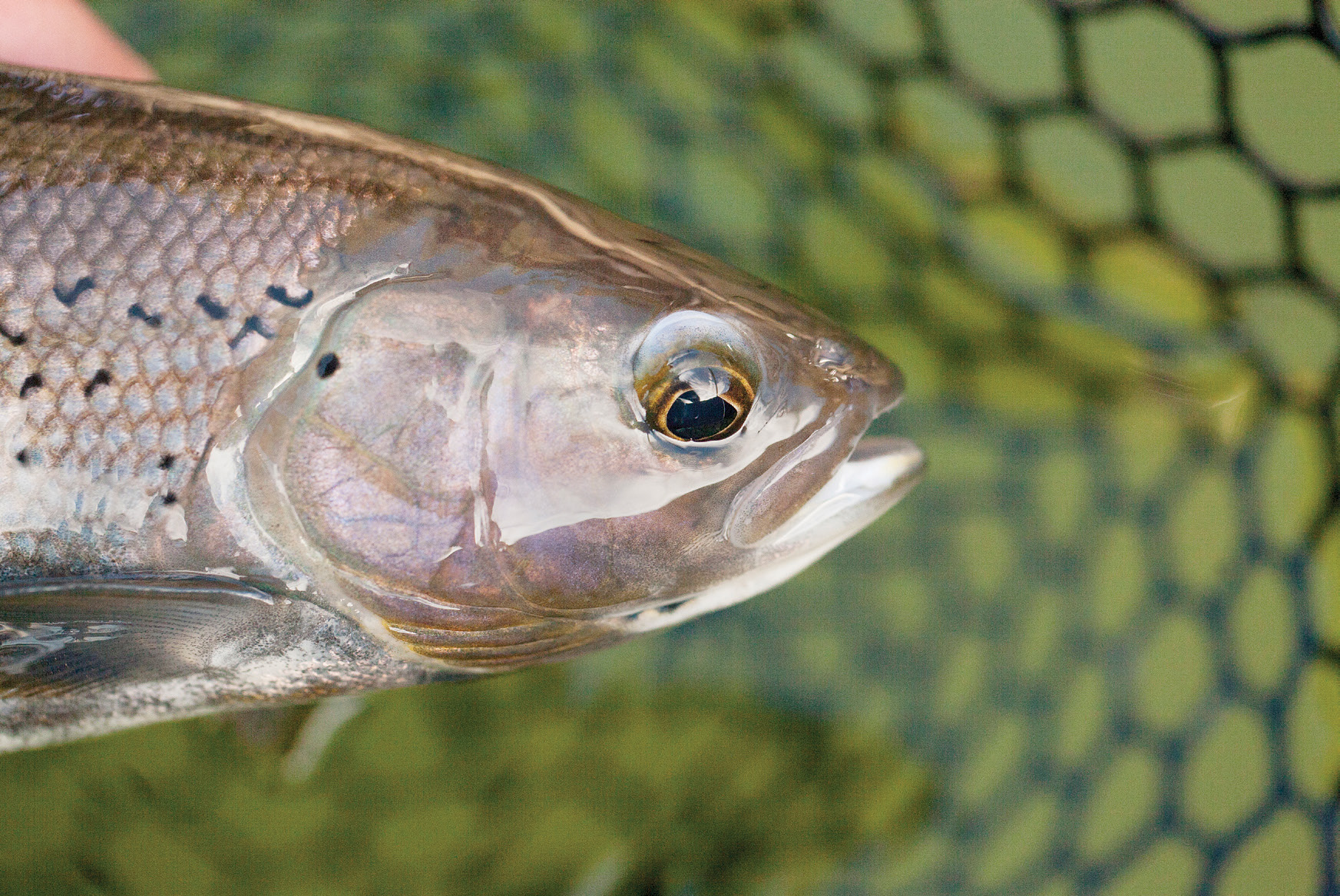
Fluvial (river-dwelling) arctic grayling once predominated Montana’s Upper Missouri River drainage, but habitat alterations (such as dams and irrigation dewatering) as well as the arrival of non-native brook, brown, and rainbow trout have reduced them to less than 5 percent of their historic range. Introduced lacustrine (lake-dwelling) populations are far more numerous today, and they have especially thrived in waters that hold few or no other fish species. | JEREMIE HOLLMAN
East of the Divide, hatchery-raised grayling derived from populations established in Georgetown, Rogers, and other lakes were planted in waters that the fish once inhabited, those in which it still resided, and others to which it was not native. Grayling are indigenous to the Big Hole drainage, but an extensive stocking history makes it unclear whether the fish originally occupied some lakes that it now inhabits, such as Mussigbrod, Pintler, and Lower Miner lakes; genetic data suggest that the Mussigbrod and Miner populations are indigenous. Elsewhere in the Big Hole, grayling were not native to Lake Agnes, but Montana Fish and Game personnel used Georgetown Lake stock to establish the species there in 1928. The Lake Agnes grayling population became a source of eggs for Montana hatcheries thereafter.
Grayling now also occupy numerous lakes in south-central Montana’s Beartooth Mountains that they did not originally inhabit. In that high, rugged country lies Little Washtub Lake, from which an angler pulled Montana’s state record grayling in 2003; it measured 20 inches and weighed over 3.5 pounds. That lake, which covers only 2 acres and lies at 9,239 feet in elevation, was first stocked with grayling in 1985. The fish now also swims in Emerald Lake in the Gallatin system, Lake Levale near the North Fork of the Sun River, Park Lake near Helena, Silver King Lake in the Blackfoot drainage, and dozens of other lakes to which it is not indigenous.
And then there is Fuse Lake, which was fishless before it received exactly one plant of 25,000 grayling in late June 1952. That introduction was unique, as the historical record indicates that it was the only time grayling from Canada were stocked in Montana; all other populations originated within the state. But those that now inhabit Fuse originated in the Fond du Lac region of the Northwest Territories’ Athabasca drainage before arriving in Montana from a secondary population in Saskatchewan. In early June 1952, the Montana Fish and Game hatchery in Anaconda received over 110,000 grayling eggs from “Lacho Rouge,” probably Lac La Ronge. Subsequent genetic studies confirmed the distinctiveness of Fuse Lake grayling from other populations in Montana.
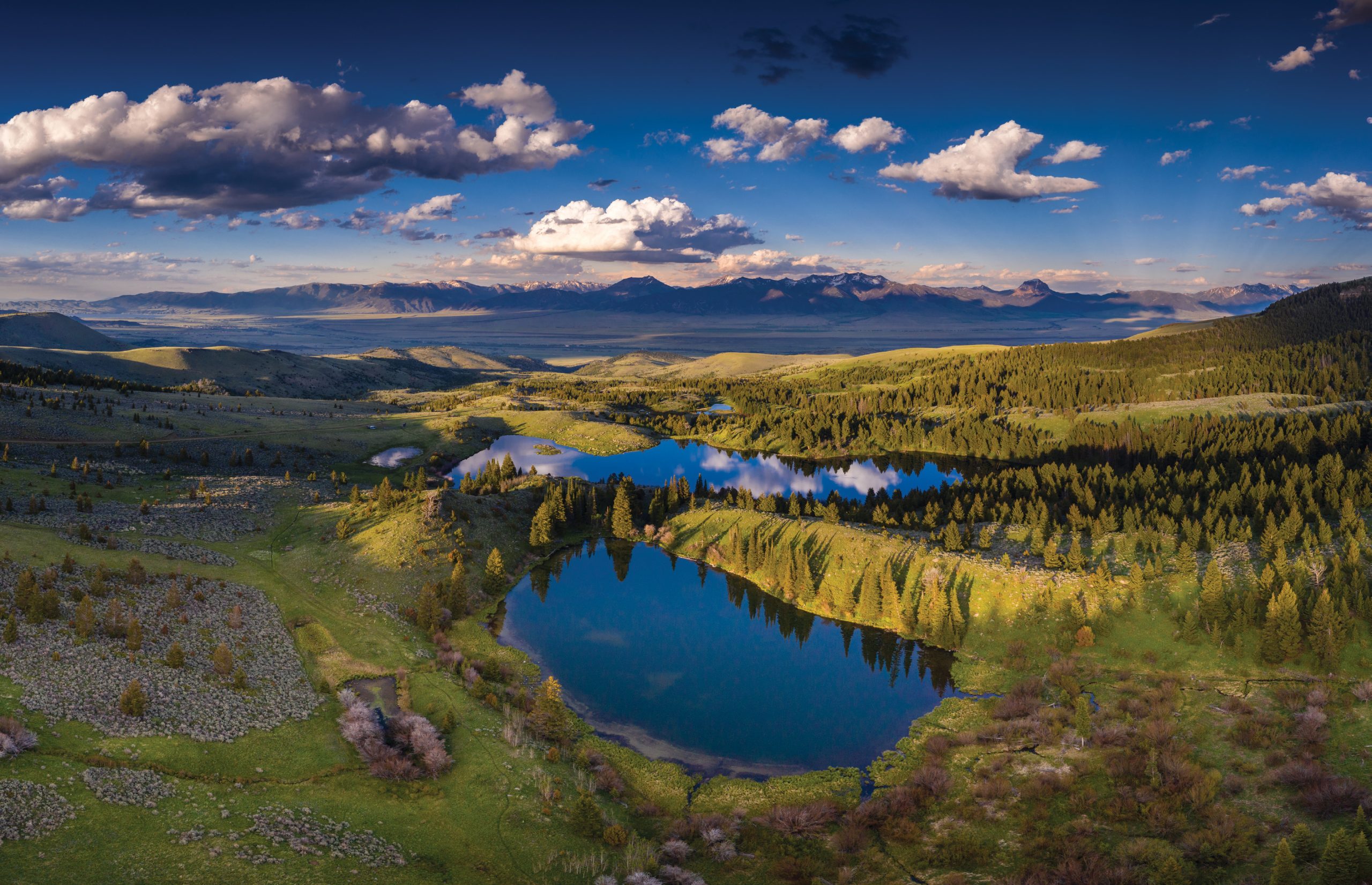
This aerial view offers a glimpse of a small part of the Axolotl chain of lakes in the Gravelly Range southwest of Ennis. While Upper Twin Lake in the foreground holds one of Montana Fish, Wildlife & Parks’ brood stocks of fluvial arctic grayling used for reintroduction purposes, the larger Lower Twin Lake in the background holds a population of rainbow trout. A part of the Axolotl Lakes Wilderness Study Area, both are easily accessible via a dirt road and short hike. | KEVIN LEAGUE
Some time after fishing Fuse Lake, I enjoyed the opportunity to explore the bodies of water around Axolotl Lakes. As I slowly retrieved my fly line — which featured a dry-dropper rig with a size-16 purple-and-black micro chubby Chernobyl on top with a smaller pheasant-tail nymph below — a grayling shot out from some aquatic vegetation and took the dropper when it was perhaps 15 feet away from me. The foot-long fish’s especially large sail-like dorsal fin told me it was a rooster. I removed the fly from his mouth and lowered him into my net where I admired my catch in the water before releasing it. I landed only two other grayling that day, but I was satisfied. Those fish — like those in Fuse — are special in their own way.
Part of the Axolotl chain of lakes in the Gravelly Range near Ennis, Upper Twin Lake sits at 6,958 feet in elevation and encompasses less than 3 acres. MT FWP once stocked Yellowstone cutthroat trout in that historically fishless waterbody, but grayling are the only fish found there now. Upper Twin Lake holds one of the agency’s captive conservation brood stocks of native fluvial (river-dwelling) grayling. That population was established in 1988 as a reserve of Big Hole grayling genetics and maintained through subsequent additions of fish spawned from wild Big Hole grayling. Biologists have used eggs produced by Upper Twin Lake grayling in their efforts to reestablish the species in its former waters, as well as expand its range and numbers in the Big Hole. The grayling’s finicky nature has, however, largely thwarted their work beyond the upper Ruby River, which now holds a modest reintroduced population. Meanwhile, Upper Twin Lake gives anglers an excellent opportunity to catch fluvial grayling from a little lake.
Unlike at Fuse and most other Montana lakes that hold grayling, one does not have to hike far to reach Upper Twin Lake. Doing so simply requires a drive of several miles along dirt roads and a modest uphill hike from a parking area near Lower Twin Lake. Stubbornness got me skunked during my first visit in 2019. With the fish rising, I refused to put anything below the surface as I went through dry fly after dry fly, failing to get even a strike. But I did get my first two leeches as I was wearing wading sandals and quick-dry pants when I sank knee-deep into the lake’s soft bottom. I wore chest waders when I revisited the lake two years later, and this time I landed a pair of grayling on a Griffith’s gnat in less than an hour. One of them was a feisty 8-incher that leapt out of the water like a rainbow trout to hammer my phony gnat. The grayling eagerly hit dry flies that day, as I missed on a handful of strikes.
My third trip — on what began as a sunny afternoon in late June 2023 — was my most eventful. That day, I took my wife and 5-year-old daughter to Axolotl Lakes to picnic, hike, and, of course, fish. While my family explored the area, I pursued grayling at Upper Twin Lake. I had hardly gotten a cast off when rain began to drizzle. The grayling were biting — though I had yet to land one — so I kept fishing until a storm brought hail and thunder. Having not caught a fish, I grudgingly headed downhill to hunker down in the car with my family. As soon as the storm passed, I again ventured uphill, soaked and cold as the air temperature had cooled considerably. But it proved worthwhile when I quickly landed three — one on the dry fly and two on the dropper — before I decided to find my wife and daughter. After all, I knew that sooner or later I would again chase my favorite fish somewhere else in Montana.
All of Montana’s arctic grayling populations are, therefore, shades of native. Few places — such as the Big Hole and Centennial valleys — hold the state’s last remaining indigenous populations. Most grayling inhabiting Montana waters today are not native to them but were introduced. For all but Fuse Lake, the brood stocks originated within Montana. Yet, a case for nativeness can be made for even the Fuse population because the species is indigenous to Montana, even if those particular fish have Canadian roots. And since that population was established over 70 years ago, those fish might claim — if they could — that they are native-born Montana grayling, generations removed from their ancestors’ arrival in the Treasure State.
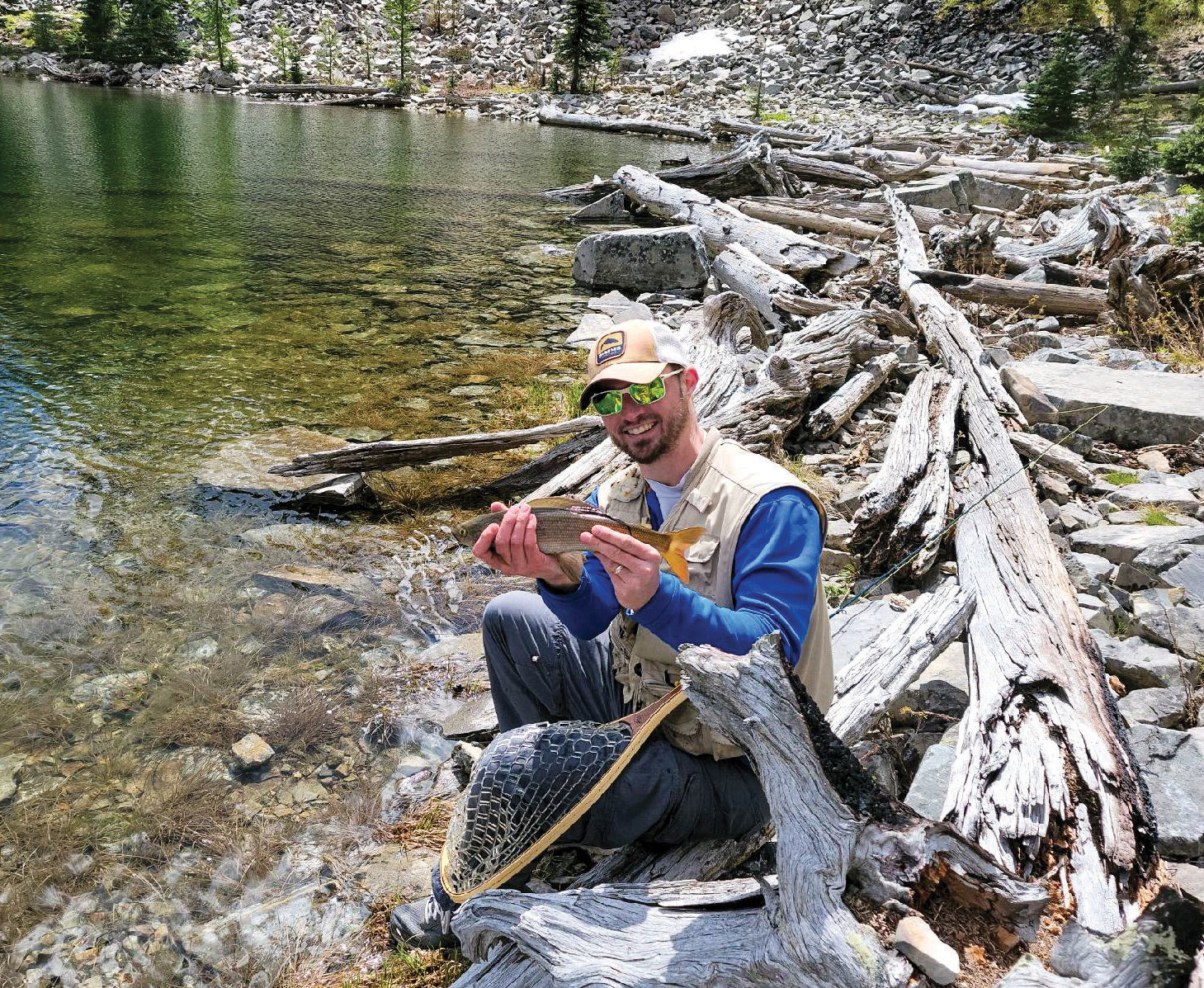
The author holds a rooster (male) grayling caught at Fuse Lake in the Sapphire Range east of Hamilton. Although all grayling should be treasured, this population is unique because it is the only one found in Montana that is documented to descend from fish of Canadian origin. | BRENDAN HODGE
But from an angler’s perspective, does it truly matter how “native” a given Montana grayling population is? Are those that are not “true” indigenous grayling — but rather naturalized populations of a species that is native to Montana — any less special than those that are? Each of Montana’s grayling populations has its own distinctive history that sets it apart from others and each is, therefore, special in its own way. And so this angler has found that being aware of and appreciating their complex and unique pasts makes catching grayling from one Montana water or another a far more fulfilling experience.
Adam R. Hodge is the head of reference at the Kansas State Historical Society. He holds a doctorate in history from the University of Nebraska-Lincoln and specializes in the environmental history of the American West. His current research projects examine the history of fisheries management in Montana and Kansas.
No Comments