



09 Apr A Quiet Approach
Architecture | Miller Roodell Architects
Construction | Denman Construction
Interior Design | Cravotta Interiors
Landscape Architecture | Design Workshop
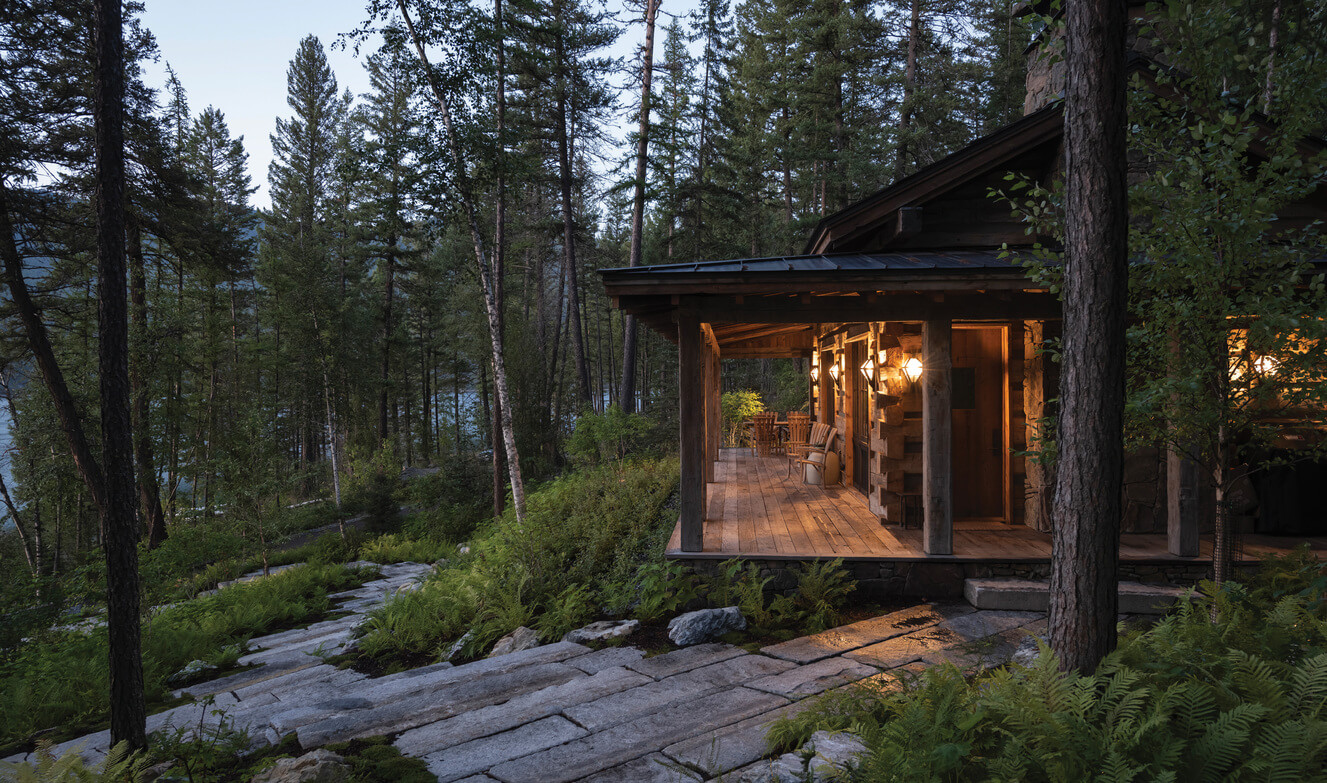
At the quiet end of Whitefish Lake, where a town of about 10,000 residents feels far but trailheads into the Flathead National Forest abound, a year-round escape for an empty-nester couple snugs into old-growth forest. But this retreat is more than a cherished lakeside getaway — it’s a statement: Less can be more.
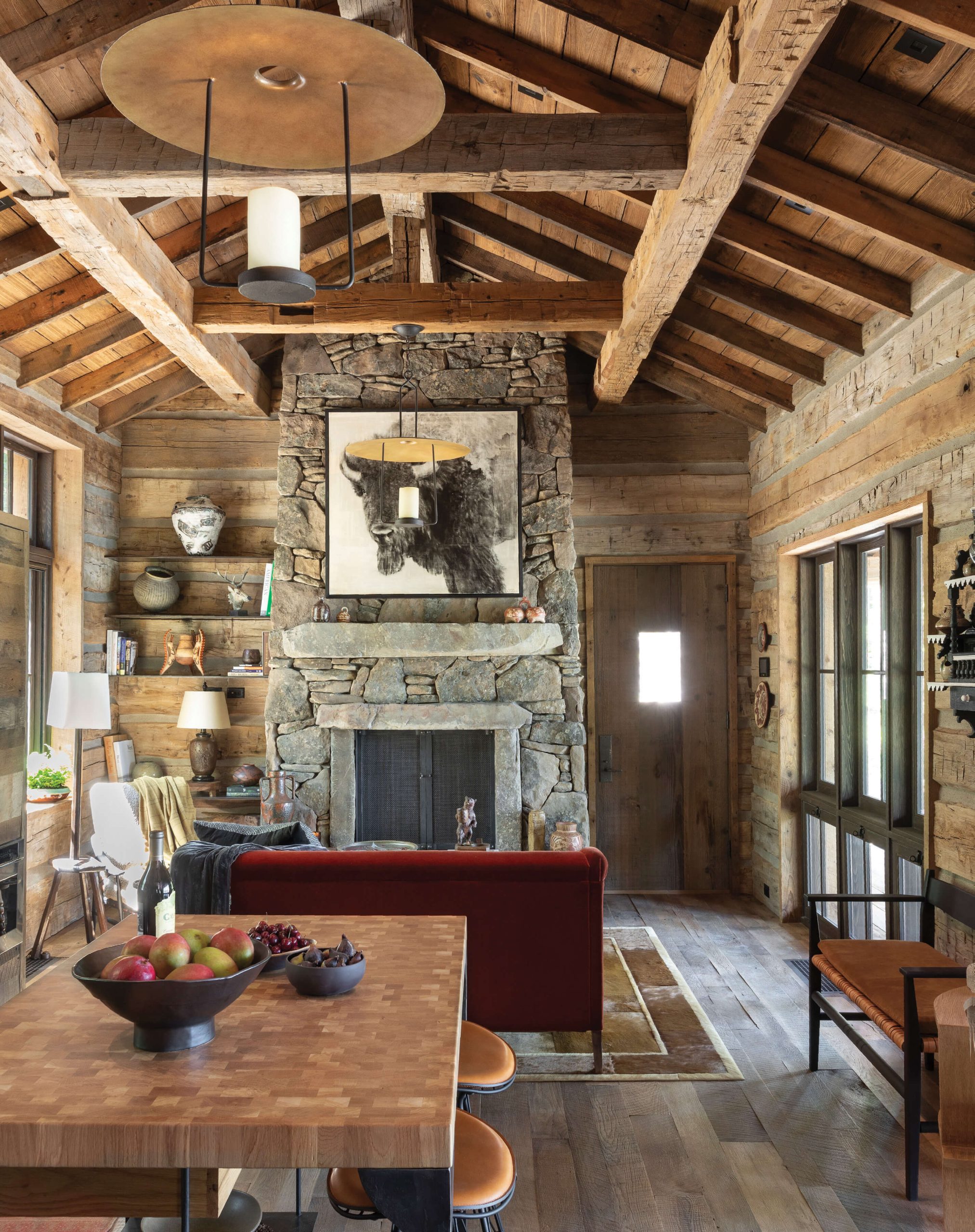
“This cabin is a tiny space, but it embodies the spirit of artisanal craft,” says interior designer Mark Cravotta. “The home was about intimacy and immediacy; it’s cozy, warm, and full of surprise and delight.” The painting above the fireplace is a Kenneth Peloke from Courtney Collins Fine Art in Big Sky. Taking a unique approach to the fireplace, the builders incorporated the screens into the rock work. “This was something that we came up with that turned out beautifully,” says Travis Denman.
Located on a 3.6-acre lot with about 400 feet of lakeshore, the parcel includes a nearly 700-square-foot cabin and 1,000-square-foot garage. “Our intention was never to have a property with a massive house, but to have privacy and space,” the homeowners say. Rather than do what they saw elsewhere around the lake — build a massive main house right on the lakeshore — they wanted to do something different. “We wanted the surroundings to be the focus and for the buildings to blend in rather than be a statement.”
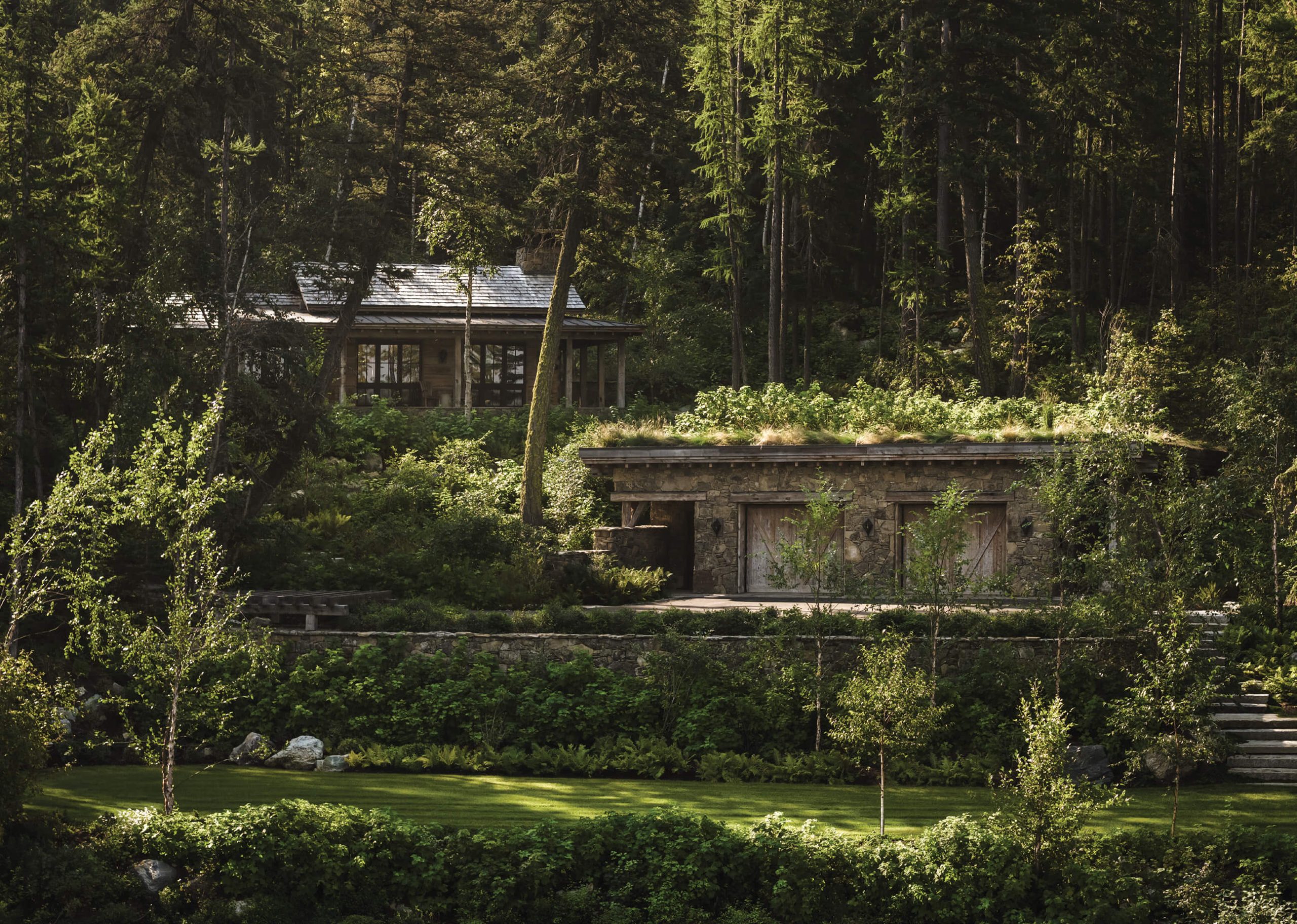
Inez Point Cabin and its detached garage unfold lightly beneath the forest canopy and virtually disappear from view along the lake’s edge.
Landscape architect Mike Albert, a principal at Aspen-based Design Workshop, says the property’s natural surroundings are indeed the highlight. On his first visit to the site, Albert saw that the forest, a mix of larch, fir, and birch, was magical, even if it had been unmanaged for decades. “It needed renewal but wasn’t something that we’d be able to recreate once disturbed. There were layers that created diversity, shape, and ecosystems for different animals and insects. It was more than one note.”
Albert also saw the sad shape of the property where it met the lake. Multiple structures and domesticated landscape improvements from the 1970s and 1980s had been pushed right up to the shoreline and spanned the parcel’s width. Vital riparian vegetation had been stripped away, and unfiltered runoff had degraded water quality, disrupted ecology, and detracted from the scenic shoreline. “Our goal was to heal the areas that had been disturbed in the past — including the lakeshore itself — enhance forest resilience, and stitch the new buildings into the landscape so they feel like they’ve been there for generations,” Albert says.
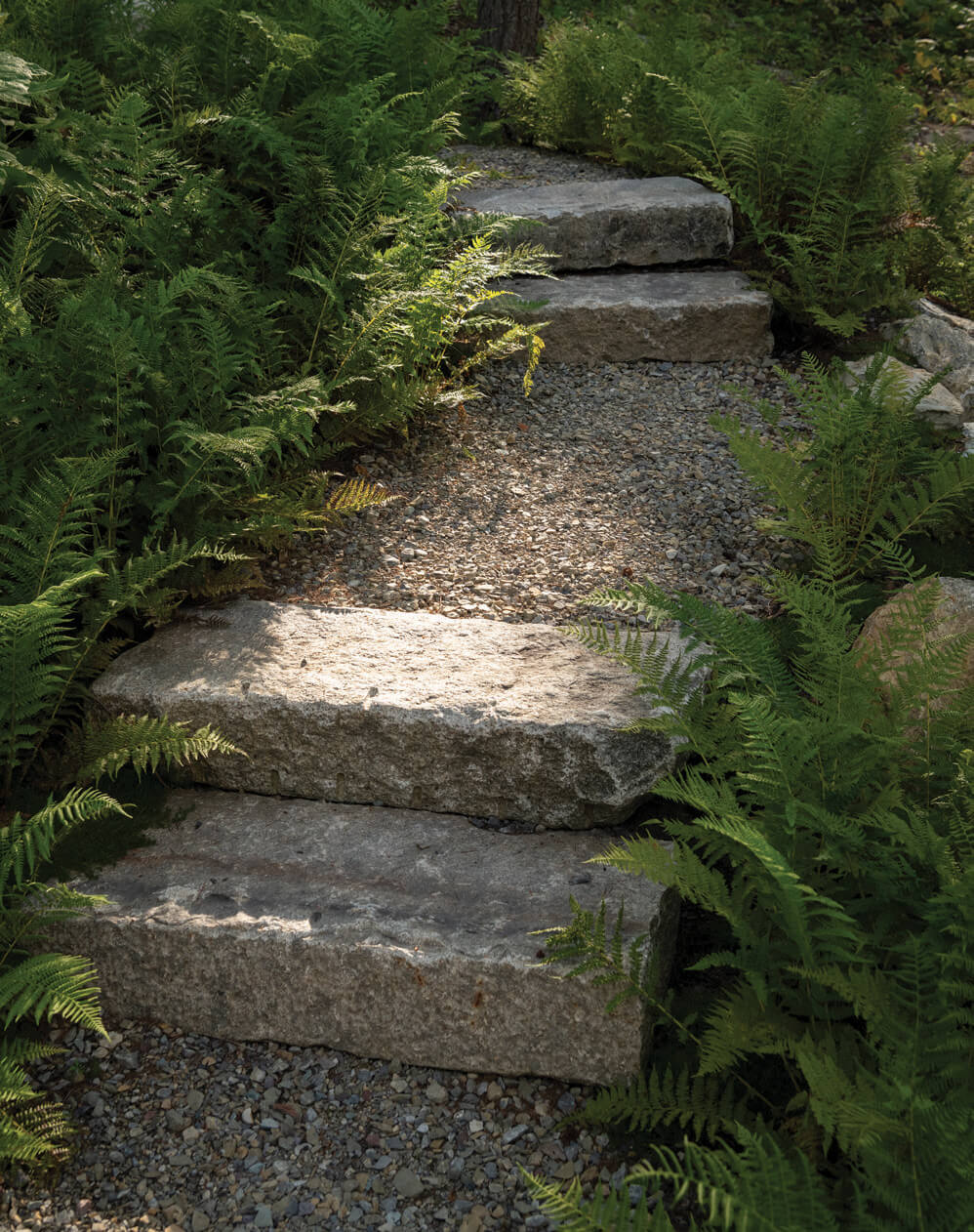
Pathways and stairs are formed from sand-set, reclaimed granite pavers.
To this end, architect Joe Roodell, founding principal at Bozeman-based Miller Roodell Architects, and Albert presented an unorthodox idea for an area that annually receives about 5 feet of snow: an unconnected cabin and garage.
“We knew it would take an adventurous client in northwest Montana to say, ‘Yes, we’ll walk 40 steps to the house,’” Albert says. But, these clients have climbed Mount Kilimanjaro, traveled the world, and aren’t afraid of the elements. “We knew a detached garage meant carrying groceries into the house would be more work and there would be snow to walk through, but we weren’t after practical functionality,” the homeowners say. “A big part of what we wanted here was a distinct sense of place and moments of discovery and engagement.”
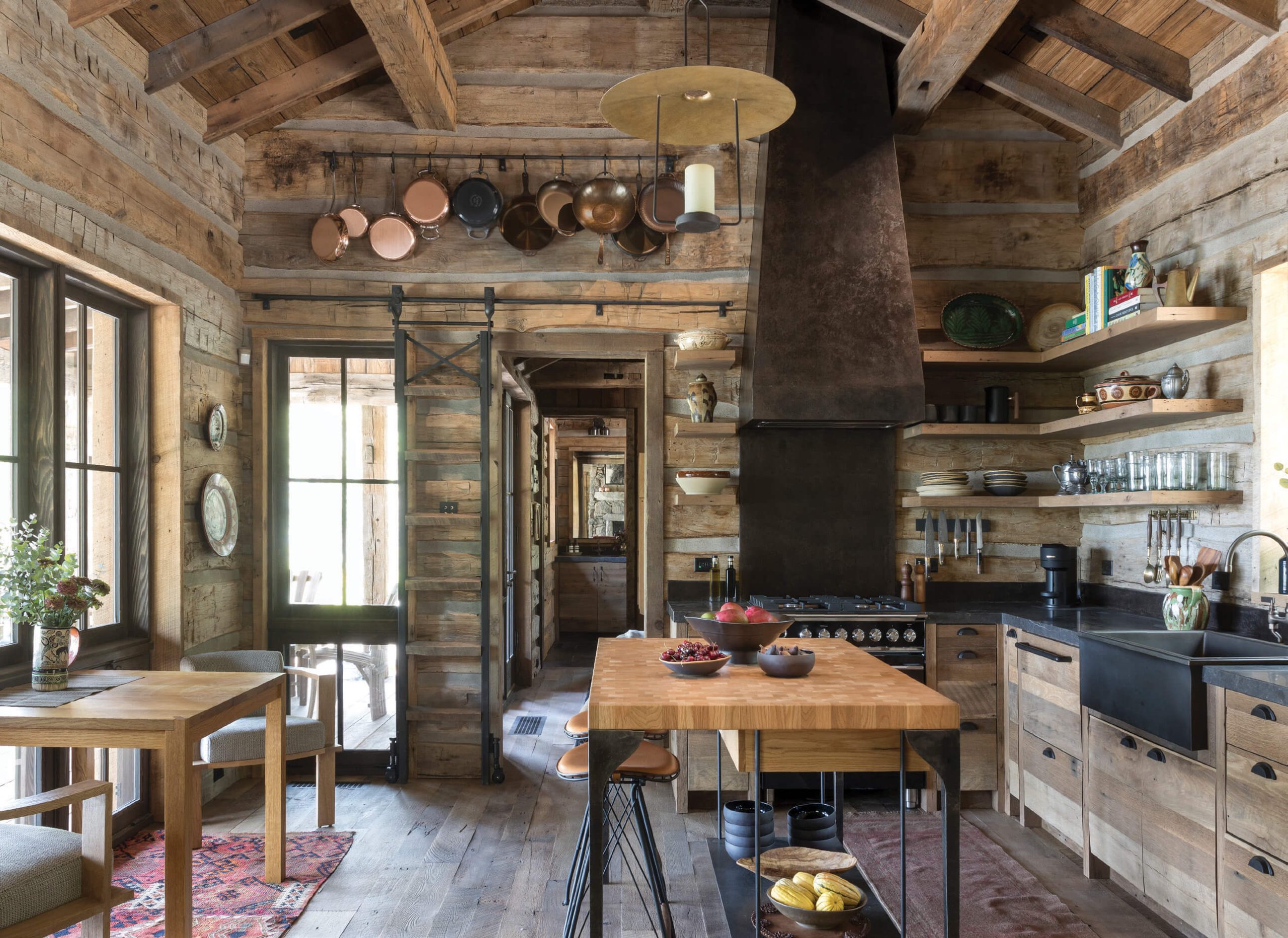
The kitchen is small yet highly organized and functional. Cravotta designed the island from forged steel and a butcher-block top, as well as the forged iron rack and rolling ladder. “I love the kitchen so much,” Cravotta says.
Now that they’ve been living in the cabin for about two years, the homeowners say this design decision gave them exactly what they wanted. “Walking up the granite steps from the garage to the house makes us feel connected to the forest and forces us to engage with the landscape. Anything that is a little more difficult because of it is a small trade-off for the aesthetic and the way it all feels.”
This move didn’t just make getting from the garage to the house a welcome moment for the homeowners, it was the foundation for both integrating the buildings into the forest and healing the landscape along the lakeshore. The garage is set into the hillside below the cabin, making it the closest building to the water. But thanks to a lush, herbaceous fern-filled roof, it’s almost invisible from the lake. “We wanted to diminish its scale,” Roodell says.
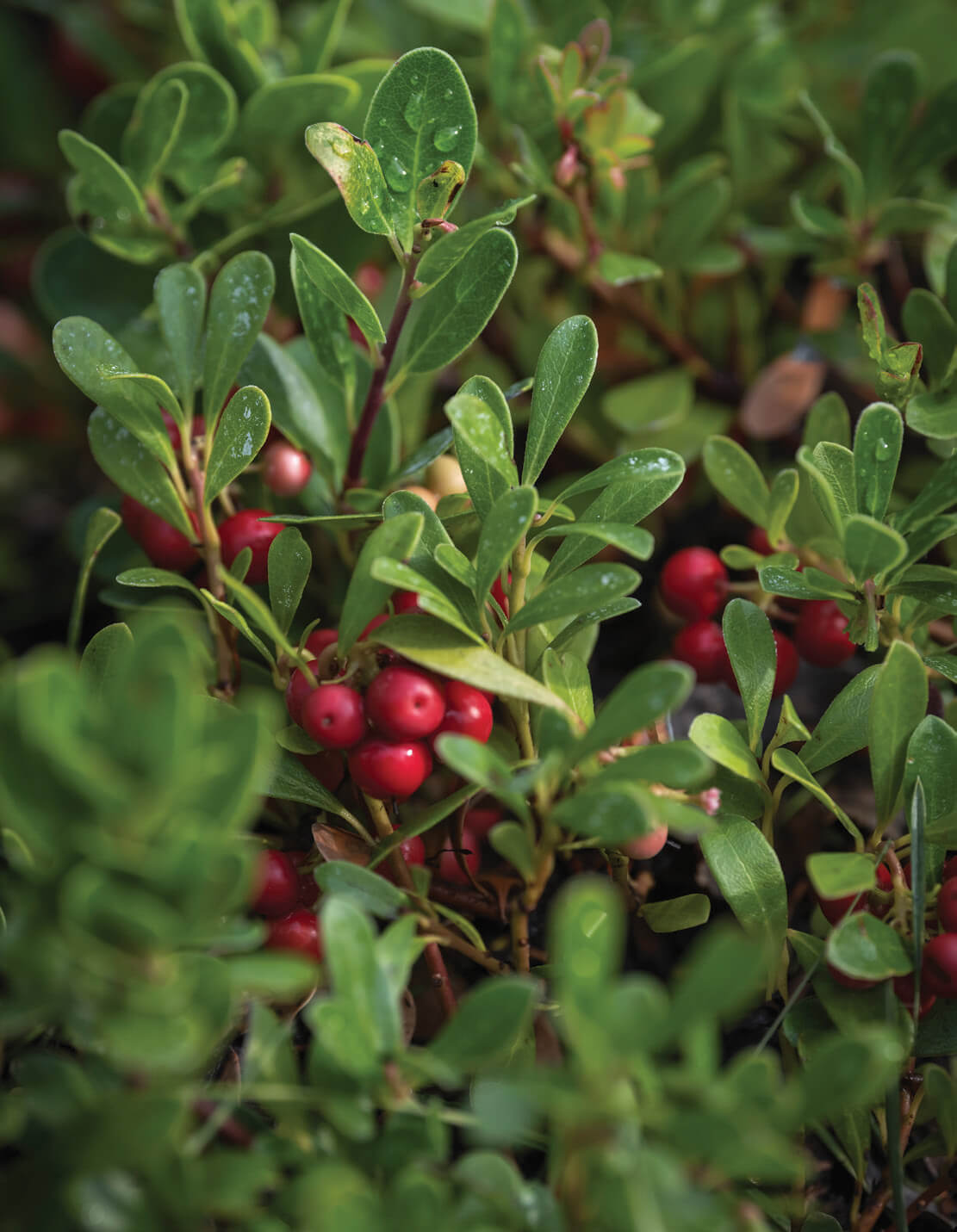
Native, berry-producing species like kinnikinnick, serviceberry, and snowberry sustain wildlife, while drip irrigation reduces water demand and evaporative loss.
The garage is hidden entirely from the cabin, where the homeowners can sit on the front porch and see only the lake and forest. “We were very strategic with the elevations so that, for anyone sitting on the porch and looking out, it would feel like a natural environment rolling down to the water’s edge,” Roodell says.
At the shore, Albert called for the existing wall and lawn to be removed, land to be recontoured, and the first 30 feet to be revegetated with native woody species like red twig dogwood, oceanspray, Rocky Mountain maple, and river birch. The end result stabilized soil, filtered runoff, and restored the natural shoreline connection, leading the project to be recognized with the American Society of Landscape Architects’ National Honor Award in Residential Design. (About it, the ASLA Awards Jury wrote: “The landscape architect successfully healed-back the landscape, making this project appear effortless.”)
As fluent as the landscape, cabin, and garage look today, their design and construction were rigorous. “When doing a jewel box like this cabin, we really dove into the details and thought about everything you’d see and touch and feel. We thought critically about everything,” Roodell says. To keep the cabin as flexible as possible for the future, its sole bedroom features a Murphy bed. It could evolve from the homeowners’ personal house to its planned purpose — a guesthouse — but it could also be a yoga or exercise cabin. In the kitchen, the bronze hood over the range features a custom patina that the builder, Denman Construction, had never attempted. In a similarly unique feature, the rocks around the fireplace weren’t merely stacked but set to create a feeling of movement.
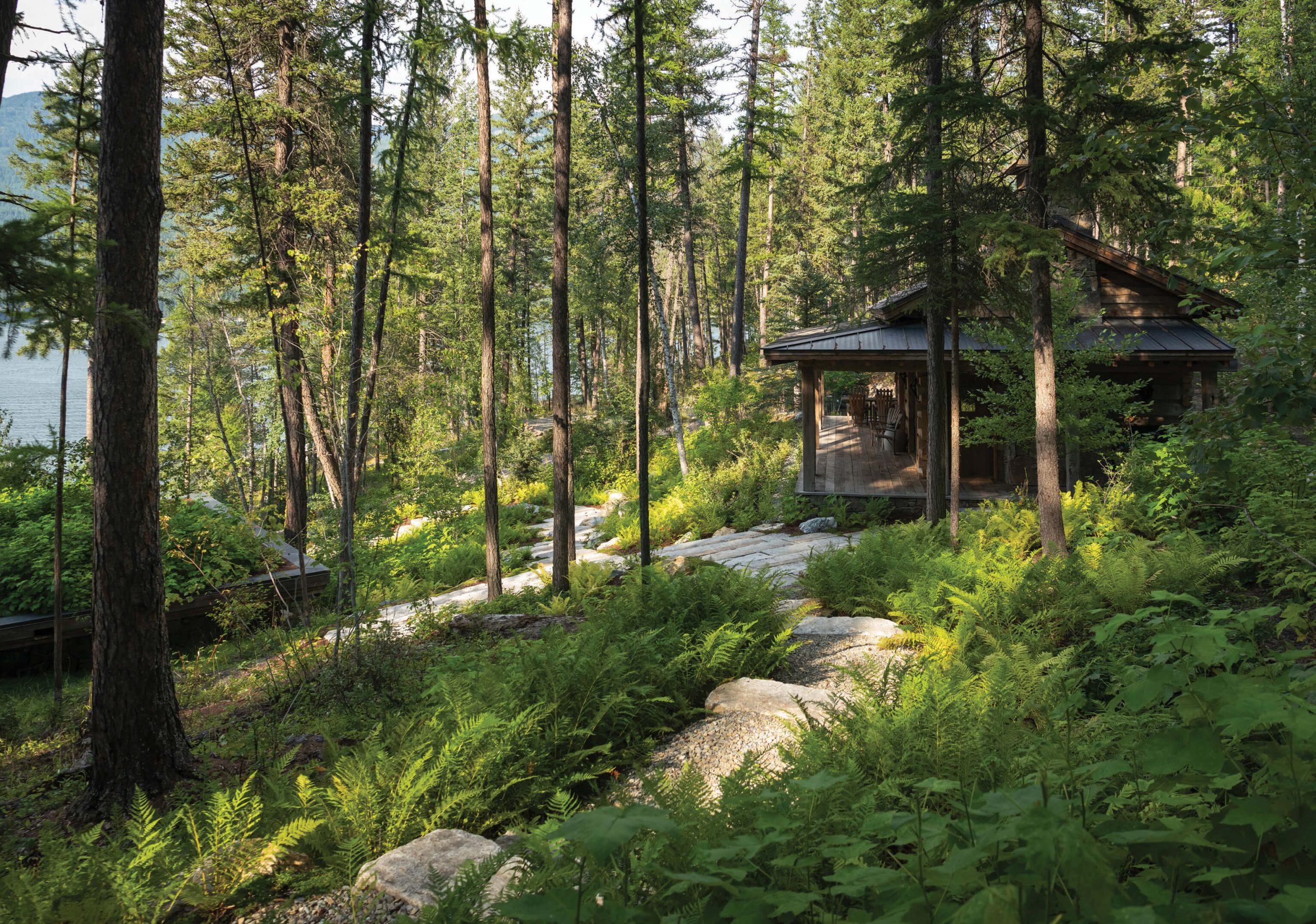
Nestled into the hillside along the shore of Whitefish Lake, Inez Point Cabin offers the experience of shinrin-yoku, or “forest bathing.” Walking from the garage to the cabin provides ample opportunity for immersive connection with nature.
“The biggest challenge on the interior was that every little inch mattered,” says Travis Denman, president and owner of Denman Construction and an architect himself (formerly of Miller Roodell). “A project with this level of detail is a once-in-a-decade opportunity for us. The intimacy and the charm of the entire setting is something we’ve never gotten to do before.”
It was the setting — or rather, the preservation of it — that was Denman’s biggest challenge. “This house wasn’t a conventional build where we would drive forklifts around the house,” he says. Typically, heavy materials like the reclaimed granite pavers that link the house and garage would have been moved by machinery. Instead, his crew carried them along a trail by hand. “There were some things that required rallying the crew, but once we got started, everyone saw the vision and the importance of not disturbing the landscape.”
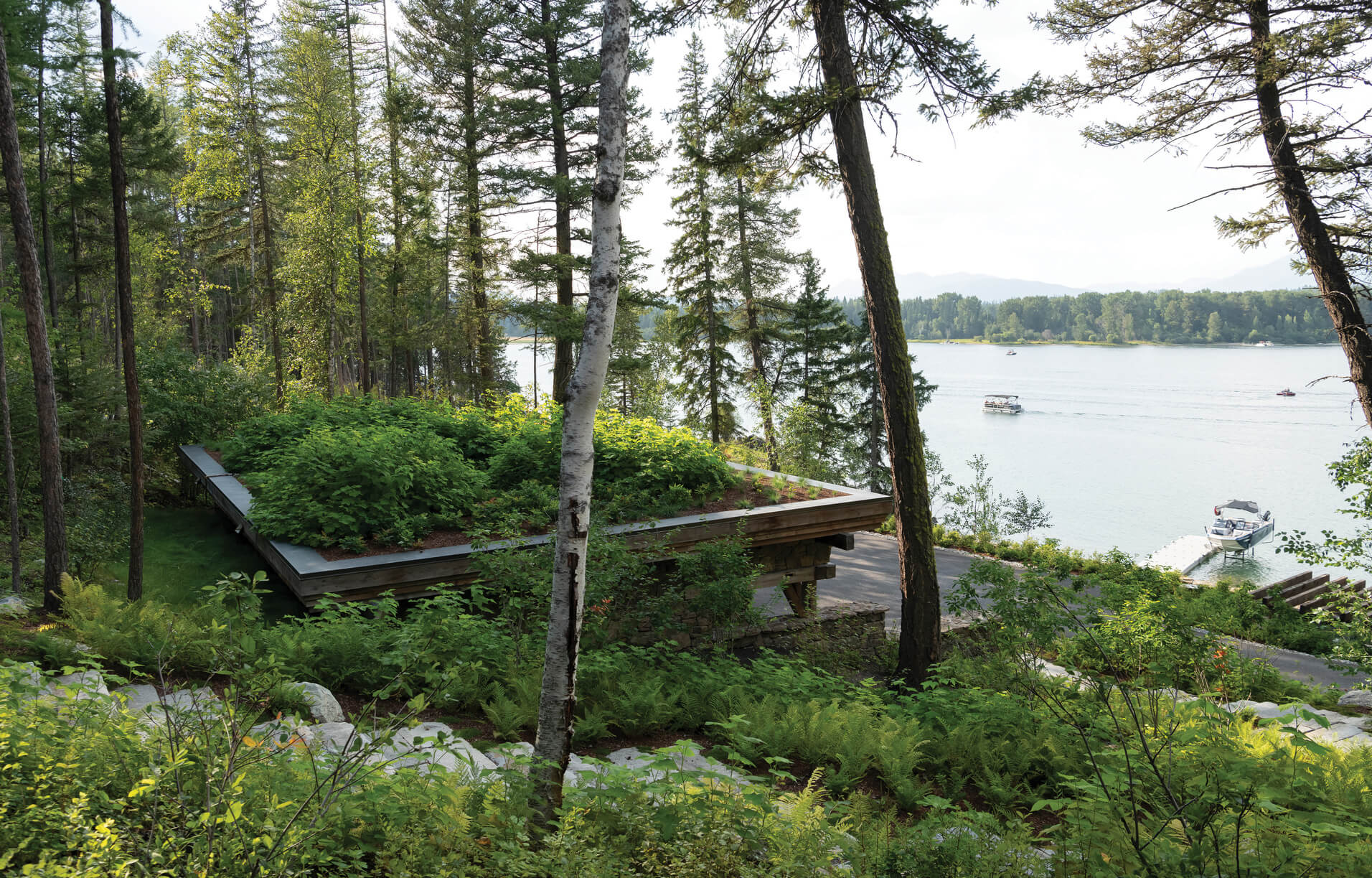
The garage’s green roof serves as an extension of the herbaceous layer of the forest and preserves unimpeded lake views from the cabin above.
“Even if a bigger house were instantly on this property, we wouldn’t want to move out of this cabin,” the homeowners say. “We love this intimate space. It’s so warm, cozy, and simple.”
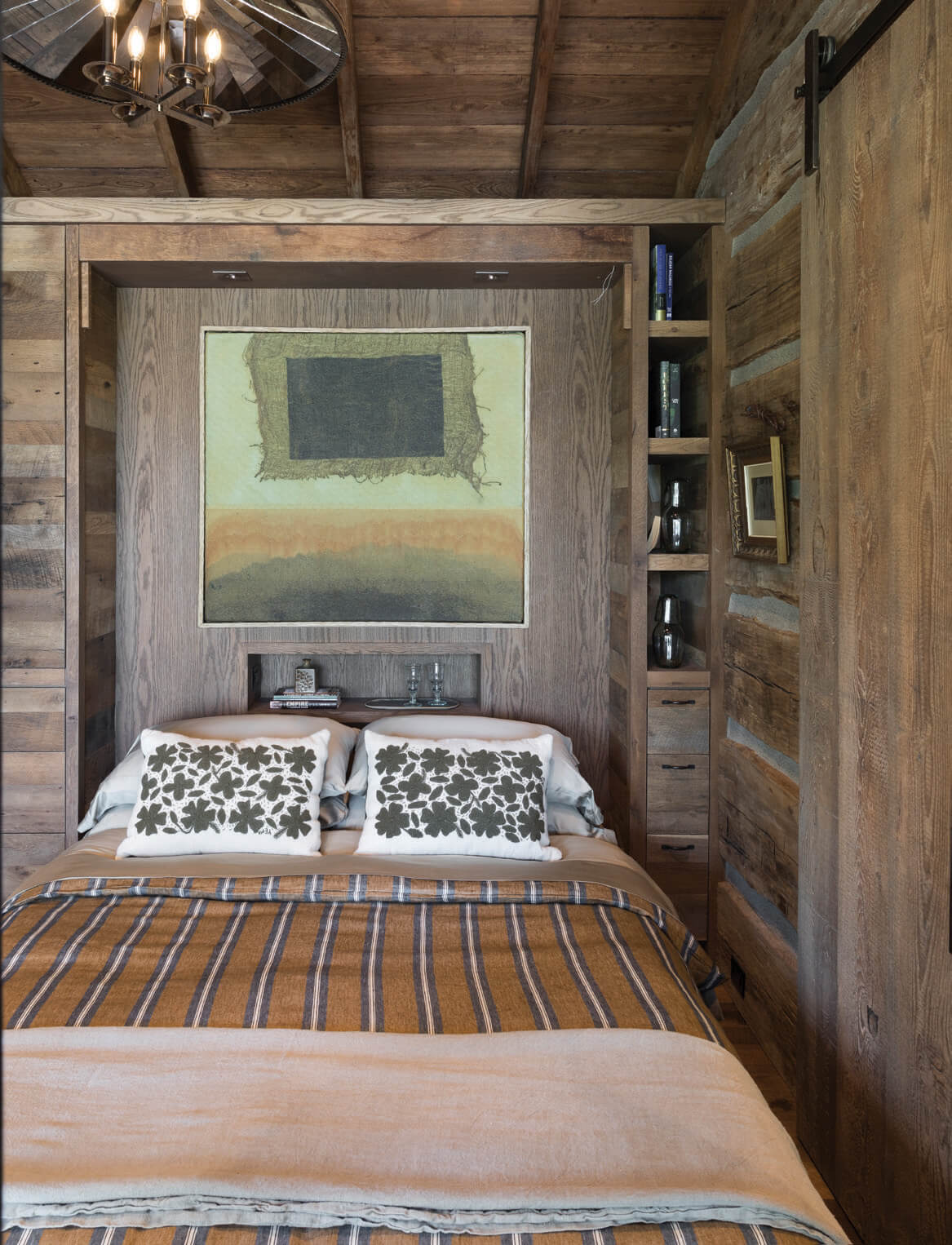
Throughout the cabin, Denman Construction worked to align the wood grain from one element to another, ensuring smooth transitions.
In fact, they love it so much that it has influenced what they’re considering for the rest of the property in the future. “When we first built this cabin, we were thinking of it as more of a guest cabin. We’re still going to build a main house, but it will be much smaller than typical main houses. Instead of this 700-square-foot cabin, it might be a 1,200-square-foot cabin.”
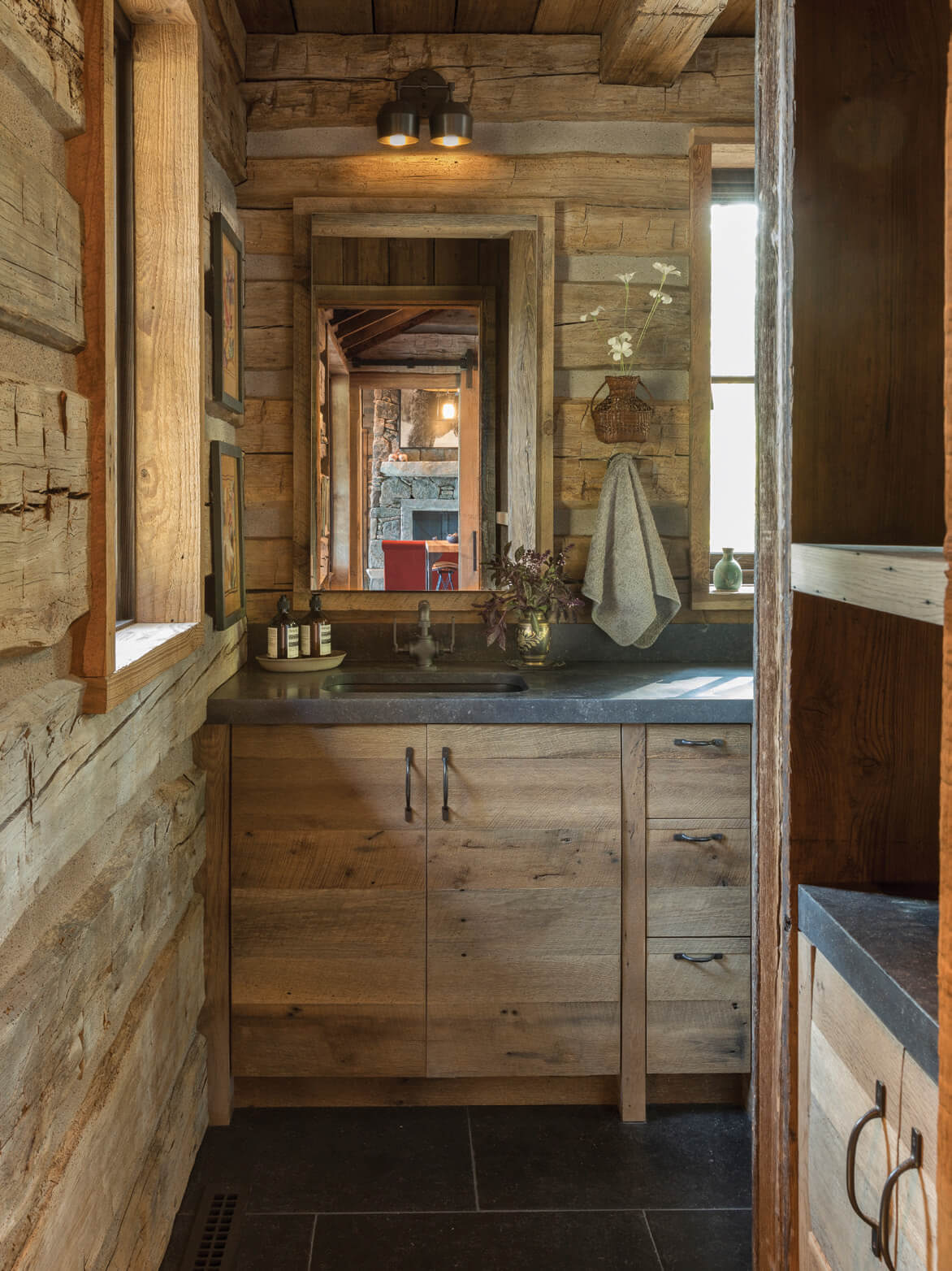
In the bathroom, reclaimed white oak timbers enhance the cabin feel and also match the toast-brown tones of the vanity’s reclaimed oak cabinetry.
While Roodell and Albert are both excited at potential future opportunities on the site, Roodell says, “If this cabin is the only thing ever built on this property, it is amazing.” And the surrounding forest and lakeshore are healed.
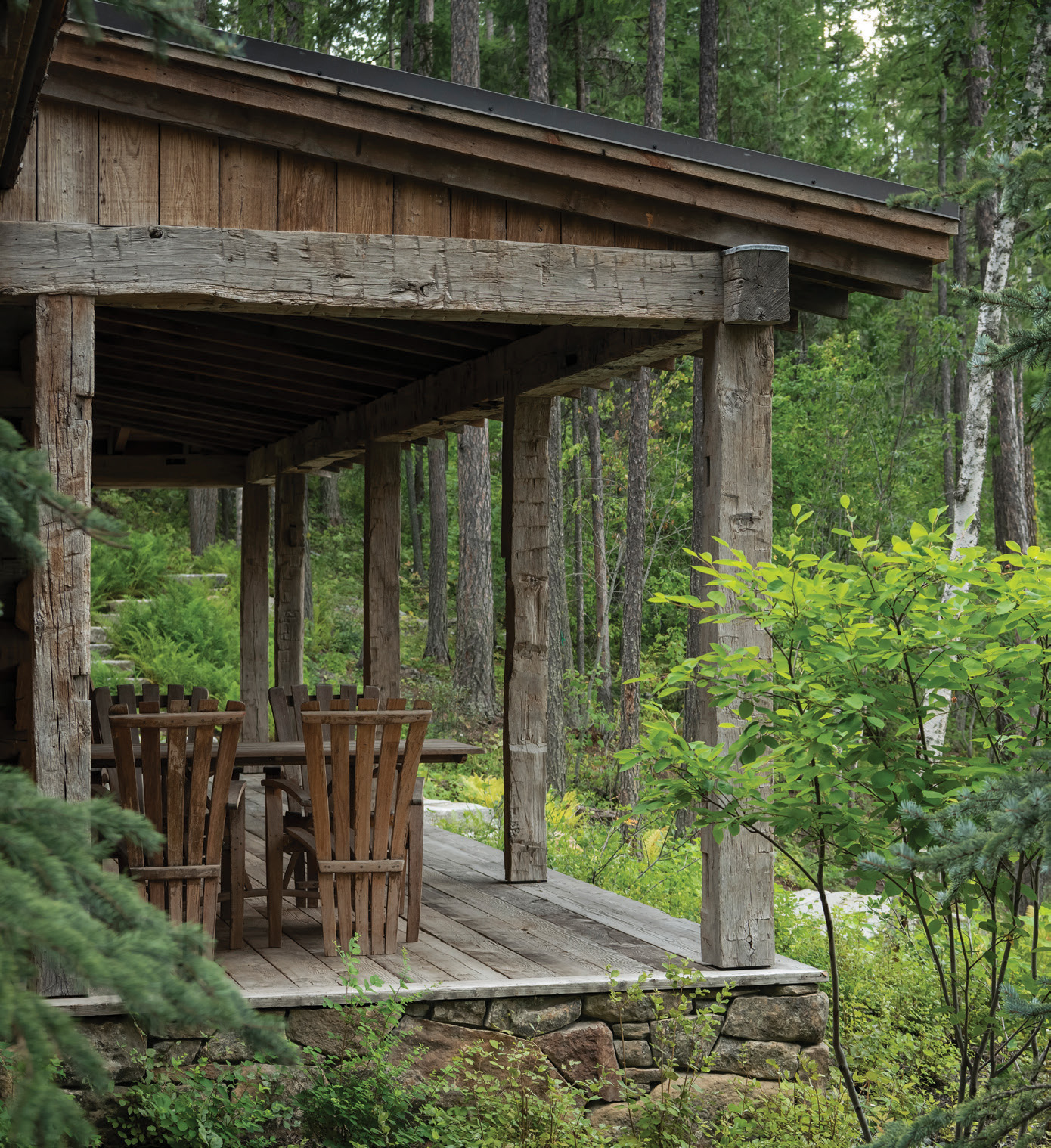
With layered views through the forest to the lake and the Whitefish Range beyond, a small dining area on the covered porch makes for a perfect spot to enjoy an alfresco meal.
Dina Mishev is the editor-in-chief of Jackson Hole magazine. She loves her contemporary home in downtown Jackson but also dreams of a log cabin on a lake (like the one she wrote about in this issue). Her work has also appeared in The New York Times, The Washington Post, Outside, and Afar.
Antoine Bootz grew up in Paris, France. After studying at the Sorbonne and in Marseilles, he moved to New York to pursue a career in fine art and commercial photography. His work has appeared in House & Garden, Elle Décor, Martha Stewart Living, The New York Times Magazine, Metropolitan Home, Departures, Travel & Leisure, and Vogue Decoration, among others. His many prestigious commercial photography clients include Air France, Calvin Klein, Pottery Barn, Williams Sonoma, Baker Furniture, Garnet Hill, La Redoute, Herman Miller, Anthropologie, and Sheraton Hotels.
Based in Aspen, Brandon Huttenlocher is an architectural and design photographer whose work has appeared in outlets around the country. He loves blending his passion for the outdoors with his architectural photography. When he’s not working, he can be found spending time in the mountains, whether snowboarding and splitboarding or biking and backpacking.
No Comments